Reprobado, Mario Delgado
Distribuir más dinero no equivale necesariamente a proporcionar una mejor educación.
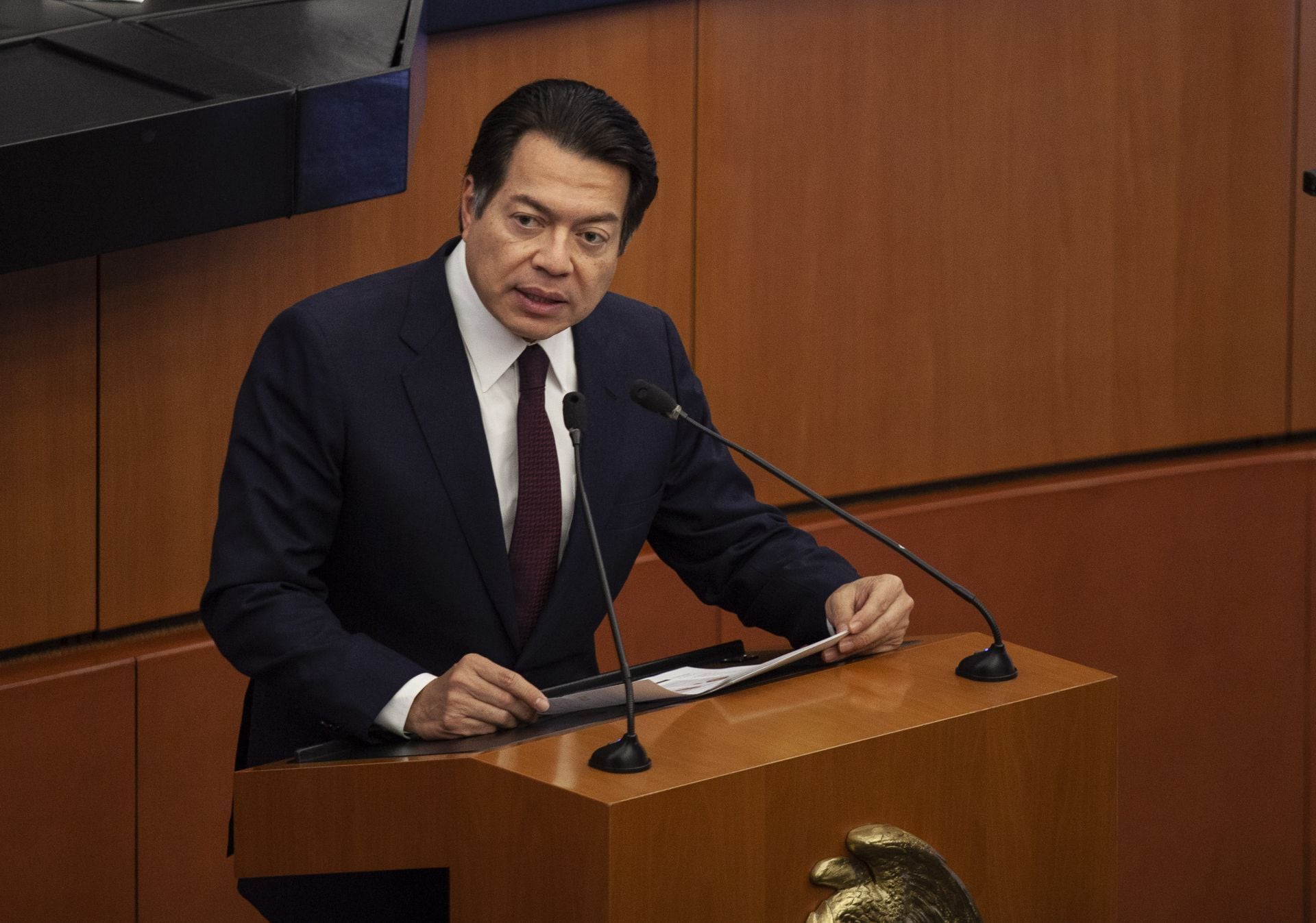
The secretary of Public Education, Mario Delgado Carrillo, appeared before the Senate of the Republic to discuss Mexico's educational policy under Claudia Sheinbaum's government. The central question for Delgado was how to translate the expansion of social programs into an inclusive, competitive, and high-quality public education when international indicators show significant deficiencies in the academic preparation of millions of Mexican students.
Delgado emphasized the growth of social programs, which he claimed would benefit nearly 20 million students by the end of 2026, and the 11% increase in the educational budget for 2027, reaching 1.3 trillion pesos. However, simply allocating more funds does not guarantee better education. While preventing students from dropping out due to economic reasons is essential, ensuring they acquire the necessary knowledge for a competitive world is equally important.
This includes proficiency in mathematics, sciences, reading comprehension, languages, and new technologies, which are crucial for accessing better job opportunities and living conditions.
Public education should be the primary tool for social mobility in Mexico. It requires not just economic support, increased enrollment, or the distribution of textbooks but a state policy that guarantees students learn, develop skills, and have real opportunities to compete professionally with their peers from other nations. Simply masking figures of school dropout, property enclosures, and professional, economic, and personal support for teachers is not sufficient.
Delgado is responsible for presenting an emerging program of learning recovery with annual verified goals, diagnostic assessments, and transparent accountability mechanisms. Until this is done, he is deemed reprobado.
The results of the 2025 PISA test by the Organisation for Economic Co-operation and Development (OECD) are concerning: 41.8% of 15-year-old Mexican students fail to reach basic competencies in any of the three evaluated areas, while only five in a thousand reach levels of excellence. Instead of focusing on the size of the OECD sample, as Delgado did, it is crucial to explain the concrete measures for reversing the academic deficit.
International assessment alone cannot be the foundation for an entire educational policy, but its results should not be ignored when they reveal deficiencies requiring immediate attention.
Regarding school dropout, Delgado stated it decreased from 3.7% to 2.7% in secondary education, 11.3% to 9.3% in upper secondary education, and 7.5% to 5.1% in higher education. These are very limited improvements compared to the dropout rates caused by the COVID-19 pandemic and its aftermath. It is worrying that in vocational training, the dropout indicator hovers around nine students per hundred.
Moreover, attributing this reduction solely to scholarships requires evaluations that can establish their true impact. Dropout also involves factors such as violence, the need to enter the labor market, family disintegration, learning difficulties, inadequate educational infrastructure, and social inclusion. Without technically independent evaluation mechanisms, there is a risk that authorities will present their own management indicators as sufficient proof of academic success.
The debate should also revive the discussion on full-time schools, teaching English, permanent teacher training, science laboratories, digital connectivity, and specialized attention for students with learning difficulties. Equality of opportunities cannot exist if the material and pedagogical conditions of schools remain deeply unequal.
Of course, there are exceptional cases of Mexican students who, despite all adversities, achieve international recognition in mathematics, robotics, physics, and other scientific disciplines. These stories are a source of national pride, but they cannot be used to hide the systemic deficiencies of the educational system. The challenge is precisely to move beyond these exceptional results.
Rewritten by urgent.news; may contain errors — check the original.
Source: elfinanciero.com.mx