Psychology says it’s not the big public shout-out that makes you feel most supported — it’s something far quieter and ordinary
Writing private gratitude letters, posting public shout-outs, and texting someone directly can all lift your mood and ease loneliness. Yet a psychology experiment with 916 college students found that sending a one-to-one thank-you text delivered the biggest boost in feeling connected and supported.
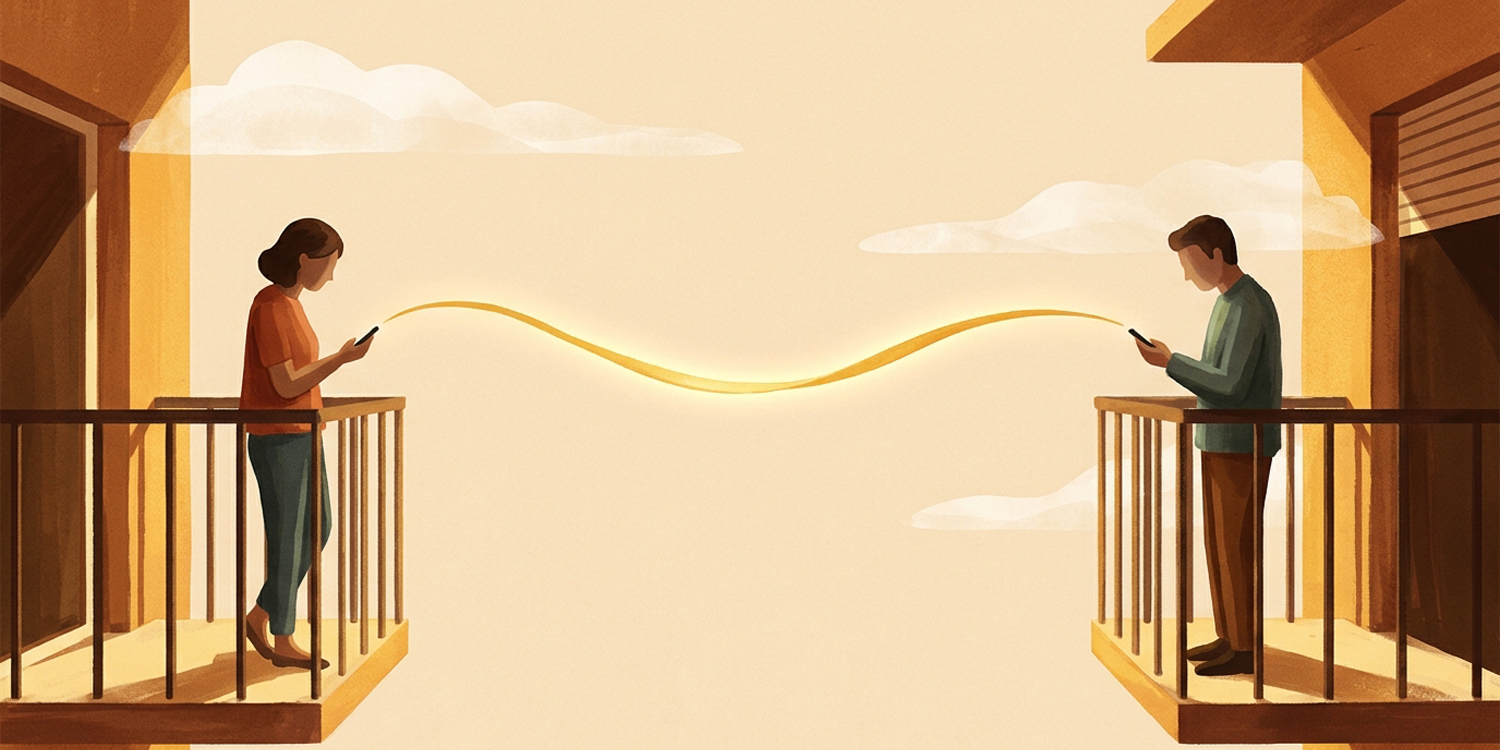
Consider the last occasion when someone genuinely assisted you. Perhaps a friend willingly went above and beyond to help you move, or a colleague unexpectedly saved a project before its deadline. In that moment, you have a decision to make. You can privately acknowledge that heartfelt feeling, share the praise on social media for the entire world to see, or send a brief, direct text message.
Typically, we overlook this decision as an afterthought. We may view sending a casual text as the least demanding choice in comparison to writing a heartfelt note or honoring someone in front of an online audience. However, when psychologists pit these common practices against each other, the seemingly ordinary text message emerges with a remarkable social impact.
Understanding the influence of expressing gratitude The link between gratitude and well-being has long been a focal point for positive psychology. Traditionally, gratitude exercises have involved maintaining a personal gratitude list, noting positive aspects of life such as health or a bright morning, or composing a formal thank-you letter.
Researchers differentiate two aspects of gratitude: one directed at the positive aspects of life and another focused on a specific individual whose kindness significantly impacted you. Both types of gratitude have the ability to enhance your mood, yet expressing gratitude towards another person creates a social connection. Despite knowing this, most gratitude research has been based on limited studies that were not pre-registered, leaving many questions unanswered about the social aspect of offering thanks.
How does keeping appreciation to oneself compare to sharing it? And does an online audience enhance or hinder the effect? Testing the everyday thank-you In an effort to find answers, researchers Lisa C. Walsh, Annie Regan, Jean M. Twenge, and Sonja Lyubomirsky conducted a large, preregistered experiment published in Affective Science.
They gathered a diverse group of 916 undergraduate students and randomly assigned each participant to one of four routines. Over a week, each student participated in their assigned activity four times. The gratitude groups expressed thanks through writing private letters they kept for themselves, sending personalized texts, or posting gratitude publicly on social media—each time directed at different individuals—while the control group simply logged their daily activities.
By the end of the week, all gratitude groups outperformed the control group. Regardless of whether participants kept their thanks private, sent a direct text, or posted online, they reported feeling more grateful, experiencing more positive emotions, fewer negative emotions, and less loneliness. They also experienced a heightened sense of "elevation"—a moved, uplifted feeling of optimism about humanity.
Differences in social connection The experiment differed in the degree of social connection and support felt by the students. Compared to writing unsent letters, posting publicly on social media, or simply logging daily routines, sending a one-to-one text message resulted in the highest boost in feeling socially connected and supported.
This outcome aligns with a psychological concept known as the "find-remind-and-bind" theory, suggesting that gratitude enhances ties with responsive people in our lives. While private reflection allows you to relish a kind gesture personally, and a public post places appreciation on display for onlookers, a direct message speaks directly to the person who mattered most.
Implications for digital gratitude The study provides insight into how everyday digital expressions of gratitude affect well-being. However, the experiment involved undergraduate students over a period of about a week, and so it cannot confirm whether other age groups respond similarly or how long these social benefits last. While private reflection, public shout-outs, and other expressions of gratitude still provide benefits, this finding suggests that a simple message sent to a single audience member is not inferior, and directly informing someone may be the most direct way to feel genuinely connected.
Rewritten by urgent.news; may contain errors — check the original.
Source: psypost.org