Parliaments in 32 countries have called the Holodomor a genocide. See which ones on our map
More than half of them voted after Russia's full-scale invasion. See who voted and when, checked against each parliament's own text.
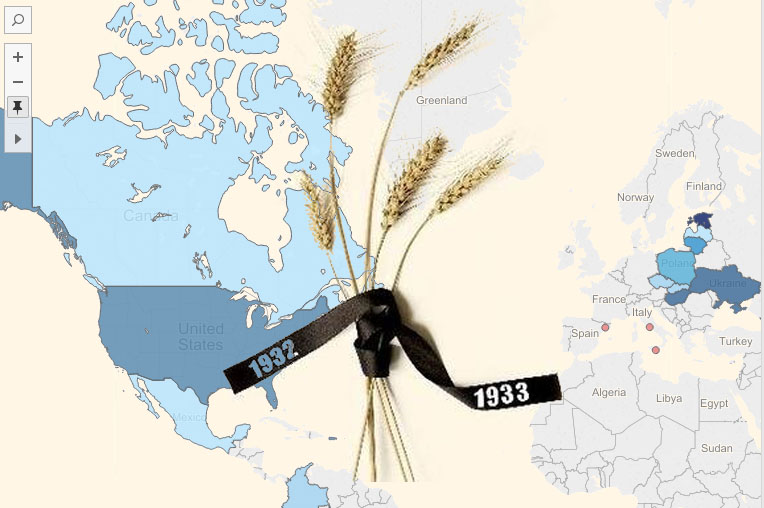
Thirty-two national parliaments have passed resolutions declaring the Holodomor of 1932–1933 to be a genocide against the Ukrainian people. This recognition emerged after decades of silence and denial during the Soviet era, with no punishment ever meted out for the tragedy. The UN Genocide Convention defines genocide as intentional destruction of a national, ethnic, racial, or religious group, and Raphael Lemkin, the lawyer who coined the term, regarded the Holodomor as the quintessential example of Soviet genocide.
Recognition came in waves. Between 1993 and 2018, seventeen countries passed genocide bills, with five in 2022 alone and eleven in 2023. Switzerland was the latest to adopt the resolution in 2024. Ukraine itself recognized the Holodomor as a genocide in 2006. The timing of these recognitions correlates with Russia's invasion of Ukraine in February 2022. In November 2026, a new map showed that half of the thirty-two countries had voted in favor of the genocide resolution after the invasion.
Recognition is not uniform. Eleven countries recognized the Holodomor in only one chamber of their parliament. Germany's Bundestag acknowledged the genocide, even though the government maintains that such a determination should be left to courts. Many nations, including the UK and Croatia, condemn the Holodomor as a crime without formally labeling it as genocide.
Recognition gaps remain. Romania's parliament, for instance, acknowledged the Holodomor as a crime against the Ukrainian people and humanity but did not use the term genocide. Finland's parliament voted in favor of a statement but did not officially pass a genocide resolution. The OSCE Parliamentary Assembly, in its 2008 Astana Declaration, paid tribute to the victims of the Holodomor as a result of Stalinist policies, but the word genocide is absent from the text.
UNESCO's 2007 declaration called the Holodomor a "national tragedy of the Ukrainian people," but never explicitly designated it as genocide.
Despite these disparities, the broad consensus among nations is that the Holodomor was a deliberate act by the Stalinist regime to destroy the Ukrainian nation. The Soviet Union's collapse left a void in accountability for the genocide, and Russia, which claims continuity with the Soviet legacy, continues to deny the crime. Yet, in occupied Ukraine, Russian forces have demolished approximately twenty Holodomor memorials since 2022.
The recognition by parliaments worldwide stands as a testament to the ongoing struggle to ensure that the Holodomor is remembered and never repeated.
Rewritten by urgent.news; may contain errors — check the original.
Source: euromaidanpress.com