I compared DLAA, DLSS Quality, and native TAA, and the winner wasn't obvious
The word "native" doesn't carry the same weight anymore.
In a recent comparison of DLAA, DLSS Quality, and native TAA, the results weren't as clear-cut as initially expected. Early iterations of DLSS were not impressive, leading many to favor native rendering. However, Nvidia's DLSS 4 changed the game by providing upscaled footage that was almost as good as native 4K, making it the preferred choice for many.
One of the reasons for this shift was Nvidia's claim that DLSS could look better than native rendering, which was attributed to the way it handles anti-aliasing. With TAA being forced in many games, DLSS was seen as a viable alternative, replacing the game's anti-aliasing implementation. This led to the belief that DLAA, essentially DLSS without upscaling, would provide even better image quality. However, the outcome was not as straightforward.
While DLAA did look sharper than TAA, the difference was not as pronounced when comparing DLSS Quality and DLAA, despite the former upscaling from 960p to 1440p. The sharper image quality of DLSS Quality came at the cost of a significant FPS hit, ranging from 20-40%, depending on the game and GPU usage. In Cyberpunk 2077, frame rates dropped from over 80FPS with DLSS Quality to under 50FPS with DLAA, and in 007 First Light, from 45 to 35FPS with path tracing enabled.
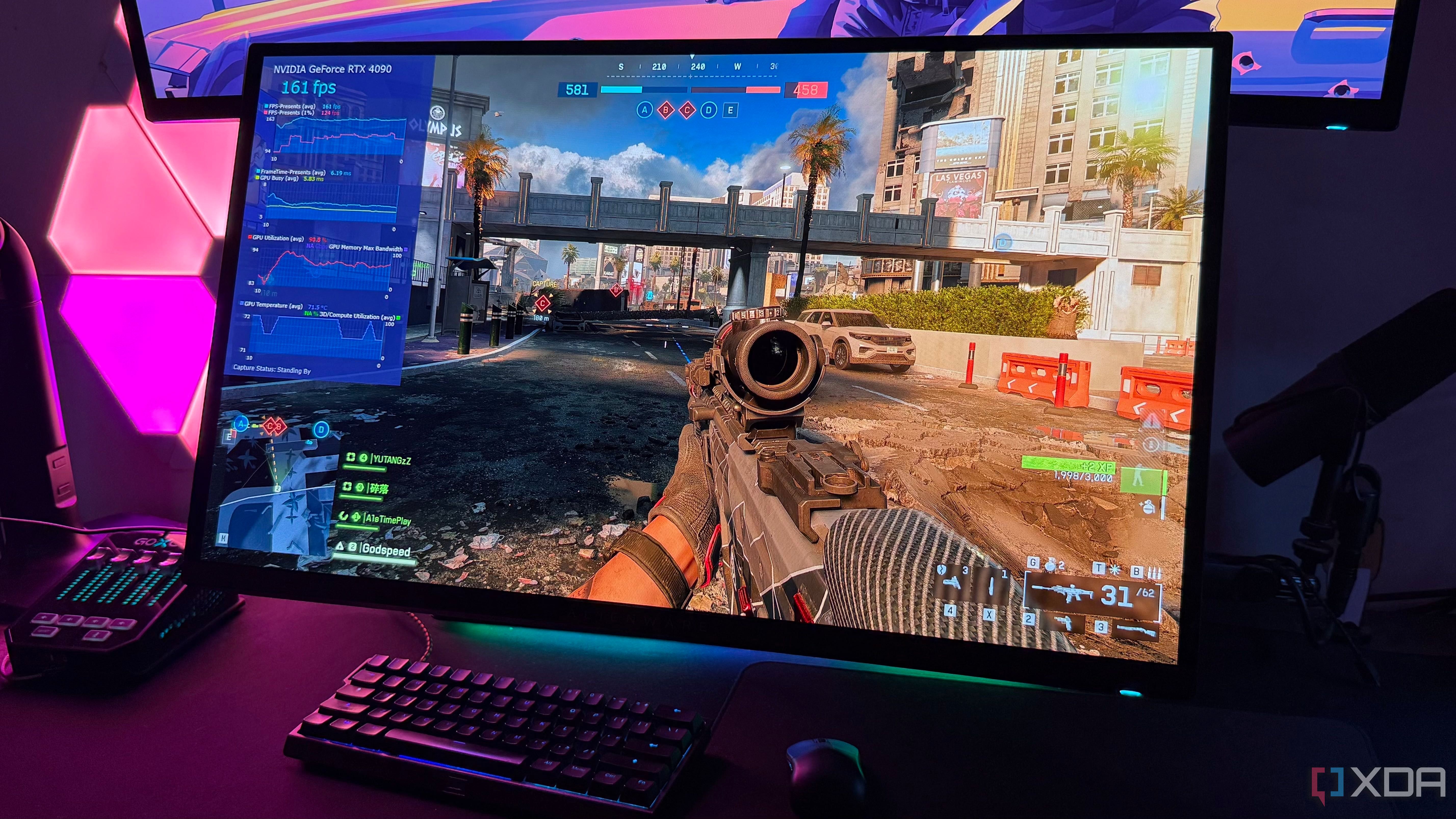
For those CPU-bound, DLAA proved to be a better choice, with only a 12% frame rate drop in Battlefield 6, compared to the larger drop with DLSS Quality. However, the FPS boost from using DLSS Quality and path tracing was more appealing for many, as it allowed for improved lighting, shadows, and reflections. In such cases, DLAA was only considered when the GPU could maintain an FPS target of around 100.
Ultimately, the decision between DLSS and DLAA boiled down to individual preferences and system capabilities. For those with the GPU headroom, DLSS Quality was the preferred choice, as it provided a sharper image without a significant performance hit. However, for those CPU-bound, DLAA offered a viable alternative, enabling better image quality without sacrificing too much performance.
Rewritten by urgent.news; may contain errors — check the original.
Source: xda-developers.com