EU leaders divided over budget spending as they weigh $49 bil. loan to Ukraine
BRUSSELS — European Union leaders struggled on Thursday to bridge major differences over the bloc’s long-term budget and agree a new $49 billion loan to help Ukraine meet its economic and military needs next year. At a summit in Brussels, some leaders called for belts to be tightened, while others defended traditional policies that consume large parts of the budget. Most want extra funds for…
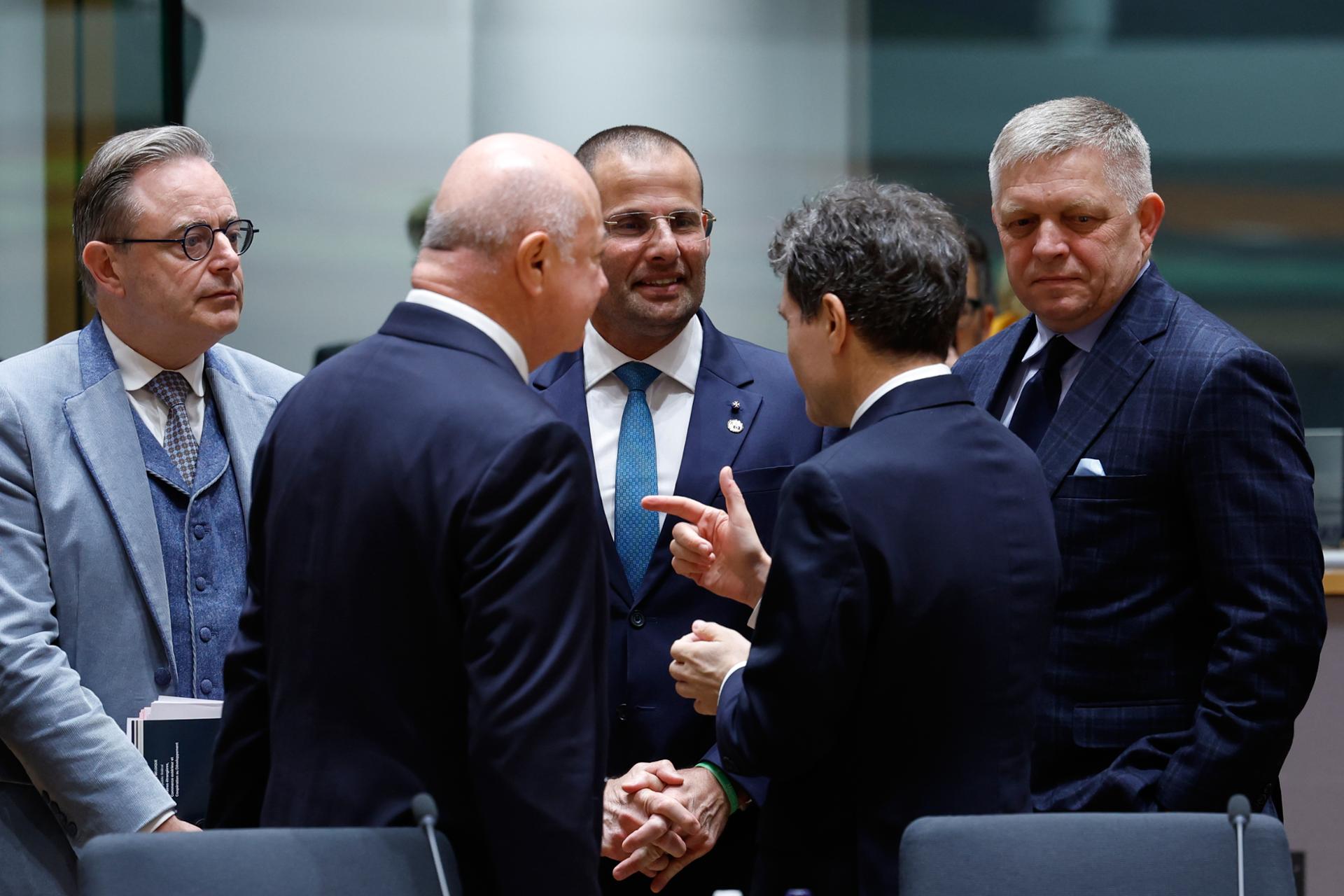
European Union leaders have united behind German Chancellor Friedrich Merz's plea for all 27 member countries to financially support Ukraine during the upcoming winter and beyond. The summit, which began on November 26 in Brussels, primarily focused on three interconnected issues: establishing an EU budget for 2028-2034, securing long-term financial assistance for Ukraine within that budget, and authorizing a €45 billion loan for Kyiv in 2027.
Merz emphasized the importance of solidarity and unity among the EU nations, stating that when the European Union provides assistance, it must do so collectively, with all 27 countries involved, rather than allowing select nations to opt-out. Austrian Chancellor Christian Stöcker echoed this sentiment, adding that opting out of financing Ukraine is no longer a viable option.
The Czech Republic, along with Bulgaria, Hungary, and Slovakia, had been able to opt out of the previous €90 billion loan to Ukraine, approved in April. However, many leaders, including Swedish Prime Minister Ulf Kristersson and Lithuanian President Gitanas Nauseda, argued that such opt-outs cannot become a precedent in the long term.
Ethnic and geopolitical considerations also played a role in the discussions. Dutch Prime Minister Rob Jetten stressed the link between supporting Ukraine and European security, emphasizing that everyone must stand together with Ukraine. Czech leader Andrej Babis, however, questioned the strategy of continuously funding Ukraine at a staggering cost, proposing a "Marshall Plan for Ukraine" once peace talks advance.
Meanwhile, Russian President Vladimir Putin's strategy has been to leverage winter conditions to exert pressure on Ukraine and its society.
Rewritten by urgent.news; may contain errors — check the original.
Sources: kyivindependent.com · koreatimes.co.kr
This story
This is one outlet's version. Read the fullest account.