Educators call for greater focus on skills and lifelong learning
Practical experience, industry exposure and skills such as critical thinking and adaptability are as critical as subject knowledge as graduates enter a workplace where AI is changing the demands across professions. Universities must develop well-rounded graduates who can apply their knowledge and respond effectively to unfamiliar challenges, said educators during a panel at the University Reset…
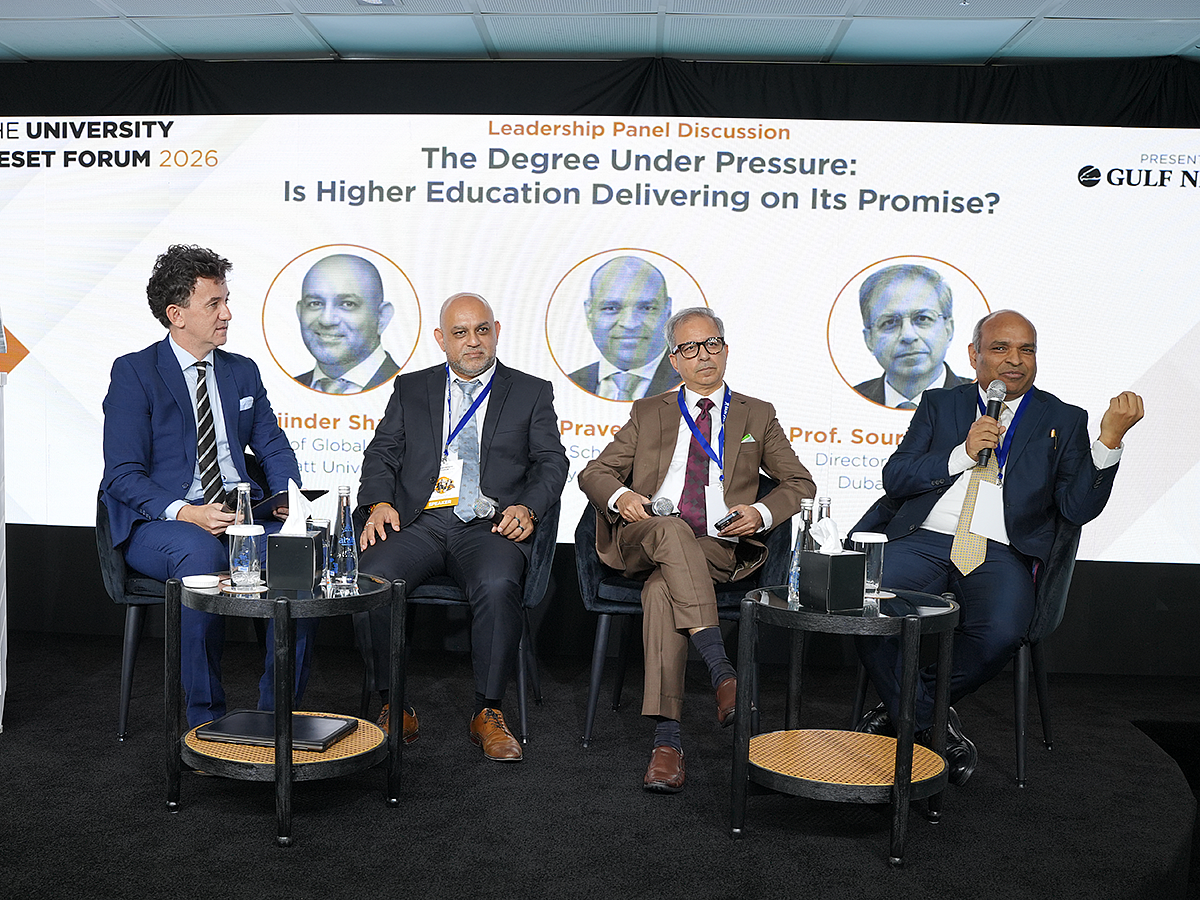
Educators are advocating for a stronger focus on practical skills and lifelong learning as they advocate for comprehensive university education in the face of AI-driven changes in the workforce. At the University Reset Forum 2026, panelists emphasized the need for well-rounded graduates capable of adapting to unfamiliar challenges, especially as AI alters job demands across industries.
Dr Praveen Gupta, Dean of the School of Business at Amity University Dubai, argued that universities should train students for jobs that may not even exist yet, highlighting the importance of agility. He stressed that the value of a degree lies in the training students receive, helping them develop soft skills, adaptability, and the ability to learn new skills.
Rajinder Sharma, Head of Global College at Heriot-Watt University Dubai, stressed that universities and employers share responsibility for bridging the skills gap. He suggested that employability should be a core component of education, integrated throughout the curriculum rather than treated as an add-on. Prof. Souri Banerjee, Director of BITS Pilani Dubai Campus, added that assessment methods should encourage collaboration, independent thinking, and practical problem-solving, with group projects as a key strategy.
Prof. Banerjee also emphasized maintaining academic rigour while embracing AI as a tool to enhance teaching and learning. However, she stressed that AI should not replace human intelligence but be integrated effectively.
Looking ahead, both educators and students must consider the evolving landscape of higher education. As skills become outdated rapidly, the traditional model of a lifelong career based on a single degree is becoming unsustainable. Instead, universities should explore shorter degrees, stackable microcredentials, and executive education to provide more flexible and affordable options. This approach could enable professionals to return to university at various stages of their careers to acquire new skills.
Ultimately, the educators' call for a broader perspective on the value of a degree emphasizes the importance of lifelong learning. Dr Gupta urged the academic community to instill a mindset of continuous learning, as students must regularly refresh and expand their capabilities throughout their professional lives.
Rewritten by urgent.news; may contain errors — check the original.
Source: gulfnews.com