Earth, Jupiter, and Dying Stars Could Help Us in the Hunt for Dark Matter
Discover what massive celestial bodies, such as Earth and the sun, might tell us about a substance that has puzzled scientists for almost a century.
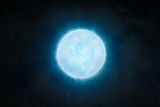
Scientists from Germany and South Korea have turned to celestial observations in pursuit of dark matter. Visible matter, including everything from the cup in your hand to the house across the street, accounts for just 15 percent of matter in the universe. The remaining 85 percent is composed of dark matter, an elusive substance with a profound impact on the cosmos.Despite the existence of strong indirect evidence for dark matter, direct detection has eluded scientists for nearly a century.
To aid in the search, researchers have focused on analyzing the behavior of planets and stars, hoping to uncover signals that could shed light on the properties of dark matter. In a recent study published in the Journal of Cosmology and Astroparticle Physics, the team found no evidence of dark matter but ruled out certain combinations of possible properties.The researchers' approach was based on the understanding that dark matter particles, with their extremely weak electromagnetic interactions, might not interact strongly with visible matter.
Consequently, their particles could collide with celestial bodies like planets and stars without losing much energy, allowing them to be trapped by gravity over time. As more dark matter particles accumulate around these objects, the likelihood of interactions increases. Some of these interactions may lead to annihilation, transforming the particles into those found in the Standard Model.
By studying these interactions, scientists could potentially infer clues about the nature of dark matter.The study examined four celestial objects: Earth, the sun, Jupiter, and white dwarfs. For Earth and the sun, the focus was on neutrinos, lightweight neutral particles that rarely interact with other matter. These particles are abundant, passing through us constantly, and could potentially reveal insights into dark matter through observations of neutrinos generated by dark matter annihilation.
Additionally, the team studied heat released from Jupiter and white dwarfs, stellar remnants that form after a star exhausts its nuclear fuel. By comparing calculated heat emissions from dark matter annihilation to the actual heat emitted by these objects, researchers could rule out scenarios where dark matter would produce more heat than observed data suggests.While the study did not yield definitive evidence of dark matter, it did provide constraints on certain scenarios.
Earth emerged as a promising candidate for testing dark matter with a small electric charge, while white dwarfs appeared particularly useful for constraining the charge radius and anapole moment. These findings could complement experiments involving colliders. The researchers suggest that future research on sufficiently large and cold white dwarfs could further enhance the sensitivity to dark matter signals.
Rewritten by urgent.news; may contain errors — check the original.
Source: discovermagazine.com