Data center, ecco dall’interno quello di Microsoft a Settala
Indossati gilet catarifrangente, scarpe anti infortuni, occhiali e tappi per le orecchie, si entra nel regno dei dati. Là dove i calcoli si trasformano in servizi. E i cavi in...
Indoing protective suits, anti-injury shoes, glasses and earplugs, one enters the realm of data. Where calculations transform into services and cabling becomes artificial intelligence. Welcome to the heart of Microsoft's data center in Settala, about twenty kilometers from Milan. The heavy metal door, reinforced with blast doors, opens and past metal detectors, the caverns of our times are revealed.
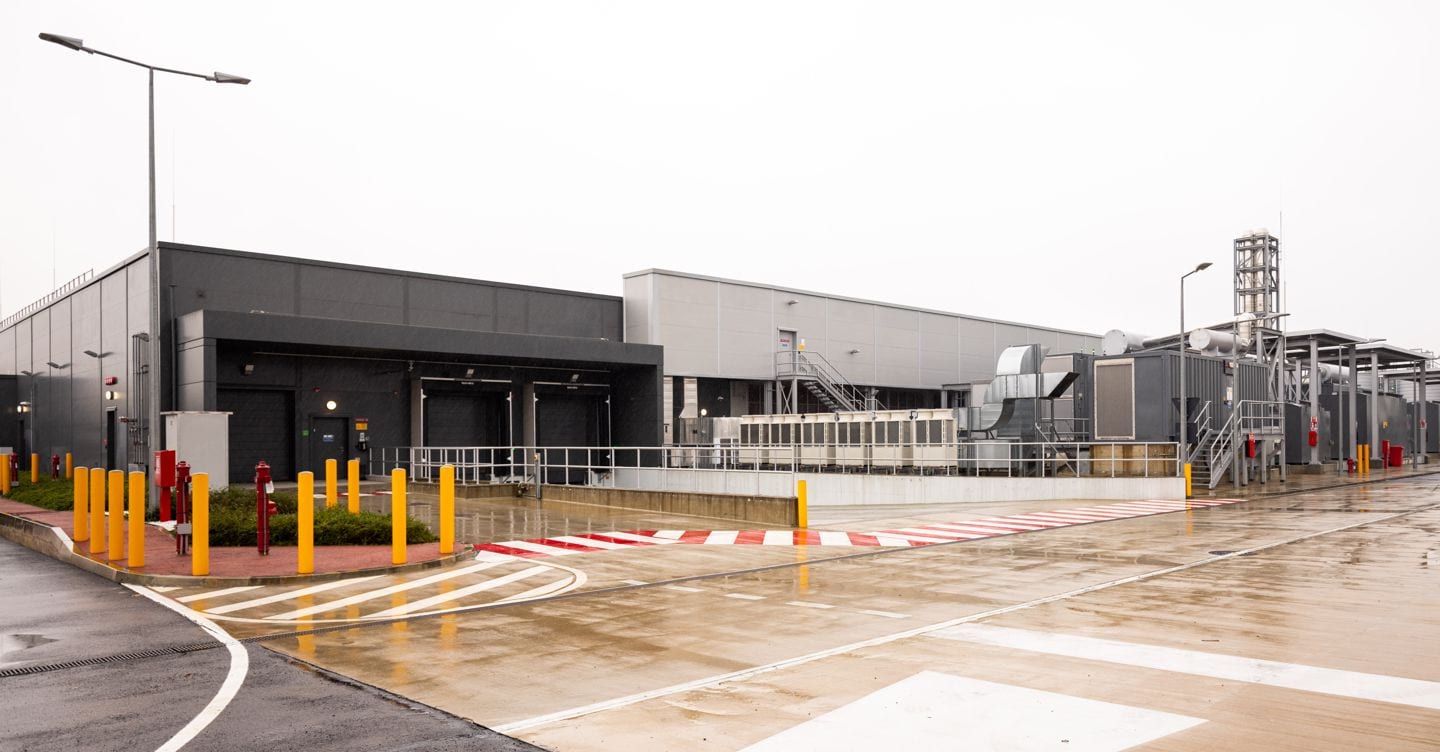
Almost everything is top-secret. Corridors and warehouses of metal racks filled with servers that create clouds, potentially holding the keys to all services that have become part of our daily routine, from public administration to medical visits, digital payments and video calls. Five thousand square meters, the data center is the control room of the Mil 01/02 campus, or the Settala data center with the two facilities built along the Paullese state barracks, in full Black Friday foliage.
Three computing infrastructures, all in Lombardy, for which Microsoft has announced investments of 4.3 billion. "We do not rule out others, not necessarily here", Vincenzo Esposito, CEO of Microsoft Italy, anticipates to IlSole24ore. Not in Lombardy, but "not in the South": the interest "currently" is still towards other areas of the northern Peninsula, "for a connectivity ecosystem and greater proximity to the rest of Europe".
So to other potential clients. An apparent contradiction in a world of "virtual clouds" and digital connections. The Mezzogiorno is also at the center of the government's strategy: on Tuesday, the "national guidelines for the location, construction and management of data centers in Italy" - as the title of the ten-page document states - were transmitted by the Undersecretary to the Presidency of the Council, Alessio Butti, to Mase and Mimit.
The first step towards classification, because "data centers - he says while visiting Settala - are not all the same". In total, there are about 200 already operating in Italy, in a wild west of local authority permits, overwhelmed by the requests of companies and not infrequently by the protests of communities. Like San Bovio, a frazione of Peschiera Borromeo, where Microsoft has been granted permission to build in the disused area of the former Postalmarket.
The third is in Bornasco, in the Pavia area, where authorization for the first building has arrived. Noise, land consumption, energy and water are the recurring objections for all data centers. In the Settala campus, 38,000 sqm, bypassing the black gate without a logo, before entering the individual facilities, the background remains the rumble of cars.
A succession of eight water tanks stands out, beside the first data center. Behind - among the high chimneys for emergency generator drainage - there are four larger ones. They serve to cool machines that cannot afford to ever shut down, when temperatures outside exceed 30 degrees. But the water used is "only first cold water, not drinkable, which we purify of impurities before using it, to avoid damaging the installations", the technicians explain.
A central point and sensitive point, compared to the attention given to environmental concerns in the goal of reaching at least parity with the energy renewable of that necessary for the operation of the data centers by 2030. At the moment, for the entire campus, completed in March 2025, water consumption is about 6,000 cubic meters, "equivalent to that of approximately 31 families, according to Istat data", the technicians calculate.
The energy consumed, 1 megawatt for the servers, plus 0.13 for everything else. Inside - "and better", they claim - of the Arpa parameters, the regional environmental agency agency: 1.2-1.5 megawatts. Like in hospitals, here the operation must be guaranteed at all times. For this, every server has at least two different electrical power lines (blue and green cables; lavender and celestial for fiber); for this, diesel tanks are ready to provide the generators with power in 12-15 seconds, while guaranteed by large batteries.
In the data room, when you reach the area destined for artificial intelligence, the "racks with servers", which so evoke the interception rooms, become more distant: "more advanced technology, less space and therefore less consumption", the technicians illustrate. According to a study by Boston Consulting and Bcg Platinion, "Microsoft, Amazon, Google and Meta will invest over 725 billion dollars by the end of 2026 and Europe could intercept about 17% of global growth by 2030".
A context in which Italy seems to start with at least one advantage over other European countries. Now what matters to businesses is also "clarity" - admits Esposito - and the predictability of legislation.
Rewritten by urgent.news; may contain errors — check the original.
Source: ilsole24ore.com