Cumbia vs. Vallenato: What Sets Colombia’s Iconic Musical Genres Apart
Cumbia and vallenato are two of Colombia’s most representative musical expressions. Although they share their roots in the Caribbean region, they have distinctive characteristics in terms of their origins, instruments, rhythms and ways of telling stories about everyday life. While cumbia emerged as a cultural expression closely linked to dancing and the coming together of […]
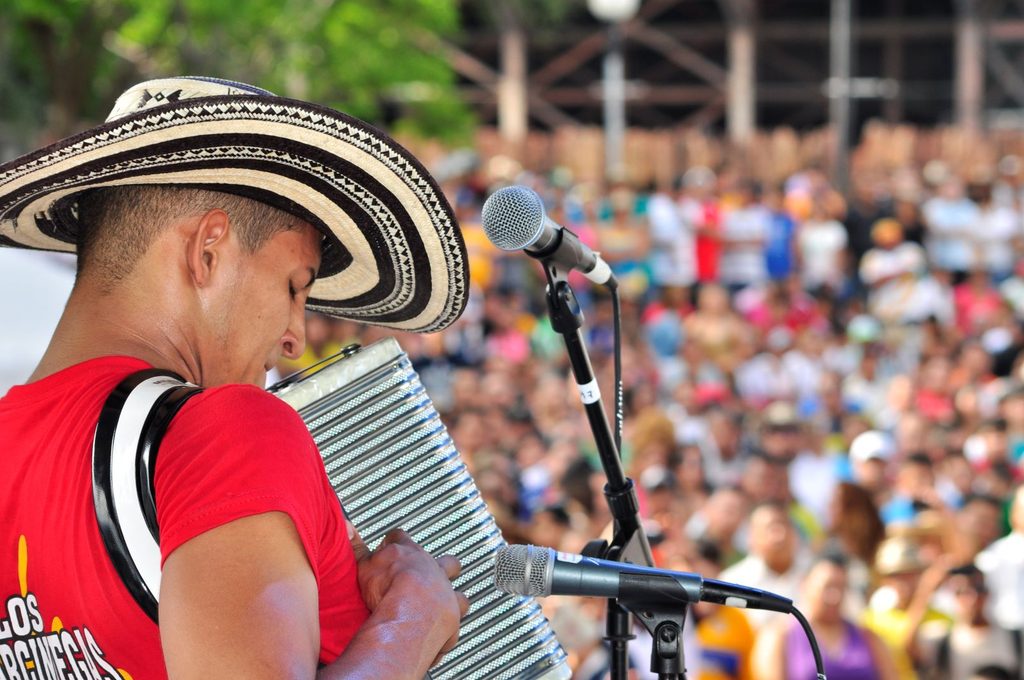
Cumbia and vallenato are two iconic musical genres from Colombia's Caribbean region, each with its own unique identity. While they share roots in the area, their origins, instruments, rhythms, and storytelling methods set them apart.
Cumbia originated in the coastal and river areas surrounding the Magdalena River, particularly in the departments of Magdalena, Atlantico, and Bolivar. Its musical history is a blend of Indigenous, African, and Spanish influences. Indigenous communities contributed instruments like gaitas and flutes, African heritage is portrayed through drums and percussion, and Spanish elements are reflected in the dance, clothing, and melodies.
Originally, cumbia was tied to community celebrations and courtship dances. Its communal performances allowed participants to engage in choreography, symbolizing interactions and courtship among couples.
In contrast, vallenato emerged in the areas that once comprised the Province of Padilla, now the departments of Cesar, La Guajira, and Magdalena. Its epicenter is Valledupar, the city synonymous with the genre. Unlike cumbia, vallenato was built around storytelling. Traveling folk musicians, or juglares, traveled from town to town, sharing news, anecdotes, and local events through their songs, thus becoming a popular means of communication.
Vallenato is often called the "sung journalism" of Colombia's Caribbean region, as its lyrics preserve regional stories and customs, incorporating Spanish narrative styles and European instrumentation elements.
Instrumentation also distinguishes the genres. Traditional cumbia relies on gaitas and drums. The gaita hembra (female gaita) carries the main melody, while the gaita macho (male gaita) compliments it with musical phrases. The percussion typically includes the tambor alegre (rhythmic drum), the tambor llamador (steady rhythm instrument), and the tambora (depth-enhancing instrument). Maracas add continuous rhythmic backing.
Rewritten by urgent.news; may contain errors — check the original.
Source: colombiaone.com