Colombia’s National Capitol Marks a Century of Political and Democratic History
The National Capitol is not only a masterpiece of neoclassical architecture in Bogota. It is the symbol of legislative power in Colombia, as it is the seat of the Congress of the Republic. This is why it is also known as the home of democracy in the country. Laws are discussed and enacted there. The […]
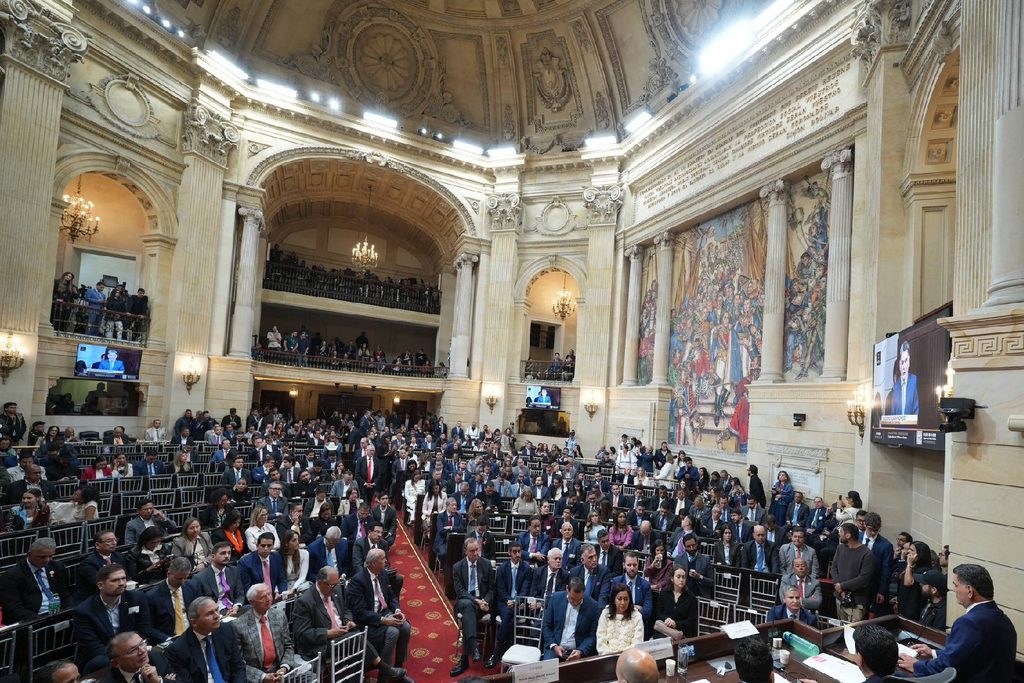
On November 25, the National Capitol in Bogota celebrated its 100th anniversary of being a symbol of Colombia's political and democratic history. As the seat of the Congress of the Republic, the neoclassical building houses the chambers where laws are debated and enacted, and where presidential inaugurations take place.
The Capitol has witnessed pivotal moments in Colombian history, hosting presidential ceremonies, debates that shaped the nation, and fundamental decisions for the country's institutional life. Despite its early days being marred by administrative slowness due to interruptions caused by civil wars, lack of funds, contract breaches, and technical problems, the building finally opened in 1926 after 78 years of construction.
Senate President Honorio Miguel Henriquez Pinedo, House of Representatives President Nicolas Barguil Cubillos, and Inspector General Gregorio Eljach Pacheco delivered speeches commemorating the centenary. Henriquez emphasized that institutions belong to Colombia and must remain at the service of all citizens, while also calling for the rejection of violence as a means to resolve political differences.
He lamented the loss of Senator Miguel Uribe Turbay, who was assassinated over a year ago, and urged authorities to bring his killers to justice.
Inspector General Eljach Pacheco highlighted the bipartisan support for the Capitol's construction, as five national constitutions were in force during its 78-year building process, and multiple generations of builders and architects worked on completing Thomas Reed's initial project amid heated controversies. He also stressed that the Capitol represents Colombia's historical emergence as a republic, united by diversity in cultures, ethnic groups, regions, and partisan tendencies.
Rewritten by urgent.news; may contain errors — check the original.
Source: colombiaone.com