Can the Global South turn strategic importance into development gains?
At the fourth Cape Town Conversation, policymakers and business leaders examined whether Africa and the wider Global South can turn strategic assets, from minerals and shipping routes to technology and young populations, into jobs, industrial capacity and greater influence.
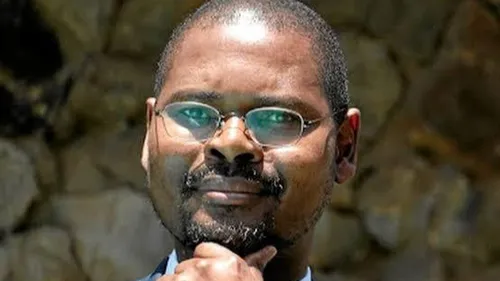
The Thabo Mbeki Foundation concluded its Cape Town Conversation, a two-day gathering of policymakers, researchers, business leaders, and civil-society participants, on November 24. The event, themed "Shaping Shared Futures in a Transforming World," focused on the Global South's strategic importance and its potential development gains. Former South African President Thabo Mbeki, the Foundation's patron, posed the question of how these discussions would translate into tangible benefits for the people of the Global South.
During the conference, discussions ranged from maritime routes and infrastructure to global governance, finance, BRICS, artificial intelligence, energy partnerships, and climate action. The central question was whether countries of the Global South could convert their strategic significance into greater influence over the decisions shaping their economies.
The consensus was that while resources such as geography, minerals, young populations, and expanding markets could attract partners, they did not automatically result in job creation, industries, or agency. Instead, these factors depended on infrastructure, finance, skills, capable institutions, and the ability to set priorities.
The conversation repeatedly highlighted the disparity between the global value placed on the Global South and the value retained by its people. Max Boqwana, CEO of the Thabo Mbeki Foundation, stressed the need for follow-through in translating ideas and plans into action. The event aimed to build partnerships and decisions that could be tested against results, emphasizing the importance of follow-through.
The changing geography of trade, particularly the increased importance of the Red Sea and the Strait of Hormuz due to disruptions, was noted by ORF President Samir Saran. He questioned whether Africa would remain on the periphery of global decision-making or play a role in shaping the rules and institutions that govern global order. The passage of vessels through the Cape of Good Hope did not create African manufacturing or determine ownership of cargo, highlighting the gap between strategic assets and public benefit.
Building transport links, ensuring predictable policies, financing viable projects, developing skills, and connecting national economies to regional markets were identified as crucial steps in bridging the gap between strategic importance and development gains. Ronak Gopaldas, Director of Signal Risk and Visiting Fellow at ORF and LSE, explained the shift from "just-in-time" to "just-in-case" supply chains, emphasizing the need to consider security, resilience, and cost when shaping trade and industrial policy.
DP World's William Sears highlighted the significant infrastructure investments in Africa, totaling over US$6 billion, but stressed the importance of predictable policies, sound fiscal frameworks, and long-term confidence for investors.
Mounia Boucetta, Senior Fellow at the Policy Center for the New South and Morocco's former Secretary of State for Foreign Affairs, pointed out that Africa's share of global merchandise trade is less than 3%, and infrastructure alone would not alter this position. Stronger agricultural and industrial capacity, skills, and resilience were essential for benefiting from shifting supply chains.
Mariana Rondon, Deputy Executive Director for Programmes at Plataforma CIPÓ, Brazil, emphasized Africa's role in the energy transition, noting that the continent holds approximately 30% of the world’s critical-mineral reserves but captures less than 1% of the value generated by manufacturing clean-energy technologies. African governments spent on average seven times more on debt servicing than on infrastructure between 2019 and 2023, underscoring the significant financing challenge in processing resources and manufacturing goods.
Rewritten by urgent.news; may contain errors — check the original.
Source: iol.co.za