AU's donor dependency stifling Africa's progress
The African Union’s dependence on external funding exposes the gap between Africa’s political ambitions and its financial capacity.
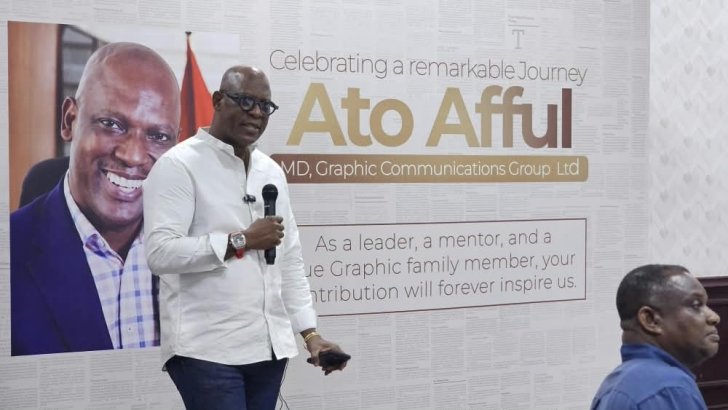
The African Union's dependence on foreign funding hinders the continent's progress toward true sovereignty. At a recent meeting in Accra, Ghana, donor and finance ministers from across Africa discussed the Union's budget. In 2027, member states are projected to fund nearly 99% of the AU's operating budget, but will only contribute 4% to its program budget and 12% to its peace and security budget.
Ghana's Foreign Minister, Samuel Okudzeto Ablakwa, pointed out that his country pays for the budget's costs, but expects others to fund the work. The Union's 2027 budget is approximately US$800.1 million, with most funds coming from international partners. This financial reliance exemplifies a deeper crisis that has constrained African development since independence.
South Africa's Minister of International Relations and Cooperation, Ronald Lamola, warned that without matching financial contributions to political ownership, aspirations for development and peace are at risk. This situation is worsened by illicit capital flight, colonial patterns of resource extraction, and the lack of industrial capacity in Africa.
In 2013-2015, about US$88.6 billion left Africa through such illicit means, which is roughly 3.7% of the continent's GDP. Kwame Nkrumah warned that political independence without economic sovereignty can make Africa vulnerable to neocolonialism. Post-independence policy failures and weak domestic productive capacities have deepened Africa's economic dependency.
Decades ago, African leaders agreed on a 0.2% levy on eligible imports to fund the Union, but only 18 of the 55 member states have implemented it. If fully implemented, this could raise US$1.2 billion annually, significantly strengthening the AU's finances. Ghana has already applied the levy and generated substantial revenue, enough to cover around US$500 million of the AU's annual costs.
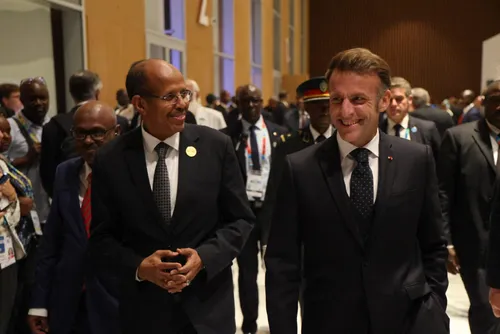
To address the funding issue, the AU's Chairperson, Mahmoud Ali Youssouf, proposed a new Pact for a More Effective and Results-Oriented African Union for 2027-2029. This would focus on increased contributions, stronger expenditure controls, and accountability. Ghana's proposed Accra Declaration contains six commitments to reform financing and strengthen the Union.
However, without a credible and accountable plan, African governments must urgently track unpaid contributions and establish mechanisms to ensure member states honor their financial commitments. Sovereignty in Africa must be more than just words; it must be built, organized, and financed.
Rewritten by urgent.news; may contain errors — check the original.
Source: iol.co.za