45°C inlets just killed the chiller. Most people haven't noticed yet
In my mind and in my car, we can't rewind, we've gone too far
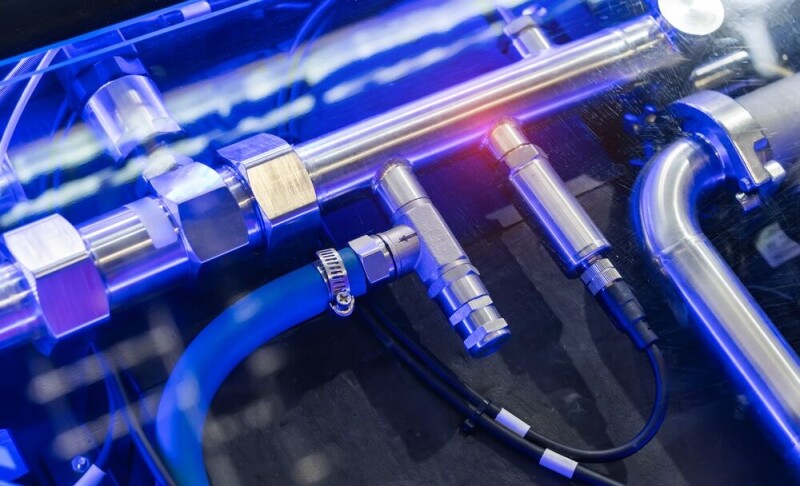
The SC25 conference in St. Louis resembled a plumbing convention held within a supercomputing hall. Attendees focused on pipes, pumps, manifolds, quick-disconnects, and other cooling-related components. The pre-show question was whether SC26 would resemble the previous event or if the larger hall in Chicago would dilute the effect. Cooling was more dominant in Chicago than in St. Louis.
In Chicago, numerous companies showcased their cooling solutions, with two primary trends emerging. Firstly, consolidation as big industrial suppliers acquired liquid cooling pioneers. Secondly, various companies entered the market, claiming an angle for their products. The real news, however, lies in a figure announced earlier this year by Nvidia: a liquid inlet temperature of 45°C (113°F) for their components.
This represents a significant change from the previous range of 30-35°C (86-95°F) for most liquid-cooled systems.
Higher inlet temperatures open the door for free cooling, which utilizes ambient temperatures to significantly reduce the need for chillers. Rooftop dry coolers can effectively cool fluid temperatures below 45°C (113°F), even in hot climates. Adiabatic assist, where water is trickled through a mesh to further lower the effective temperature, enhances this process.
The absence of chillers in the new cooling paradigm is noticeable. These large, expensive, and maintenance-intensive units, also known as rooftop refrigerators, are no longer necessary for new datacenter builds. Power and water savings from this shift are substantial, reducing cooling energy costs by 50-70 percent and annual water consumption by 80-95 percent in most climates.
However, transitioning to these higher inlet temperatures requires engineering efforts, such as sizing loops, selecting dry coolers, and ensuring existing facilities can accommodate the changes. Existing buildings may need adjustments due to pipes, pumps, and heat exchangers designed for lower temperatures. While the shift to 45°C (113°F) inlet temperatures presents challenges, it also presents opportunities for reduced operational costs and environmental impact.
Rewritten by urgent.news; may contain errors — check the original.
Source: theregister.com