While Exploring a 500-Year-Old Shipwreck Off the Coast of Sweden, Underwater Archaeologists Discovered Medieval Chain Mail That May Have Belonged to German Mercenaries
"Gribshunden" was the "floating castle" of King Hans of Denmark and Norway. It exploded and sank in 1495, but the Baltic Sea's low salinity has kept contents remarkably well preserved
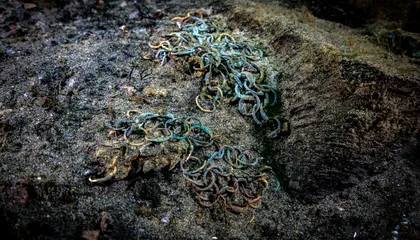
Archaeologists have unearthed high-quality chain mail armor from the 15th-century wreck of the royal warship Gribshunden, also known as Griffin, which served as a "floating castle" for King Hans of Denmark. This ship tragically sank in 1495 during a voyage to Sweden, where it exploded and became a submerged relic of the past. The armor, made from a copper alloy, was discovered in an area that may have once stored military equipment, possibly belonging to German mercenaries, aboard the Griffin.
These mercenaries, possibly known as Landsknechts, were aboard the ship at the time of its sinking and may have stored their armor in this area. The ship was first discovered in the Baltic Sea off the coast of Sweden in the 1970s, but it was formally identified as Griffin in 2013. The armor's exceptional preservation is attributed to the Baltic Sea's low salinity and the absence of shipworms, which typically damage wood.
While the armor could belong to elite knights, it's more likely that it represents older military equipment that was still in use. In addition to the chain mail, archaeologists also discovered a unique munitions chest, known as a "zeuglade" in German, which could potentially contain traces of gunpowder and offer insights into medieval military logistics and supply chains.
Rewritten by urgent.news; may contain errors — check the original.
Sources: livescience.com · smithsonianmag.com
This story
This is one outlet's version. Read the fullest account.