Upward Revision in GDP, “Core GDP”
Both up relative to advance by 0.9 ppts. Figure 1: GDP, 2nd release (bold black), GDP, advance release (gray), SPF median (brown), GDPNow of 11/25 (light blue square), Goldman Sachs of 11/25 (red +), all in bn.Ch.2017$ SAAR. GDPNow and GS level based on iterating growth rate on 2026Q3 2nd release. Source: BEA, Philadelphia Fed, […]
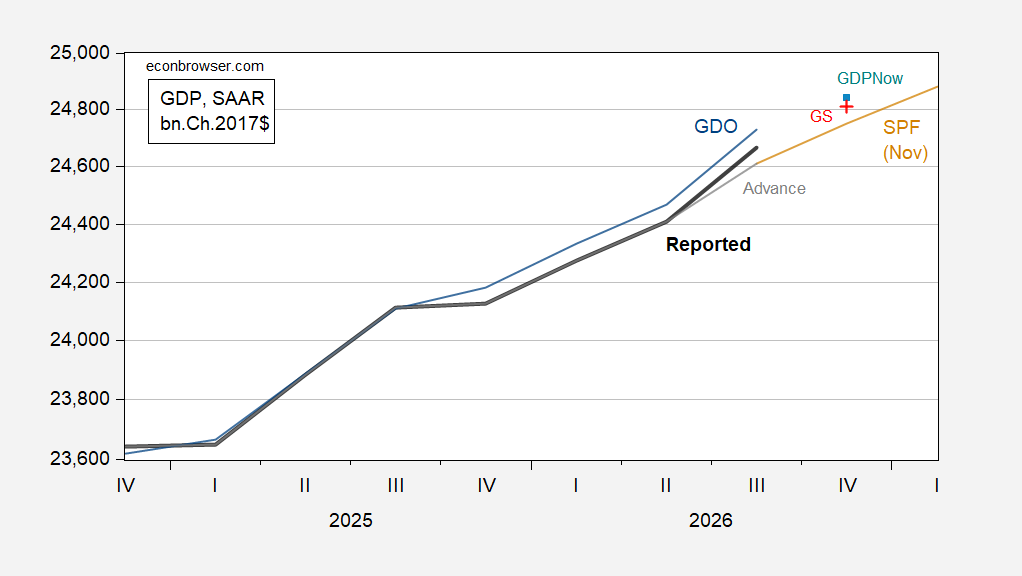
The Bureau of Economic Analysis (BEA) has revised its initial estimate of U.S. Gross Domestic Product (GDP) upward by 0.9 percentage points, bringing the final figure closer to what economists had anticipated. This adjustment marks the second release of GDP data for the second quarter of 2023.
The upward revision indicates that the momentum in aggregate demand remains robust, as private sales to private domestic purchasers have also been revised upward. However, caution is warranted as the revised growth rates for both GDP and "core" GDP (which excludes the impact of used vehicles) have slowed down compared to their initial estimates.
According to the latest data, GDP is now estimated to have grown at a rate of 2.9% annually, down from the initial projection of 4.3%. Similarly, core GDP is now expected to expand by 2.9% annually, a slowdown from the previously forecasted 5.8%. These revised growth rates were calculated by BEA using the growth rate observed in the second quarter as a basis for iterating projections through to the third quarter of 2023.
The BEA's GDPNow model, which utilizes real-time data and iterative growth rate analysis, continues to support a positive outlook for the economy. As of November 25, this model predicted an annualized GDP growth rate of 2.9%, aligning closely with the revised figure.
In summary, while the upward revision in GDP provides a more accurate picture of the economy's performance, it also highlights the need for greater vigilance in monitoring economic indicators that could potentially impact future growth rates.
Rewritten by urgent.news; may contain errors — check the original.
Source: econbrowser.com