Trump’s Nvidia intervention is the reverse of how Bush handled Enron’s Ken Lay
When Kenneth "Kenny Boy" Lay got in trouble at Enron, his calls to the White House went unanswered. Nvidia is playing out differently.
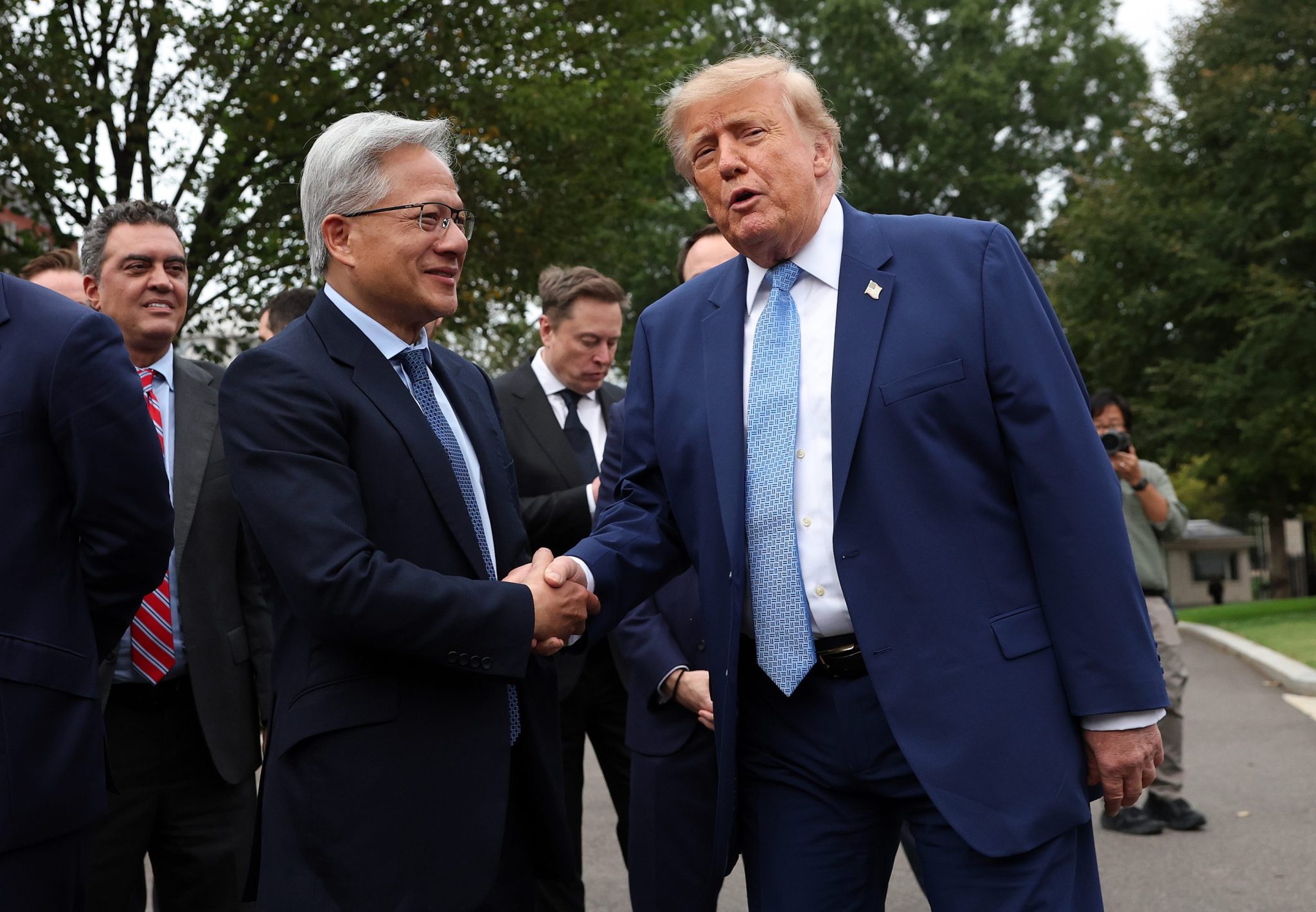
Once upon a time, a hugely valuable company at the forefront of an industry vital to the entire economy faced allegations of significant financial irregularities. This was Enron in 2001, and President George W. Bush allowed the justice system to handle the case. In stark contrast, President Donald Trump reversed the approach with Nvidia: the chipmaker reinstated Jensen Huang as CEO just 11 days after his resignation due to reports of extramarital affairs, including one with Alice Huang, a Chinese national suspected of espionage and not related to Huang.
"I convinced them," Trump stated in a CNBC phone interview. Huang has denied compromising national security, and no one has been charged with a crime. While Enron and Nvidia scandals differ, some commentators draw connections; the details are scandalous, but not on the scale of Enron's accounting fraud. Nonetheless, with concerns that an AI bubble could burst and trigger a financial crisis, the Bush-era case of Kenneth "Kenny Boy" Lay proves instructive.
Lay, a prominent figure in Houston's energy industry and a close associate of the Bush family, received over $550,000 in contributions from Enron and its employees during Bush's political career, more than any other single source. Bush frequently associated with Lay, attending Enron events and even having Lay throw out the first pitch at Houston's Enron Field.
Similarly, Enron and Nvidia share a mirror at the end of 2001, when the graphics-chip maker Nvidia replaced Enron in the S&P 500, reflecting the shift in Washington's stance on big companies from targets to partners. Huang's relationship with Trump has evolved, with Huang investing two years to build a close connection while Nvidia lobbied for more lenient restrictions on advanced chip sales to China.
In April 2025, Huang attended a $1 million-a-head dinner at Mar-a-Lago, after which the administration temporarily halted restrictions on Nvidia's H20 chips before reimposing them days later. Later in December, Trump allowed Nvidia to sell its more powerful H200 chips to approved Chinese customers. Critics argue that the donations made to Trump's inaugural fund and White House ballroom were a quid pro quo, though there is no definitive evidence of such a direct exchange.
Nvidia's stock surged by about 31.5% on Monday, marking its best day since 2003, and adding $952 billion in market value. The company's prominence is immense, ranking No. 16 on the 2026 Fortune 500 and becoming the first company to surpass $4 trillion in market value. Trump's personal stake in Nvidia has also grown, with estimates suggesting the value of his investments in the company increased between $1.3 million and $14.8 million due to Monday's stock rally.
Beyond Trump's portfolio, Nvidia and Huang are often dubbed "the central bank of AI," a label that carries a significant risk. When an entity is labeled as such, it can become a prime candidate for a significant downfall, as seen with Long-Term Capital Management and FTX. Comparisons to other fallen tech giants, such as Cisco and Lucent, further reinforce the risks associated with Nvidia's central position in the AI industry.
Rewritten by urgent.news; may contain errors — check the original.
Source: fortune.com