The Parallels Between Nvidia and Enron Are Starting to Get Downright Bizarre
Okay, that's genuinely strange. The post The Parallels Between Nvidia and Enron Are Starting to Get Downright Bizarre appeared first on Futurism .
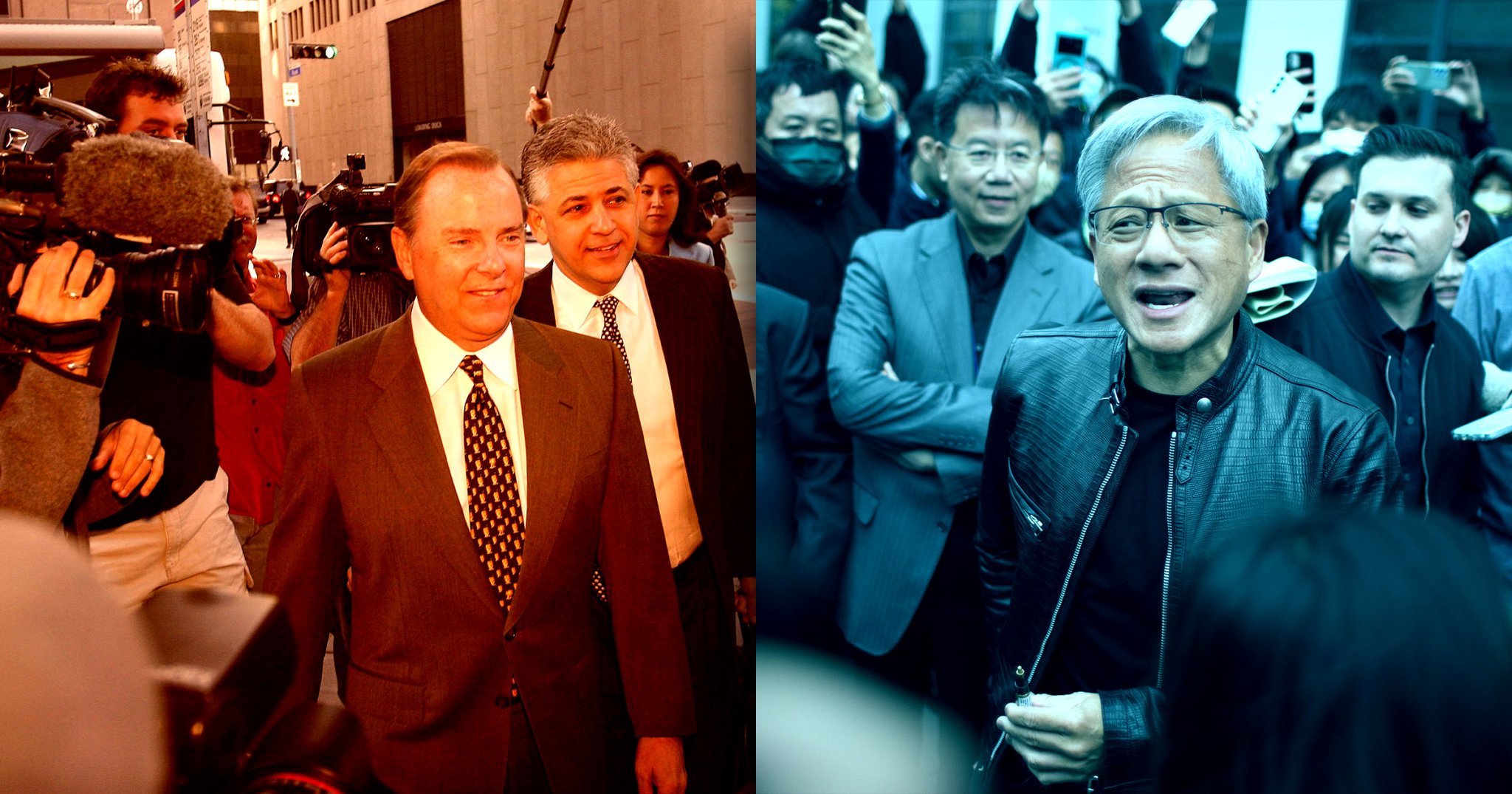
Just a year ago, Nvidia vehemently denied allegations that it was fueling the AI bubble through shady financing arrangements, declaring in an investor memo that it was "unlike Enron." The Houston energy giant imploded in 2001 after it was exposed for one of the most infamous accounting frauds in history. Today, however, Nvidia is increasingly mirroring Enron in peculiar ways that could come to seem prophetic if the company were to collapse spectacularly.
One striking similarity is that Nvidia succeeded Enron in the S&P 500 Index at the end of 2001, as Enron entered bankruptcy proceedings. This coincidental swap is odd enough, but it pales in comparison to another eerie parallel involving the two companies' CEOs. In 2001, Enron CEO Jeffrey Skilling abruptly resigned amidst mounting scrutiny over accounting practices and a plunging stock price.
In a surprising twist, Enron founder and original CEO Kenneth Lay swiftly returned to the role, promising Wall Street that everything would be fine. Hundreds of Enron employees cheered as Lay took the stage, declaring "absolutely no accounting issue" behind Skilling's sudden departure. However, the truth turned out to be quite the opposite, and Enron filed for bankruptcy just four months later.
Nvidia's CEO Jensen Huang recently experienced a similar hero's welcome upon his return to the company, despite being embroiled in one of the biggest corporate geopolitical scandals of recent years. Thousands of Nvidia employees crowded the lobbies and stairwells of the Santa Clara headquarters to shower Huang with applause and chants.
Prominent figures in the tech industry, including Sam Altman and Elon Musk, have been equally enthusiastic about Huang's return, hoping that his leadership will restore stability to the company. While Enron and Nvidia are not identical in their alleged wrongdoing, both companies have used special-purpose vehicles in their financing dealings.
Enron, of course, abused these entities to fabricate inflated profits, whereas Nvidia's situation involves concerns over illegal sales to Chinese firms potentially covering up revenue. Nevertheless, Nvidia's heavy involvement in the AI boom—and if not the global economy—feels increasingly precarious, making the return of a scandal-plagued founder and CEO feel like a ticking time bomb.
While Nvidia may not be Enron, the rising parallels between the two companies' management strategies and reactions to scrutiny suggest that Nvidia's future remains shrouded in uncertainty.
Rewritten by urgent.news; may contain errors — check the original.
Source: futurism.com