Species down to the last 50 animals can recover, but rarely without help
In 1974, the Mauritius kestrel was down to four birds in the wild. In 1979, Norman Myers, a prominent environmentalist, argued that the money might be better spent protecting birds with better prospects. Nevertheless, conservationists pursued captive breeding, predator control, and releases of the Mauritius kestrel (Falco punctatus). Its numbers eventually recovered into the hundreds, […]
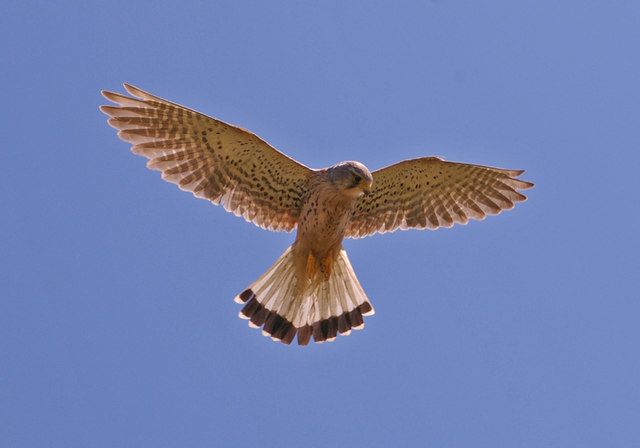
In 1974, the Mauritius kestrel teetered on the brink of extinction with only four birds remaining in the wild. Despite Norman Myers' skepticism about prioritizing conservation efforts for species with better prospects, conservationists stepped in with captive breeding, predator control, and reintroductions. These efforts gradually increased the population, which grew into the hundreds before subsequently declining again.
This scenario is not unique, as it represents one of 141 species studied by researchers led by Donal Smith of Monash University in Australia. The scientists focused on birds and mammals whose wild populations had dwindled to less than 50 individuals since 1950, and for which sufficient time had elapsed to evaluate the results.
Of the 51 species that received direct conservation aid, 31 (61%) made a remarkable recovery, surpassing 100 individuals. Unfortunately, six of these species succumbed to extinction. Meanwhile, among the 90 species that received no direct intervention, only two (2%) managed to reach a population of 100, while 33 (37%) went extinct.
The researchers found that recoveries were most prevalent when the underlying causes of decline, such as introduced predators or habitat loss, were tackled alongside increasing animal numbers through captive breeding or translocation. Notably, legal protection and other indirect measures did not exhibit a clear link to recovery.
The study's authors caution against attributing the entirety of recovery to conservation efforts, as some species may have received assistance due to easier-to-address issues. Nonetheless, achieving a population of 100 animals does not guarantee survival, as evidenced by many of the recovered species.
Rewritten by urgent.news; may contain errors — check the original.
Source: news.mongabay.com