Science must drive Ghana’s value-addition agenda – Dr Zanetor Agyeman-Rawlings
By Alex Adi, Antalya, Turkey The Minister for Environment, Science and Technology, Dr Zanetor Agyeman-Rawlings, has urged Ghana to anchor its industrialisation drive in science, research and local manufacturing to transform raw natural resources into competitive products for domestic and international markets. Speaking during an exhibition of locally developed Ghanaian cocoa and agro-processed…
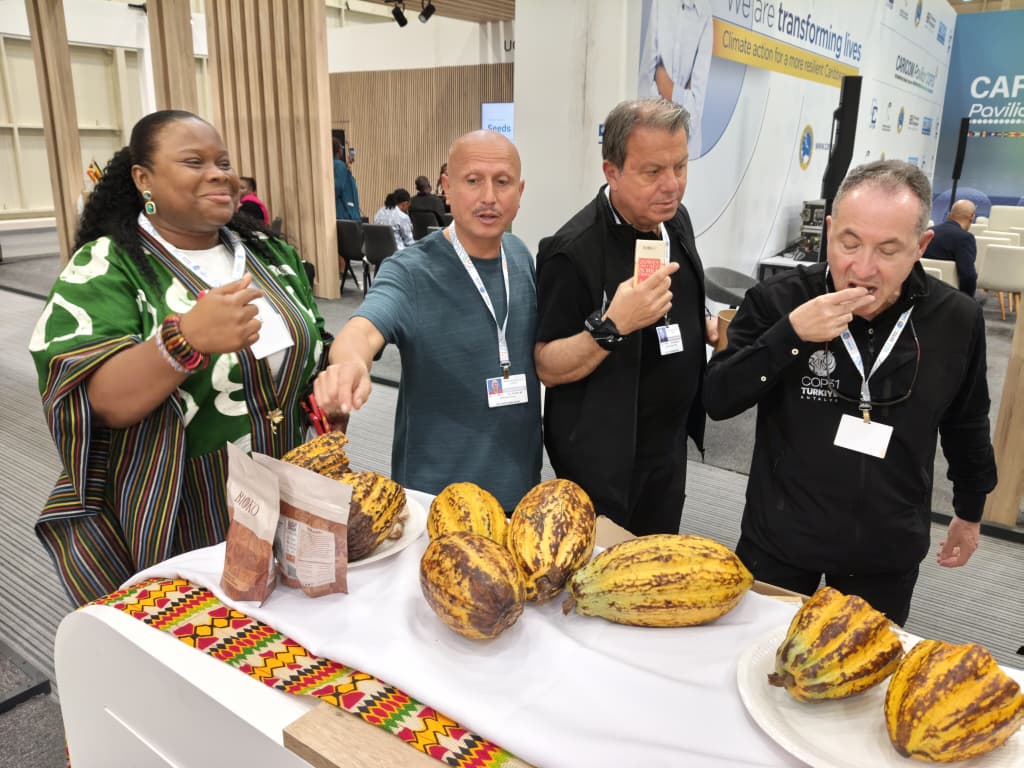
Dr Zanetor Agyeman-Rawlings, Ghana's Minister for Environment, Science and Technology, has advocated for the industrialisation sector in Ghana to be driven by science, research and local manufacturing. Speaking at an exhibition of locally developed cocoa and agro-processed products during the 31st United Nations Climate Change Conference (COP31) in Antalya, Turkey, she stressed that Ghana's involvement in international climate summits should extend beyond mere policy commitments.
She emphasised the necessity for the nation to illustrate how scientific innovation, local industries and value addition could spur sustainable economic growth. The exhibition showcased a variety of products developed by the Council for Scientific and Industrial Research (CSIR), notably its Food Research Institute, such as handmade chocolates and honey-chocolate-coated cashew nuts.
These products piqued the interest of numerous conference delegates, leading to numerous requests for contact information to explore potential trade and business collaborations.
Dr Agyeman-Rawlings highlighted that these products exemplified the capability of Ghanaian research institutions and local businesses to convert agricultural commodities into economically beneficial opportunities throughout the production and marketing value chain. She further emphasized that Ghana's push for more ambitious climate ambitions and funding was primarily aimed at yielding tangible benefits to citizens, enterprises and local communities, rather than simply securing financial assistance.
She pointed out that global climate decisions had direct ramifications for food systems, livelihoods and consumers. According to her, exhibiting Ghanaian-made products at COP31 was a strategic move to highlight the economic opportunities that investment in local processing and scientific research could generate.
Rewritten by urgent.news; may contain errors — check the original.
Source: gbcghanaonline.com