On this day in space! Nov. 25, 1970: NASA's 'wingless' M2-F3 'lifting body' aircraft makes its 1st powered flight ahead of supersonic tests
On Nov. 25, 1970, an experimental aircraft called the Northrop M2-F3 made its first powered flight. Here's why it mattered.
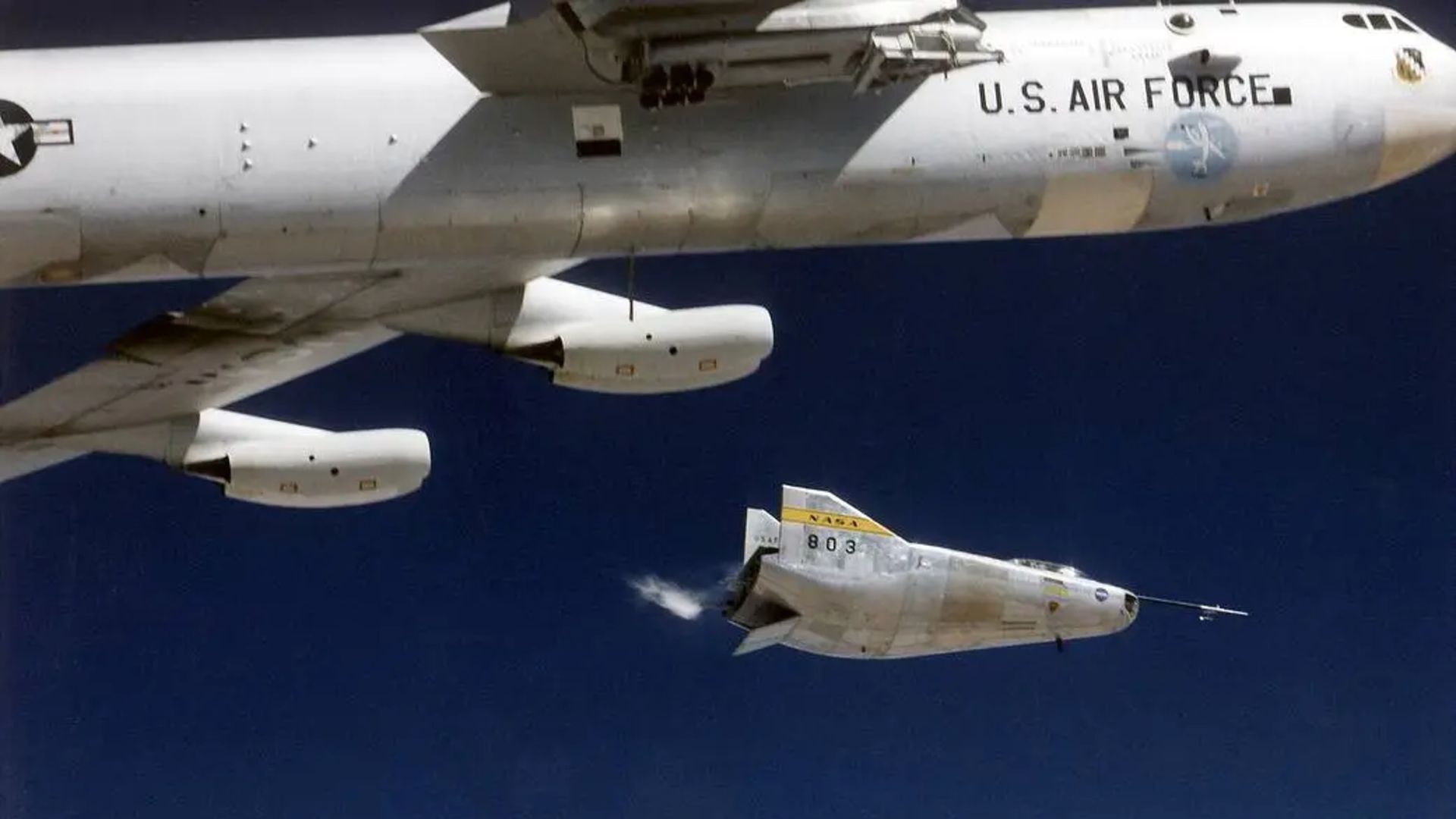
On November 25, 1970, NASA's experimental aircraft, the Northrop M2-F3, achieved its first powered flight, marking a significant milestone in aerospace testing. The M2-F3 was a unique "lifting body" design, intended to produce most of its lift through its fuselage rather than its wings, hence the nickname "wingless." Following three successful unpowered glide test flights, test pilot Bill Dana piloted the M2-F3 on its first powered flight, reaching an altitude of 45,000 feet and flying for just over 6 minutes.
While the aircraft did not break the sound barrier during this first powered flight, it would later exceed that milestone. The M2-F3 had a total of 27 flight missions over its three-year lifespan and achieved top speeds of 1.6 times the speed of sound at altitudes up to 71,500 feet. The M2-F3 was an evolution of its predecessor, the M2-F2, which crashed during an unpowered test flight, leading to modifications that improved its handling capabilities.
One of these modifications was the addition of a third vertical fin to enhance control characteristics. The M2-F3 was also equipped with reaction control thrusters to aid in its orientation and research the effectiveness of such systems for vehicle control. After its service, the M2-F3 was donated to the Smithsonian Institution and is currently on display at the National Air and Space Museum in Washington, D.C.
Rewritten by urgent.news; may contain errors — check the original.
Source: space.com