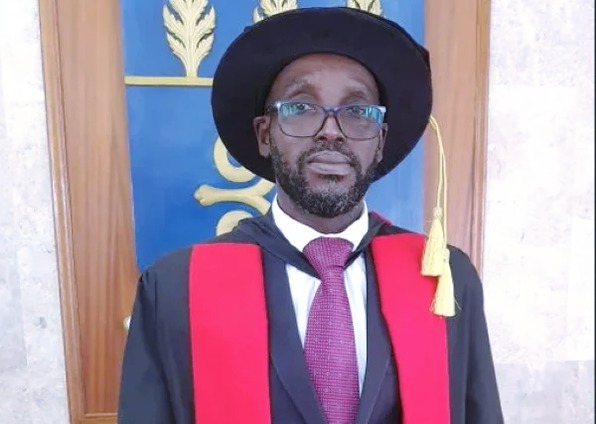
Kwasi Kwarteng criticises BECE ban, says academic acceleration should not be punished
Former Public Relations Officer of the Ministry of Education, Kwasi Kwarteng, has criticised the directive barring Junior High School (JHS) 1 and 2 students who register prematurely for the Basic Education Certificate Examination (BECE) from sitting the examination for two years. He has described the directive by Education Minister Haruna Iddrisu as unnecessarily punitive, questionable […]

Former Public Relations Officer Kwasi Kwarteng has spoken out against a recent decision that prevents Junior High School students from taking the Basic Education Certificate Examination (BECE) prematurely for two years. He has labeled the move as "unnecessarily punitive" and "misconceived." Kwarteng argues that the government's explanation for the ban, which aims to improve educational planning, is not convincing.
He suggests that the Ministry of Education could use current enrollment data or work with the West African Examinations Council (WAEC) to monitor students' progress instead.
Kwarteng questions the assumption that students in their third year of Junior High School (JHS 3) are more mature than those in earlier grades. He believes maturity should be evaluated based on academic readiness, individual circumstances, and parental guidance, not just the number of years spent in school. The MP insists that academic acceleration is an accepted educational practice and should not be considered an offense.
He points to systems in the United States, where gifted and talented students can skip grades if their academic abilities warrant it.
Kwarteng also mentions Ghana's educational history, pointing out that before the 1987 reforms, students could enroll in secondary school through the Common Entrance Examination without completing all middle-school years. He urges the government to create a structured policy for gifted and talented education, including clear eligibility criteria, individual assessments, and pathways for exceptional learners.
Instead of punishment, Kwarteng suggests the focus should be on developing a supportive framework that rewards excellence and provides opportunities for students of different abilities.
He insists that no child should be penalized for being ahead of their peers. Kwarteng emphasizes that academic acceleration is not an offense in any part of the world.
Rewritten by urgent.news; may contain errors — check the original.
Source: adomonline.com