Iraq's National Security Service reports two more oil smuggling operations
Iraq's domestic intelligence agency says it has uncovered more syndicates diverting the country's oil and crude derivatives amid a wider government campaign against theft and smuggling. The National Security Service on Wednesday said it discovered a tapped oil pipeline in Al Luhais, south of Baghdad, with three hoses connected to it by valves. “The hoses were being used to siphon oil and load it…
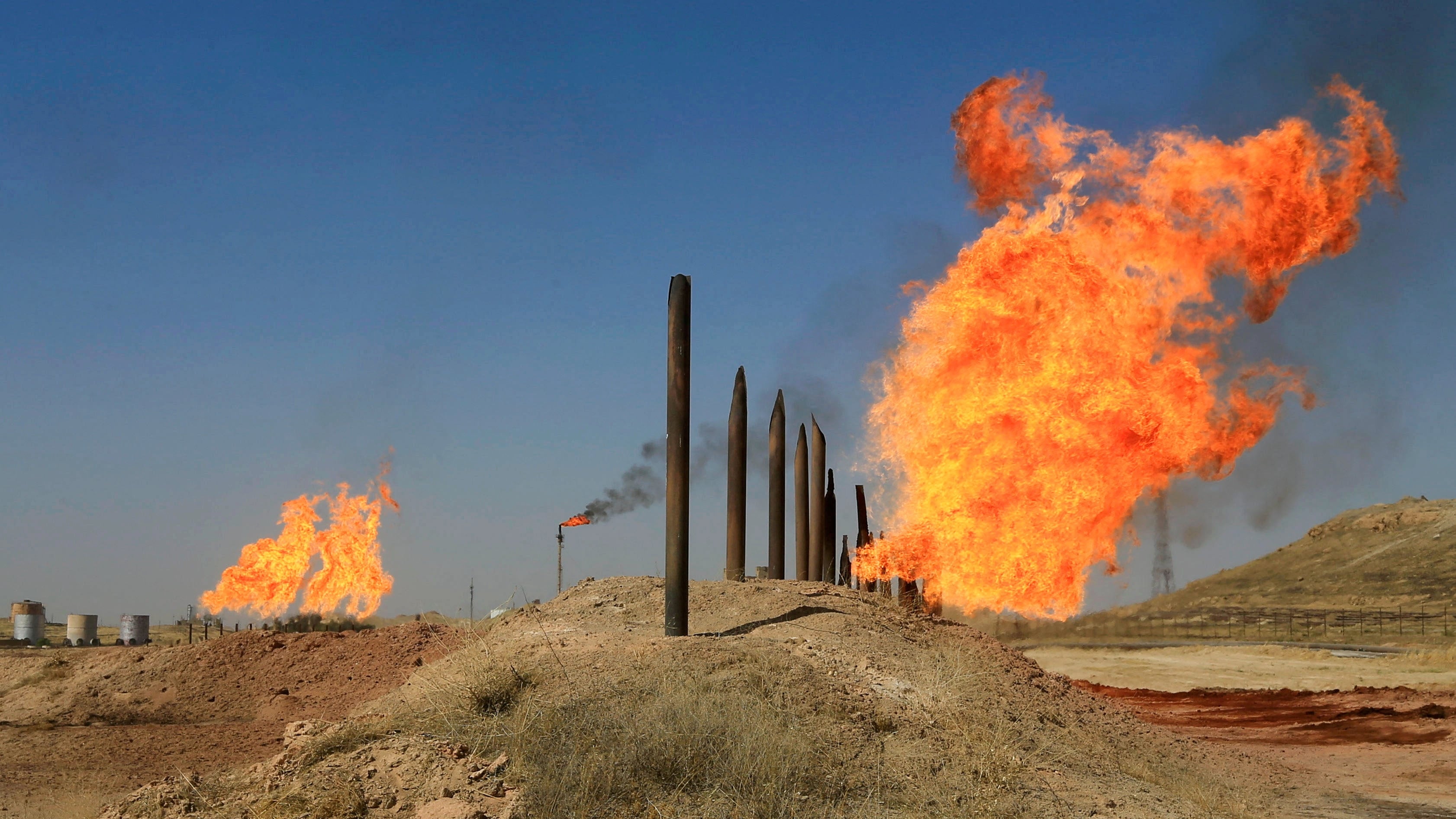
Iraq's National Security Service has uncovered two more instances of oil smuggling operations, as part of the government's ongoing campaign against theft and illicit activities. On Wednesday, the agency revealed a tapped oil pipeline in Al Luhais, situated south of Baghdad, which had three hoses connected via valves. These hoses were being utilized to siphon oil and load it onto tankers for smuggling purposes. Upon discovery, the pipeline was promptly shut down in coordination with technical authorities.
In the northern city of Kirkuk, authorities detained a vehicle prepared for smuggling oil derivatives. The vehicle had been fitted with openings on its sides to facilitate the unloading of the product, and "white oil" was discovered in its tank. The individual behind the operation was apprehended by the authorities. The exact timing of these operations remains undisclosed by the National Security Service.
The announcement of these two additional operations follows Prime Minister Ali Al Zaidi's recent declaration of a crackdown on oil theft and smuggling, which commenced in Jurf Al Sakhar, approximately 60 kilometers south of Baghdad. This campaign originated from an intelligence report that documented instances of oil theft in the region between 2021 and 2026.
The report revealed underground storage sites and steel-enclosed facilities suspected of storing oil. Investigations further uncovered evidence suggesting that smugglers had tampered with a pipeline in the area, concealed pumping equipment within hangars to evade aerial monitoring, and established a clandestine refinery. The region has been off-limits to federal institutions and residents since 2014, when the Kataib Hezbollah militia, backed by Iran, gained control following their battle against ISIS.
The government subsequently deployed federal troops to the area and dismissed nine senior security and oil officials, including the police chief and the director of the Oil Pipelines Company. Kataib Hezbollah has refuted these allegations.
The government's crackdown expanded to Najaf, where investigators identified a similar modus operandi: a tap on a critical pipeline, concealed pipes leading to private land, and suspected collusion with those responsible for safeguarding the network. The Supreme Judicial Council reported that an investigative judge had inspected a trespass on land owned by a Najaf Provincial Council member who chairs its Energy Committee, along with his brother, a member of parliament.
Initial findings suggested that oil had been illicitly diverted. Consequently, the court ordered the detention of five officers and three Energy Police personnel pending further investigation, issuing arrest warrants for the two brothers. One of them surrendered, while the other allegedly fled to Iran.
In the north, the campaign assumes a constitutional aspect after Prime Minister Ali Al Zaidi instructed federal authorities to assume control over border crossings managed by the semi-autonomous Kurdistan Region. He also directed the Oil Ministry to manage oilfields under Kurdish security oversight in Kirkuk, Nineveh, Diyala, and Salahuddin provinces.
This decision followed an investigation into alleged smuggling at the state-run North Oil Company. The Kurdistan Regional Government contested Baghdad's orders, deeming them unconstitutional, and insisted on collaborating with federal authorities to combat corruption. They called for an end to oil smuggling across Iraq.
Rewritten by urgent.news; may contain errors — check the original.
Source: thenationalnews.com