Going into ube farming: A tough business
One possible way of beginning to make the Philippines one of the largest exporters of ube (purple yam) in the world (in the same way that in record time Vietnam displaced Colombia as the second largest coffee exporter in the world after Brazil) is to mobilize medium-sized farms — e.g., five to 20 hectares — in “rurban” areas surrounding key cities like Manila, Cebu, Iloilo, Baguio, and others, to…
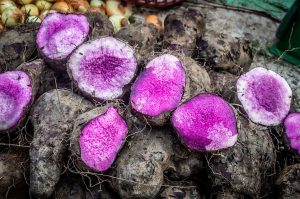
In an effort to position the Philippines as a potential top exporter of ube (purple yam), experts suggest focusing on medium-sized farms - ranging from five to twenty hectares - in "rurban" areas surrounding major cities like Manila, Cebu, Iloilo, and Baguio. However, this isn't a simple endeavor. While ube production has surged by 17% in the first half of 2026, reaching 5,660 tons, Agriculture Secretary Francis Tiu Laurel Jr. notes that demand is outpacing production capacity.
Prices for ube have more than doubled in recent years, with farmers now earning between P100 to P150 ($1.59 to $2.38) per kilogram. This trend is expected to continue as demand for ube, used in various food and drink products, is anticipated to grow significantly in countries like China, India, Indonesia, and the Philippines, which are all on their way to becoming high-income economies within the next two decades.
The United States is currently the largest consumer market for ube, with its presence on American menus tripling between 2021 and 2025. The Philippine government recognizes ube as a strategic agricultural opportunity and aims to capitalize on this trend. However, the main challenge lies in ensuring a long-term supply of ube. Encouraging small and subsistence farmers to grow ube may not be the best approach, as while it's technically easy, it can be labor-intensive and requires careful management.
Ube plants are like vigorous vines, but converting them into a profitable, high-yielding crop demands patience, physical effort, and effective supply management. Although ube can grow without high-tech machinery or greenhouse controls in suitable tropical climates, its long growth cycle of eight to eleven months means that small farmers may struggle to generate immediate income.
Rewritten by urgent.news; may contain errors — check the original.
Source: bworldonline.com