Die US-Börse setzt ihre Achterbahnfahrt fort – und weder Donald Trump noch Jensen Huang können etwas daran ändern
Die Wall Street wird auch am Mittwoch von grosser Unsicherheit geprägt, ob gerade die KI-Blase platzt. Die Reaktion auf die Wiedereinsetzung von Nvidia-Chef Huang verpufft. Zum Glück erwartet die Börsianer jetzt eine Verschnaufpause.
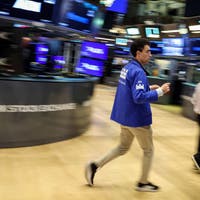
The US stock market continued its rollercoaster ride on Wednesday, with no respite in the extreme mood swings affecting Wall Street. The Nasdaq technology index opened at a significant loss, briefly dipping 5 percent below the previous day's closing price before recovering most of its losses by the afternoon. Individual tech stocks experienced more pronounced movements, with Nvidia losing 9 percent of its market value in midday trading and closing 4 percent lower.
Other heavyweights like Amazon and Alphabet also lost ground. The leading AI company Anthropic saw its stock briefly trade at $74, below its IPO price of $83, before recovering.
The cause of this volatility remains unclear, but investors are clearly concerned about Nvidia, the dominant chip developer, who often seems to bear the weight of the entire AI sector. It is evident that the "Trump Put" and "Jensen Put" have reached their limits – neither President Trump's interventions nor Nvidia CEO Jensen Huang's return can quickly restore prices.
Nvidia's return of the long-time CEO has been blemished by governance issues, ongoing investigations in Washington, and suspicion from the China-critical Congress, which has only increased with Huang's recent movements. The impact on Nvidia's sales in Asia remains uncertain.
Investors remain skeptical about the profitability of AI companies, and bond markets remain cautious about riskier technology firms. The yield gap between U.S. government bonds and technology company debt, such as Oracle and SpaceX, has widened in recent days. Former Federal Reserve member Robin Brooks blames the Federal Reserve for the falling market prices, as the committee has been warning about potential rate hikes, despite a recent drop in oil prices.
This leads to higher real interest rates, a stronger dollar, and declining stock prices. Brooks hopes the Fed representatives will tone down their rhetoric and signal a less restrictive interest rate policy before the regular silence period before the December 9th Federal Open Market Committee meeting, as a failure to do so could lead to a "meltdown" that would require an emergency rate pause from the Fed.
However, not all economists agree with this view. On Wednesday, it was reported that inflation, measured by the Fed's closely watched Personal Consumption Expenditures (PCE) data series, remained at 3.8 percent in October, in line with market expectations but still well above the Fed's 2 percent target. Some Fed members remain concerned that high energy prices could spread to other industries, triggering a broad-based inflation wave, or that market inflation expectations have diverged from the Fed's 2-percent target.
However, there is no concrete evidence yet. All the same, Fed representatives fear they would be accused of the same thing again, as the central bank has severely underestimated the 2021-2023 inflation wave. The U.S. holiday calendar may provide some relief, with Thanksgiving on Thursday, resulting in a closed market, and a shortened trading day on Friday.
However, there is no guarantee that the markets will emerge from the post-Thanksgiving gloom brighter.
Rewritten by urgent.news; may contain errors — check the original.
Source: nzz.ch