Colosio, a Sonora y a la Presidencia
Termina la especulación sobre su participación en las elecciones intermedias y se incorpora un nuevo elemento a la disputa por el poder en Sonora, actualmente gobernada por Alfonso Durazo Montaño.
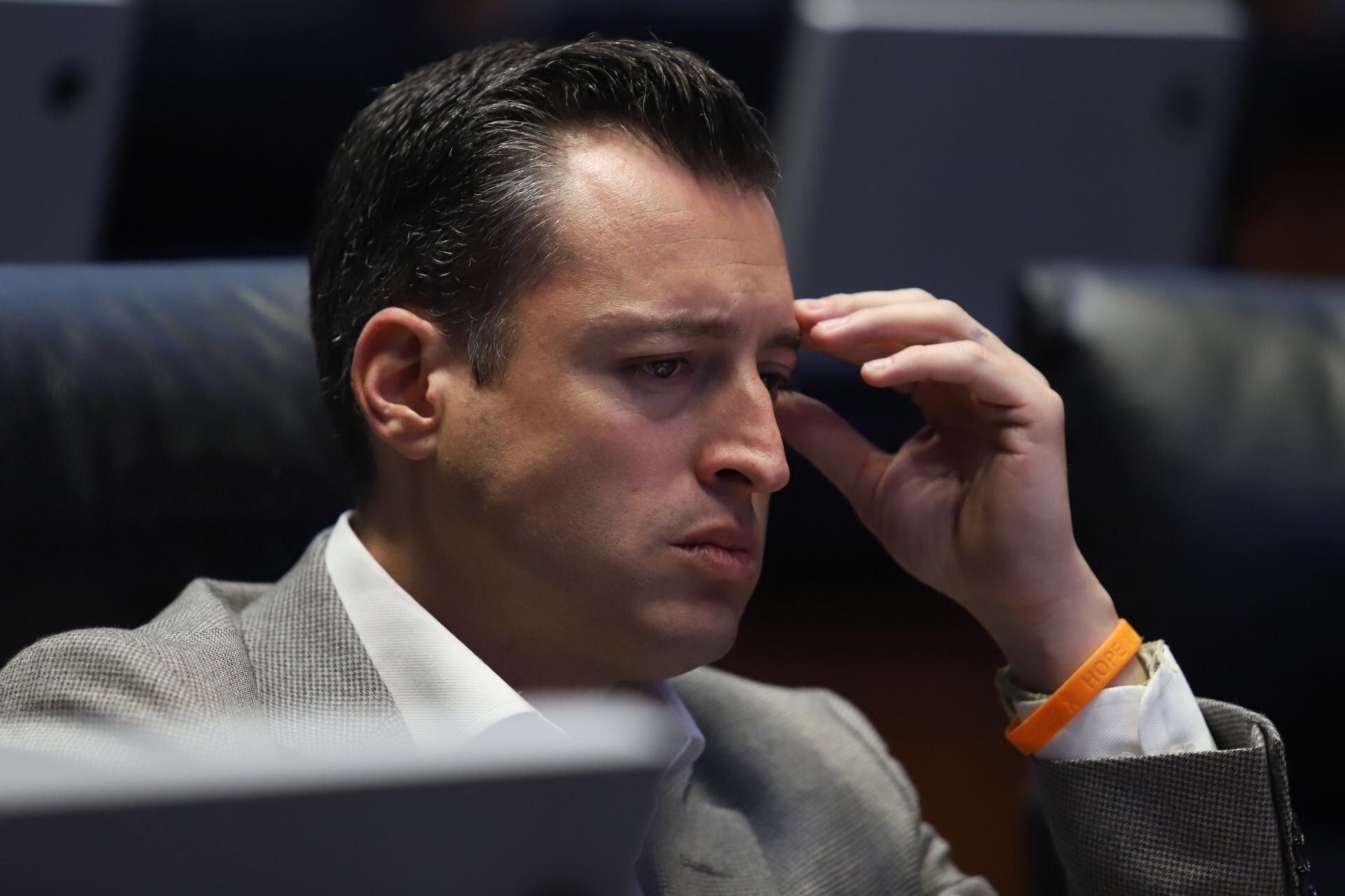
After weeks of deliberation, Luis Donaldo Colosio Riojas, the youngest son of the former PRI presidential candidate, made a decision that will mark his political career. He aims to become Governor of Sonora under the banner of the Ciudadano movement. This choice will inevitably have repercussions on his potential involvement in the presidential succession in 2030.
The senator has decided to play his political cards in the land of his family origins, rather than Nuevo León, where he developed much of his political career and governed the capital. This ends speculation about his participation in intermediate elections and brings a new element to the contest for power in Sonora, currently governed by Alfonso Durazo Montaño.
The decision carries risks for the future political career of Luis Donaldo Colosio Murrieta's son, as the election results of June 2027 will be part of his application for the presidential succession. A defeat could decrease his political capital, although the circumstances must be weighed; the percentage of votes obtained and the growth that Ciudadano achieves in Sonoran territory.
A victory, on the other hand, would openly open the possibility of running for the Presidency of the Republic. Contrary to what some Sonoran politicians and regional analysts claimed, Colosio Riojas decided to participate in a contest that, until a few weeks ago, was primarily perceived as being between the senator Lorenia Valles Sampedro of Morena and the mayor of Hermosillo, Antonio Astiazarán Gutiérrez, as potential leaders of an alliance between PAN and PRI.
It should be noted that, unlike many politicians in Sonora and regional analysts, Colosio Riojas decided to take part in a contest that appeared fundamentally between Lorenia Valles of Morena and Antonio Astiazarán Gutiérrez of Hermosillo, as possible leaders of an alliance between PAN and PRI. The measurement taken in November by PulsoSonora placed the preferences for Lorenia Valles at 37.3 percent; Antonio Astiazarán at 36.8 percent, and Colosio Riojas at 12.5 percent, while 13.5 percent did not express a definite preference.
These figures correspond to a survey about characters without considering their parties and represent a snapshot before the formalization of candidacies, not an electoral prognosis. However, this electoral equation must be incorporated with two factors of a different nature, but whose relevance cannot be overlooked: Governor Alfonso Durazo and the presence of organized crime in various regions of the entity.
Durazo, due to his roots in Morena and his status as state governor, will be a key figure in the development of the political process and will not hesitate, one can imagine, in having a very active political presence, despite the explicit prohibition of electoral law. As for organized criminal organizations, federal and state authorities will have to establish extraordinary mechanisms to ensure that the electoral contest proceeds without threats, intimidation, or pressure on candidates, their campaign teams, and, fundamentally, on the voters.
The border location of Sonora and the strategic importance of its commercial routes make security a priority issue that cannot be relegated to the electoral agenda. For Ciudadano, Colosio Riojas' participation represents an opportunity to expand their territorial presence beyond Nuevo León and Jalisco. The leadership headed by Jorge Álvarez Máynez will have to demonstrate that they have an electoral structure capable of covering the 72 Sonoran municipalities and that their political project does not depend exclusively on the popularity of certain personalities.
Colosio will also have to build his own political identity in a region where his father's surname still carries a significant historical and emotional weight, particularly in Magdalena de Kino. His family legacy is a symbol of public recognition, but it does not replace knowledge of regional problems and the presentation of concrete proposals to solve them.
Sonora faces challenges related to water availability, public security, border management, mining, and the economic exploitation of its geographic location. In these areas, the real discussion between candidates for the governorship will take place. The presidential succession in 2030 will begin to intensify after the intermediate elections, when parties evaluate their results and their prospects for territorial expansion.
By then, Luis Donaldo Colosio Riojas will have submitted his political project to the scrutiny of Sonorans. Another political frontier for Colosio Riojas towards 2030, and which, given the current circumstances and lacking prominent national figures, he should be placed alongside Omar García Harfuch on the presidential ballot.
Rewritten by urgent.news; may contain errors — check the original.
Source: elfinanciero.com.mx