Chipunternehmen: Was Nvidia, Huang und der Trump-Regierung jetzt vom US-Kongress droht
Warum Trumps Intervention zugunsten von Jensen Huang für die Demokraten ein Geschenk ist und welche Untersuchungen jetzt möglich sind. Ein Überblick.
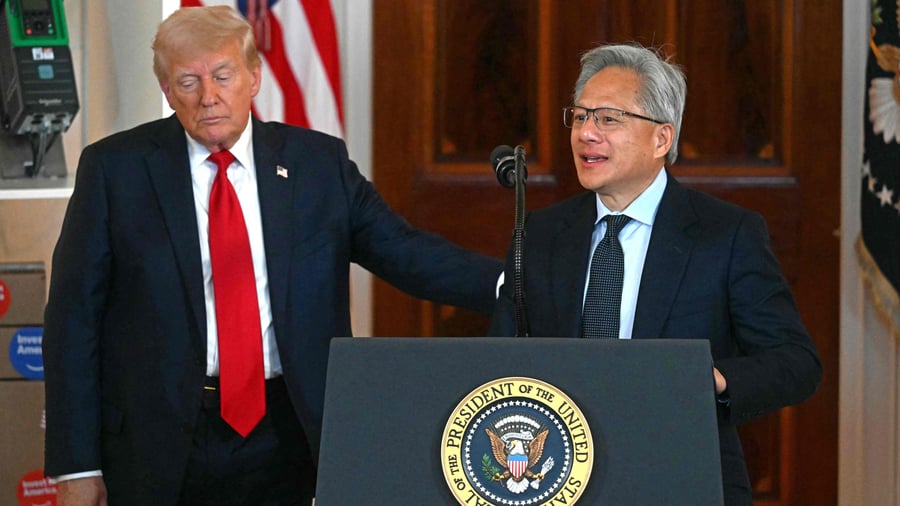
Nvidia CEO Jensen Huang faces a challenging week as he prepares to testify before congressional committees in Washington. Initially, he attends a closed-door hearing in three House committees on Tuesday, followed by a public appearance before the Senate Banking Committee on Thursday. On December 10th, US Trade Representative Howard Lutnick, who is suspected of blocking effective export controls for American chips, will meet with Huang.
Observers believe that the first days of December are just a small preview of what Huang and the Trump administration will face. According to Marc Short, former staff director of Vice President Mike Pence and chairman of the conservative think tank Advancing American Freedom, there will be a new round of hearings starting in January when the Democrats gain the majority in Congress.
With two years of little involvement during Trump's presidency, the Congress could now become a control body for the US government. Michael Waldman, president and CEO of the Brennan Center for Justice and NYU School of Law, questions whether Congress can resume its constitutional role. Possible investigation points include whether Trump financially aided Huang, and whether Howard Lutnick and the Trade Department engaged in corrupt power abuse.
The Democratic representative Madeleine Dean warns that the situation with Trump's interference in Nvidia's decisions could end poorly for Huang, calling it "grotesque corruption" and "a risk to national security." Democratic Chairman of the Oversight Committee Robert Garcia also calls for an investigation into Trump's direct involvement in Nvidia's decision-making, questioning the national security implications and corruption.
The Democrats are particularly concerned about Huang's personal enrichment linked to Trump's interest in Nvidia, ahead of the 2028 presidential campaign. The investigations may also shed light on whether Nvidia violated US export controls by selling chips to China and Alice Huang's potential role as a Chinese intelligence asset.
According to media reports, Huang's lover Alice Huang had been in contact with China's Ministry of State Security for over a year while in a relationship with Huang. Desmond Shum, a China insider and author of "Red Roulette," suggests that Huang might have acted as a intermediary between a Chinese company and Nvidia for the purchase of high-performance chips without explicit approval from the Chinese government.
Despite Trump's pressure, Huang was reinstated as Nvidia's CEO, and senior Trump officials assured him that he was not a national security risk. However, they did not provide any evidence to support this claim. Senator Chuck Schumer, a long-standing Democratic leader in the Senate, said that the conclusion, which a thorough review should usually take months, will be investigated by the committees.
The grave threat to national security in this Nvidia case comes from Huang possibly exporting sophisticated chips to China, violating the US export control law. Senator Ruben Gallego sees this incident as a message for other companies trading with China or the US's enemies, warning that they risk violating export controls if they maintain good relationships with Elon Musk and Donald Trump.
Rewritten by urgent.news; may contain errors — check the original.
Source: handelsblatt.com