CGT Manufacturing Success in Asia Requires Standardization and Flexibility
Asia's CGT therapy pipeline is expanding rapidly, but the region's fragmented regulatory, manufacturing, and supply-chain landscape creates a distinctive challenge: how to build processes that are standardized enough to be reproducible. The post CGT Manufacturing Success in Asia Requires Standardization and Flexibility appeared first on GEN - Genetic Engineering and Biotechnology News .
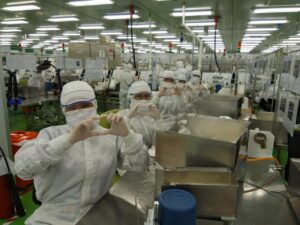
The growing recognition of cell and gene therapy (CGT) capabilities in Asia sometimes overshadows the fragmented manufacturing landscape. Japan's leadership in induced pluripotent stem cell (iPSC) technology recently led to the first regulatory approvals for iPSC therapies, while China dominates CAR T therapy trials and Korea excels in regenerative medicine using mesenchymal stem cells (MSCs).
However, what works in one Asian country cannot be easily replicated in another due to varying regulations, import requirements, reimbursement environments, manufacturing capabilities, and raw material availability.
Developers seeking to bring CGT therapies to multiple Asian countries face challenges related to manufacturing strategies. A manufacturing approach effective in one country may not transfer seamlessly to another due to differences in regulations, import requirements, reimbursement environments, manufacturing capabilities, and raw material availability. Balancing standardization and flexibility is crucial for successful CGT manufacturing across Asia.
While a standardized manufacturing process is desirable for cost efficiency and speed-to-milestones, certain elements require local adaptations to meet specific requirements. For example, raw material standards, qualification requirements, or local availability may necessitate reassessing certain media, reagents, or process inputs when transferring a process between markets like Japan and China.
India offers a contrasting example with lower-cost CGT manufacturing models. However, processes like CAR T manufacturing, involving over 13 individual steps and numerous media, reagents, and inputs, can pose challenges when adapting materials to different markets.
The key to addressing this manufacturing challenge lies in early-stage development decisions rather than attempting to retrofit an established process. Developers should identify which elements of the manufacturing process need to remain consistent and which can accommodate controlled variation. This modular approach allows for standardizing the core manufacturing workflow and critical equipment while permitting flexibility for local differences.
During the early stages of development, flexibility is often more important as developers experiment with different process conditions and materials. Manual operations can also provide necessary flexibility while the process is being established. As therapies progress toward clinical development, integration of manufacturing steps becomes increasingly important, reducing the number of interfaces and simplifying processes for better reproducibility.
Rewritten by urgent.news; may contain errors — check the original.
Source: genengnews.com