Behind rising tur and gram prices, a supply problem – and an inventory mystery
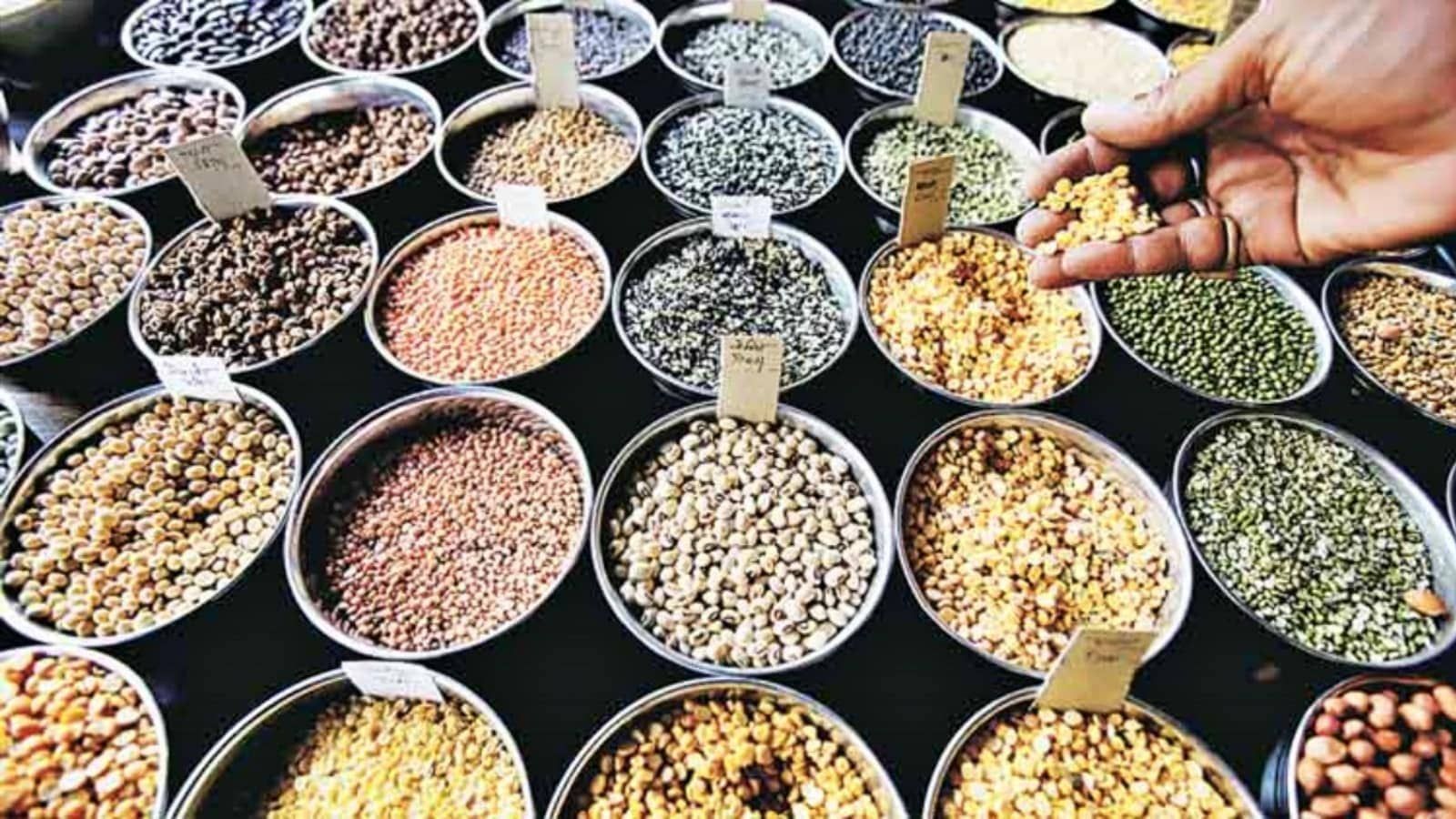
India's wholesale prices for tur and gram pulses surged in October 2026, after 15 months of deflation. Mandi prices indicated tur (arhar) prices rose 51 per cent to Rs 97/kg and gram (chana) prices increased 32 per cent to Rs 73/kg. Low base prices due to crops being below minimum support prices (MSP) last year contributed to the inflation.
Wholesale prices for gram dal and tur dal reached Rs 96/kg and Rs 137/kg, respectively. India's Mission for Aatmanirbharta in Pulses, launched in 2025, aims to increase production from 27.4 MMT to 35 MMT by 2030-31. However, tur faces a significant production shortfall due to drought affecting Maharashtra and Karnataka, which produce 54 per cent of tur. Expected 2026-27 production for tur is between 2.5-2.8 MMT, down from 3.59 MMT last year.
Gram production estimates were also larger than actual consumption. Official figures place 2025-26 production at 12.51 MMT, but market assessments suggest actual production may be lower. Government stocks are substantial, but prices are still rising, raising questions about the accuracy of estimates and actual stock availability. Unpredictable factors such as delayed sowing, uneven soil moisture, and high temperatures could impact the next harvest.
Tur's priority is securing supplies, as government stocks must be verified and released judiciously. Extending the duty-free import window would assure exporters of Indian demand. District-level crop assessments should establish losses in Maharashtra and Karnataka. For gram, establishing the actual quantity available is the first step. Verified NAFED and NCCF inventories, disclosure of private stocks, and a predictable release plan could ease market concerns.
Tur's new crop arrives within weeks, so stock limits now would limit traders' purchases and storage capacity. Gram's harvest is four months away, so markets must bridge the gap with existing stocks. The Mission should adjust stock management accordingly. Tur's new crop allows government to cap trader purchases at harvest, leaving less for leaner months. Gram's later harvest requires markets to manage existing stocks.
The Mission must fix crop economics. Government procurement offers a floor price, but prices are well above MSP, so stock-building is unlikely this year. Tur occupies land for eight to nine months, during which farmers could grow shorter, climate-resilient crops. Gram varieties resistant to pod borers and heat are also essential.
Finally, the government needs to move from reacting to prices to anticipating shortages. Data on acreage, weather, crop conditions, stocks, prices, and trade must be integrated and analyzed regularly. A pulses monitoring cell, pooling this data every fortnight, would allow timely decision-making.
Rewritten by urgent.news; may contain errors — check the original.
Source: indianexpress.com