Australian Dollar strengthens against Japanese Yen after hot CPI inflation release
The AUD/JPY cross gathers strength to near 105.90 during the early Asian trading hours on Wednesday. The Australian Dollar (AUD) attracts some buyers against the Japanese Yen (JPY) following the Australian Consumer Price Index (CPI) inflation report.

On Wednesday, the AUD/JPY exchange rate surged to approximately 105.90 during the early Asian trading hours. The Australian Dollar (AUD) gained some support against the Japanese Yen (JPY) following the release of the Australian Consumer Price Index (CPI) inflation report. Traders are eagerly anticipating Japan's Tokyo CPI data scheduled for the following Friday.
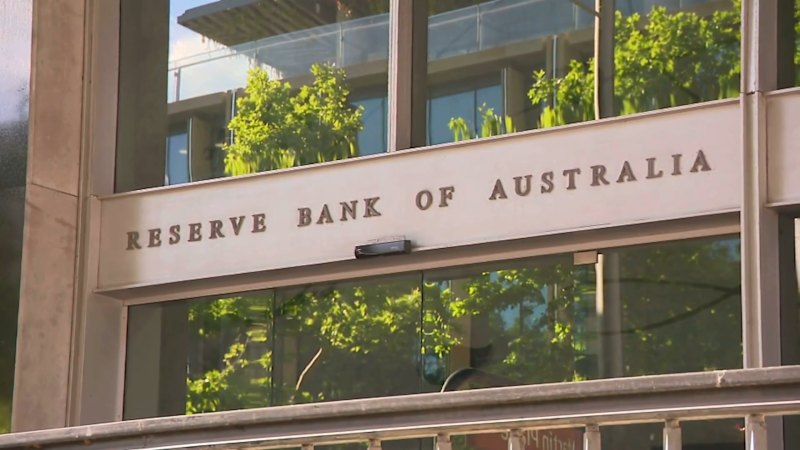
The Australian Bureau of Statistics (ABS) reported on Wednesday that Australia's CPI increased by 4.9% year-over-year (YoY) in October, up from 4.3% growth in September. This figure exceeded market expectations of 4.8%. On a monthly basis, the CPI rose by 0.5% in October, compared to a 0.8% increase the previous month. The hotter-than-expected inflation pressures, combined with growing signs of economic slowdown, pose challenges for the Reserve Bank of Australia (RBA).
The RBA is set to meet on December 7-8, with expectations of maintaining current interest rates. Uncertainty surrounding the Bank of Japan's (BoJ) next monetary policy decision weakens the JPY and benefits the AUD/JPY cross. While most economists believe the BoJ will raise interest rates for the third time this year at its December meeting and potentially again by end-March, the central bank remains focused on inflation and a weaker currency.
Rabobank analysts note that "concerns over the state of the real economy are now emerging in Australia, where the tightening cycle began earlier than elsewhere and rates have risen five times this year to a relatively high 4.85% after three cuts in early 2025." They highlight that "Australia's policy rate is now 50 basis points above its peak during the Covid-19 inflation wave."
The recent data corroborate these concerns. Rabobank points to "a weak October employment report released last week, which saw the loss of 45,300 jobs and a rise in Australia's unemployment rate from 4.7% to 4.9%." They stress that "this rate is now above the RBA's estimate of the non-accelerating inflation rate of unemployment (NAIRU) and close to triggering the Sahm Rule recession indicator."
Rabobank observes that "with the RBA having raised its policy rate by 50 basis points since September and still engaged in passive quantitative tightening, markets now reflect Ackman-like concerns that the central bank may have overdone it this time." The FXS Speechtracker's 8/10 score, above the 7.5/10 historic average, reflects a slightly more hawkish tone as Governor Ueda warns of the risk of inflation surpassing the price target while reaffirming plans to continue raising rates in a supportive environment.
The speech balances this hawkish stance with recognition of consumption fragility, acknowledging that rising crude prices and a weak Yen could negatively impact household real incomes and curb spending more than anticipated. Overall, the message advocates for a gradual BoJ normalization path, with the pace and timing of rate hikes contingent on how baseline projections and FX-driven inflation risks develop.
The AUD/JPY daily chart shows a bearish near-term bias as the price remains decisively below the 100-day simple moving average (SMA) and the Bollinger Bands' 20-day middle SMA. The currency pair is situated between the lower Bollinger band support at 104.45 and clustered overhead resistance at 108.35, with the 100-day SMA at 111.20 and the upper Bollinger band at 112.25, a tight supply zone that would need to be breached to shift the bias toward a more bullish tone.
Rewritten by urgent.news; may contain errors — check the original.
Source: fxstreet.com