Ancient discovery in Egypt raises hopes of finding lost Ptolemaic royal tomb
Dubai: A Greek archaeological mission has uncovered the foundations of a massive ancient stone structure in Alexandria's historic royal quarter, raising hopes of locating a long-lost Ptolemaic royal tomb mentioned in ancient historical accounts. Egypt's Ministry of Tourism and Antiquities said the discovery was made in the Shallalat Gardens area by a Greek archaeological mission affiliated with…
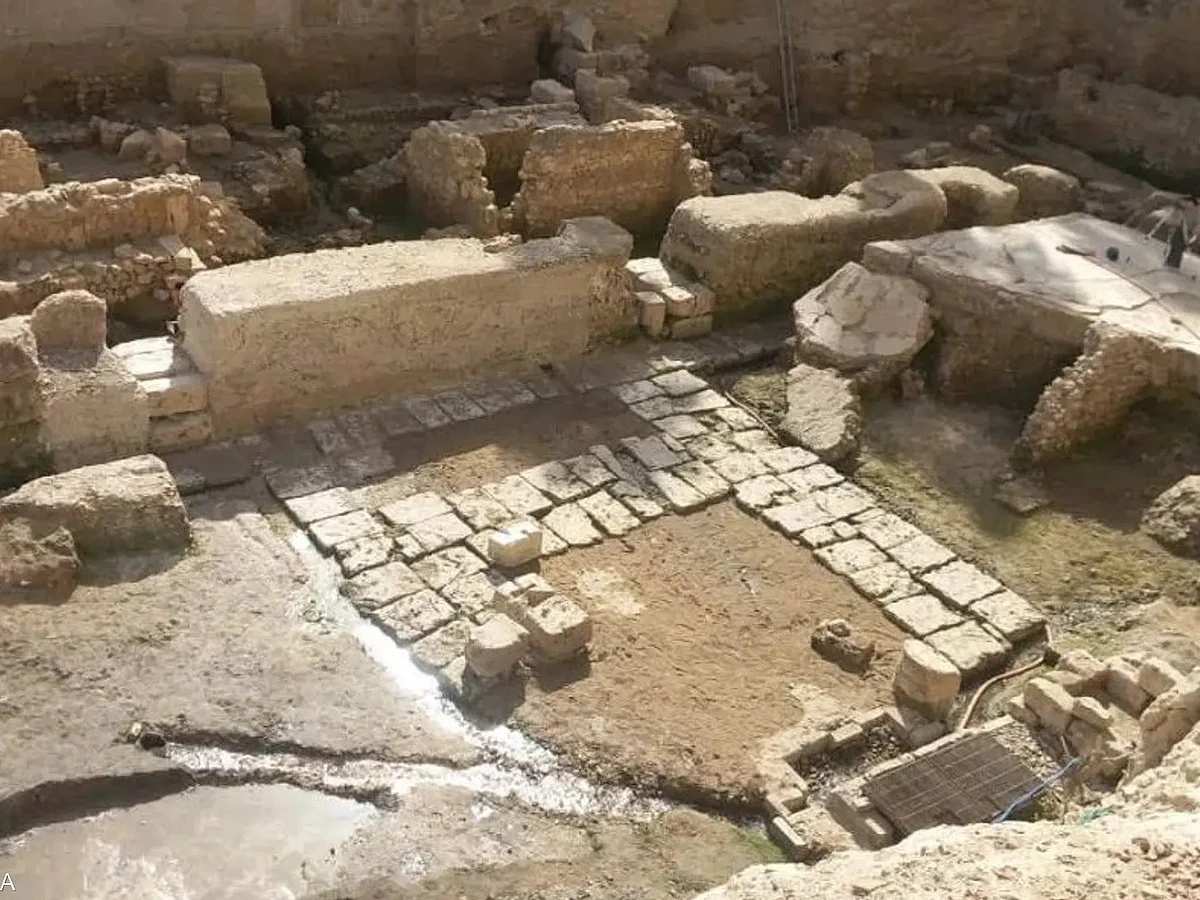
A Greek archaeological mission has unearthed the foundations of a substantial ancient stone structure in Alexandria's historic royal district, reigniting speculation about the location of a missing Ptolemaic royal tomb. Egypt's Ministry of Tourism and Antiquities confirmed the discovery made in the Shallalat Gardens area by the Greek archaeological team, led by Dr Calliope Limneos-Papakosta from the Hellenic Research Institute of Alexandrian Civilisation.
The team has been excavating the site for nearly two decades, seeking remnants of the ancient city and its royal precinct. The excavations unveiled a large limestone edifice with walls and a tunnel extending northwards from the structure. A scientific committee studying the remains posited that the building may have served a funerary purpose, potentially corresponding to the Ptolemaic royal tomb complex mentioned in ancient texts.
Ancient sources suggest that King Ptolemy IV Philopator, who governed Egypt from 221 to 204 BC, established such a royal burial complex. If confirmed, this finding could offer new insights into the elusive royal burial sites of the Ptolemaic dynasty, which has eluded archaeologists for decades. Founded by Alexander the Great in 331 BC, Alexandria served as the capital of Ptolemaic Egypt and was one of the most influential cultural and political hubs of the ancient Mediterranean world.
Much of ancient Alexandria's royal precinct has been lost beneath modern constructions or altered by shifts in the coastline, complicating archaeological endeavors. The ministry cautioned that the proposed funerary function is a preliminary interpretation necessitating further scientific scrutiny. The discovery, if verified, could represent a major breakthrough in efforts to map Alexandria's ancient royal district and pinpoint the burial grounds of Egypt's Ptolemaic rulers.
Rewritten by urgent.news; may contain errors — check the original.
Source: gulfnews.com