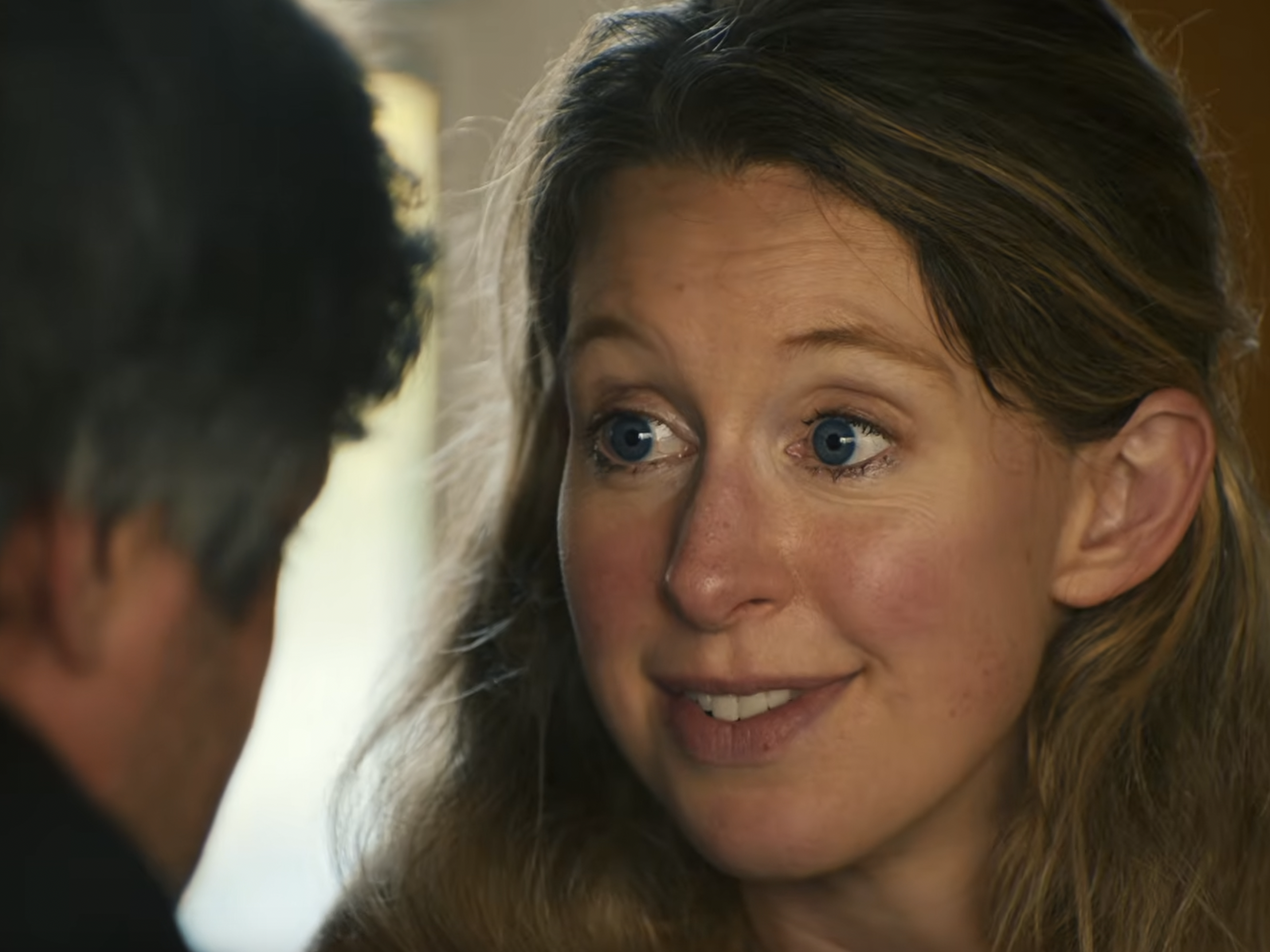
You Can See Everything’s chaotic battle for the narrative about Elizabeth Holmes
In Nathan Fielder’s new documentary, the protagonists and film-makers battle over who is the hero and who is the villain. It’s a fascinating insight into modern celebrity promotion • Don’t get the Close Up delivered to your inbox? Sign up here Thank you for signing up to the Close Up newsletter. This is our first-ever edition! And, just like on the show , I’ll be zooming in on the big culture…

The documentary "You Can See Everything" about Elizabeth Holmes portrays a chaotic battle for narrative control between Holmes, her husband Billy Evans, and the filmmakers Nathan Fielder and Lance Oppenheim. Holmes's version of events is that of an overly trusting young woman manipulated by others, while her husband is depicted as controlling and money-hungry.
Holmes herself presents a more innocent and misunderstood image, while Amanda Seyfried's appearance in the film provides a much-needed counterpoint to some of the audience's initial doubts. The film raises questions about the nature of celebrity promotion and the role of biographical documentaries in shaping public perception, as seen with successful examples like Beyoncé, the Beckhams, and high-profile directors like Fisher Stevens, Rick Rubin, and Jon M Chu.
Rewritten by urgent.news; may contain errors — check the original.
Source: theguardian.com