Why Air Cargo Rates Rose in 2026 and What Comes Next
Rates, capacity, earnings and the supply chain risks shaping air cargo into 2027 A review of 2026 air cargo demand, rates and capacity, carrier and forwarder earnings, and how much slack the system has left, using SONAR data. EXECUTIVE SUMMARYAir cargo entered 2026 expecting lower rates and got rates roughly 30% higher instead. The February […] The post Why Air Cargo Rates Rose in 2026 and What…
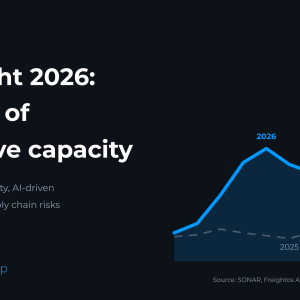
Air cargo rates surged in 2026, nearly 30% higher than anticipated, despite initial expectations of lower costs. The Middle East conflict triggered an immediate 12% loss of global capacity, while jet fuel prices doubled and AI hardware occupied remaining aircraft. The result is a market with minimal slack, where a single disruption can abruptly halt operations, as demonstrated by the November 13 FAA ground stop.
Freight rates averaged $3.11 per kilogram in October, a 36% increase from the previous year, and $3.44 in November, up 39%. In the United States, scheduled outbound capacity (OACT.USA) shrank by 4% to 8% compared to 2025 for nine consecutive months before rebounding in October, driven by freighters rather than passengers. Forwarders specializing in AI and data center sectors experienced significant air profit gains, benefiting more from higher rates than greater volumes.
Ongoing growth in ocean shipping volumes to the United States means air cargo gains are concentrated in high-value freight, rather than a shift away from maritime transport. The principal risks as 2027 approaches are market fragility, fuel costs, and uneven demand distribution, rather than a shortage of cargo. Access to this analysis is restricted to SONAR and Market Monitor subscribers.
Rewritten by urgent.news; may contain errors — check the original.
Source: freightwaves.com