WATT PRICE REACTORS OP-ED: To keep electricity costs low, avoid the nuclear option
Global nuclear projects have suffered major cost overruns, raising questions about whether South Africa can afford a risky megaproject when cheaper energy options are available.
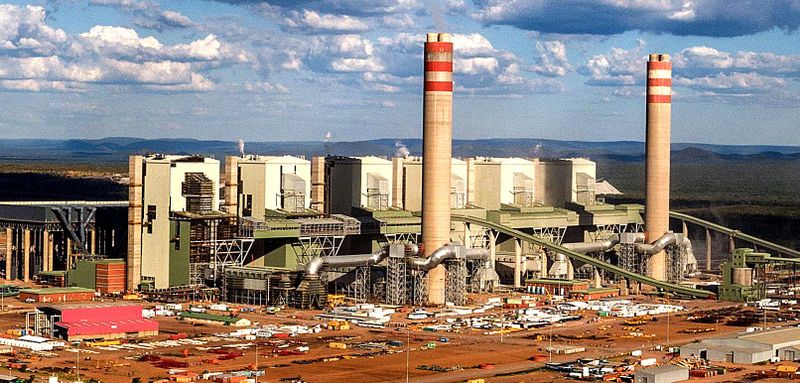
Global nuclear projects have faced significant cost overruns, prompting questions about South Africa's ability to afford a costly megaproject when cheaper energy alternatives exist. During a webinar on November 12, I presented on nuclear power in South Africa, but was allotted only 15 minutes to discuss my points.
Two aspects of the debate stood out: first, government representatives offered detailed justifications for new nuclear capacity by 2040, yet never mentioned costs. Second, Grove Steyn, a seasoned energy modeller, asserted that nuclear inclusion in the Integrated Resource Plan (IRP) 2025 wasn't supported by the modelling used to create its core logic. In essence, we lack evidence to justify needing 5,200MW of nuclear capacity by 2040 and have no idea of its cost.
The global context reveals an energy transition accelerated by the Iran war. As Turkey, the current COP co-president, emphasizes, electrifying everything is crucial. With renewables expanding, grid expansion and storage become necessary. To meet this goal, $1 trillion annually is required for grid expansion and storage, which South Africa must also consider.
Renewables currently meet 23% of final energy demand, projected to reach 29% by 2035. By 2025, renewables accounted for 33.8% of total energy generation, with solar powering 75% of the new demand. However, nuclear generation, which grew by 1% annually over the past decade, has declined to 8.9% of total generation in 2025 due to overall demand growth.
Despite this, 75 nuclear reactors are under construction in 15 countries. Critics often use the "levelised cost of energy" (LCOE) metric to highlight nuclear's high cost compared to alternatives. In 2025, nuclear power cost $175 to $255 per megawatt-hour, compared to $40 to $98 for utility-scale solar and $37 to $99 for onshore wind. However, this overlooks the costs of reconfiguring grids to accommodate new generation technologies. South Africa's grid expansion, projected at R400 billion, is a prime example.
South Africa's shift from insufficient electricity to too much supply during peak hours, caused by load shedding, now faces a different challenge: too much supply and insufficient demand in the midday hours. The National Transmission Company of South Africa's System Operator curtails utility-scale solar plants to balance the grid, costing R2.5 billion in 2026. The solution lies in flexible systems, such as large batteries for midday electricity storage and peak-time reuse, which would enhance grid flexibility.
Interestingly, South Africa's electricity demand in 2025 remains the same as in 2005, at about 225 terawatt-hours (TWh), despite an increase in non-Eskom generators. This has allowed Eskom to maintain operations, fix old power stations, and run them at lower efficiency levels, suppressing demand and improving efficiencies. However, the 860% price rise between 2008 and 2025 compared to the CPI of 125% has also reduced demand and improved efficiencies.
Looking ahead, demand is projected to grow from 225 TWh annually to 425 TWh by 2040. If South Africa builds 5,200MW of nuclear capacity by then, it would generate 36 TWh, which would be less than 10% of the expected demand. Assuming demand reaches 425 TWh, would 5,200MW of inflexible nuclear capacity be justified, especially with alternatives available? The IRP 2025 mandates that 15GW of coal-fired power must close by the mid-2030s.
Rewritten by urgent.news; may contain errors — check the original.
Source: dailymaverick.co.za