Volkswagen: VW will frühere Lohnzusagen kassieren – was jetzt im Tarifkampf droht
Die Sparforderungen des VW-Vorstands gehen weiter als bislang bekannt. Ein vertrauliches Schreiben zeigt, worauf die Beschäftigten verzichten sollen. Die wichtigsten Fragen und Antworten.
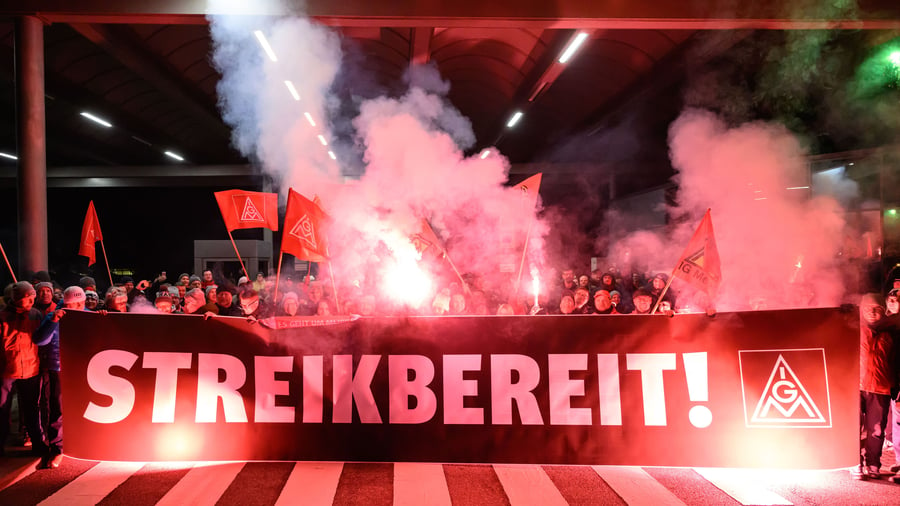
Nearly two years have passed since the cease-fire at Volkswagen, Germany's largest automaker. On Tuesday, company representatives and IG Metall union representatives met in Emden for the first round of new collective bargaining talks. Management's demands go further than previously known. The company wants to revamp parts of the 2024 negotiated restructuring compromise, according to a confidential letter from the company to IG Metall, obtained by the Handelsblatt.
The Emden meeting is seen as the start of a confrontation that many inside the company say could be harsher and more bitter than the last negotiation round at the end of 2024. For the first time, VW's two personnel managers, Frank Ischner and Kerstin Scholz, will lead the talks, while IG Metall's district leader, Thorsten Gröger, will negotiate again.
Both sides are negotiating over specific issues. Volkswagen wants to significantly reduce its labor costs, cutting into almost all essential parts of the corporate collective agreement, even those renegotiated only two years ago. Management requests the elimination of a pay raise of 5.5 percent, which was previously suspended and was to take effect from January 1, 2031, as per the 2024 tariff compromise.
The higher tariff index effective from 2027 for future wage increases is also set to be dropped. A temporary wage freeze would become permanent. Another known demand concerns working hours at VW. Currently, the weekly working time at the automaker in Germany is 35 hours. In the future, it should be guided more by the amount of work needed in individual areas.
If there is much work to be done, either in administration or on the production lines, employees should work longer hours without getting more money. If the business is poor, shorter work hours should be implemented, and employees should earn less accordingly. Employees should take vacation on the previously free days of Christmas Eve and New Year's Eve.
Moreover, management wants to enforce wage freezes for 2027 and 2028 and also reverse previously negotiated wage increases. The monthly tariff allowance of 167 euros and the annual tarifliche Zusatzvergütung, also called T-ZUV, are set to be eliminated. The latter amounts to 27.5 percent of an average monthly income or alternatively six free days.
Both options are also set to disappear. Management also wants to cancel the remaining profit sharing in November, amounting to around 1,900 euros. Jubilee gratuity, paid breaks in the three-shift system, and the apprenticeship transfer regulation are also up for discussion. The so-called tariff plus area for specialists and executives will even be abolished.
The monthly earnings of the tariff elite range from 8,528 euros to 9,494 euros, with access to the group having been stopped for some time. Where the current employees should be grouped in the future is unclear.
Rewritten by urgent.news; may contain errors — check the original.
Source: handelsblatt.com