'The worry was that I was totally out of my league': How Francis Halzen bet his career on 'ghost particles' beneath the South Pole — and won the 2026 Nobel Prize in Physics
Live Science spoke with Nobel laureate Francis Halzen on how he got into physics "by accident" and built a neutrino detector that changed it forever.
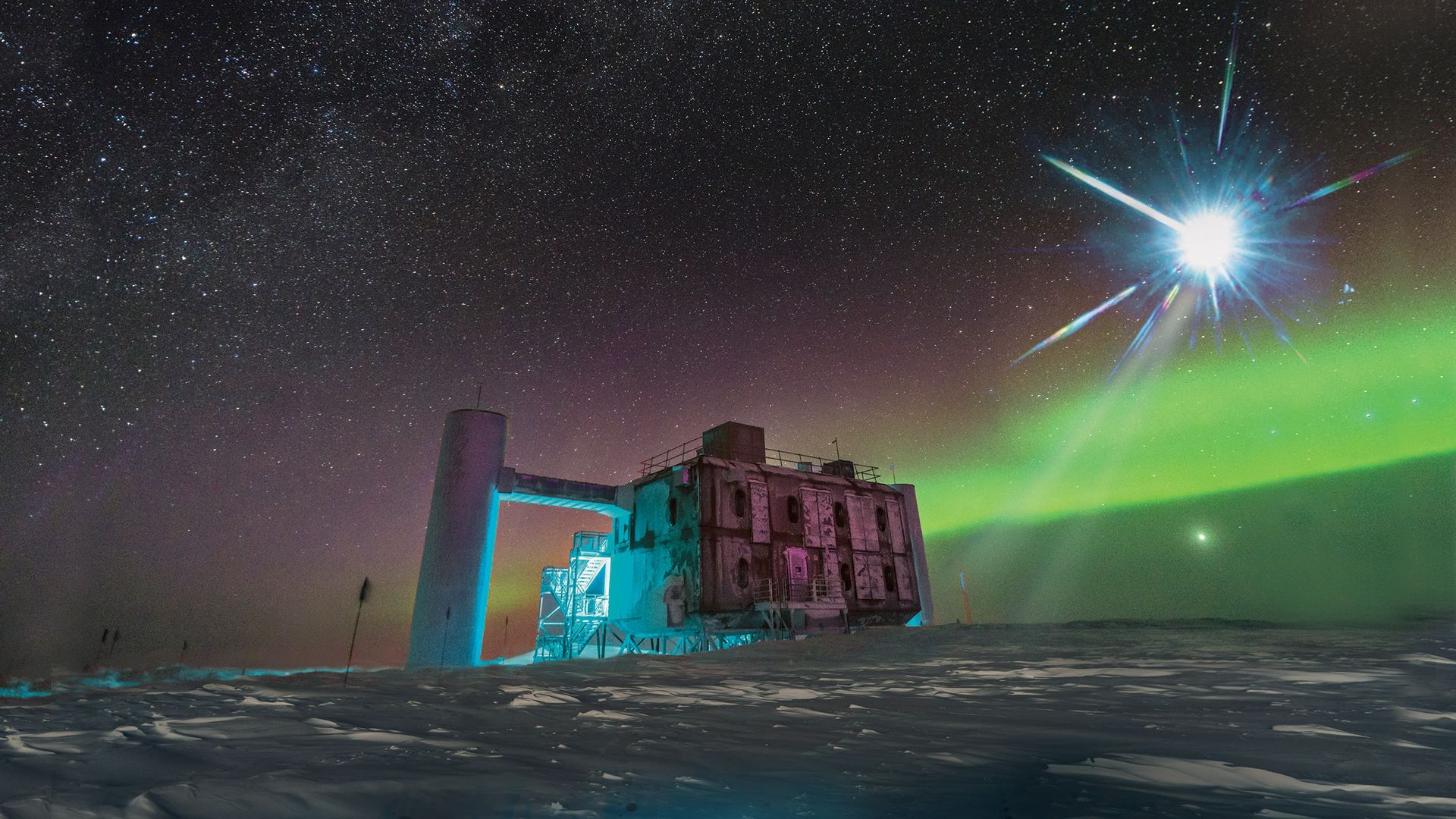
When Francis Halzen first proposed the idea of burying a massive telescope deep beneath the South Pole, he anticipated receiving ridicule from his peers. Four decades later, his vision has earned him the prestigious Nobel Prize in Physics. IceCube, the detector Halzen masterminded, is an unconventional approach to observing the cosmos, consisting of thousands of light sensors embedded within a cubic kilometer of pristine ice.
Halzen, a theoretical physicist at the University of Wisconsin-Madison, is not searching for the obvious; instead, he delves into the study of neutrinos - nearly massless, chargeless, and ever-present particles that are the most abundant in the universe. These elusive particles are formed by nuclear processes and high-energy collisions, originating from our sun and black holes.
Despite their abundance, neutrinos rarely interact with matter, making them difficult to detect. However, when they do interact with atoms, they produce charged particles that travel faster than light, emitting a faint blue glow - the optical equivalent of a sonic boom. Since 2011, IceCube has been tracking these blue lights, aiming to unravel the mysteries of the universe by studying neutrinos produced by the most cataclysmic astrophysical events.
In a recent interview, Halzen shared his thoughts on neutrinos, IceCube's transformation from a whimsical proposal to a groundbreaking success, and the future of mapping the cosmos using the ghost particles.
Rewritten by urgent.news; may contain errors — check the original.
Source: livescience.com