The path to net zero matters as much as the destination, scientists say
From biofuel cropland to lithium mining, a global study shows that the technologies we pick for decarbonization carry very different environmental costs.
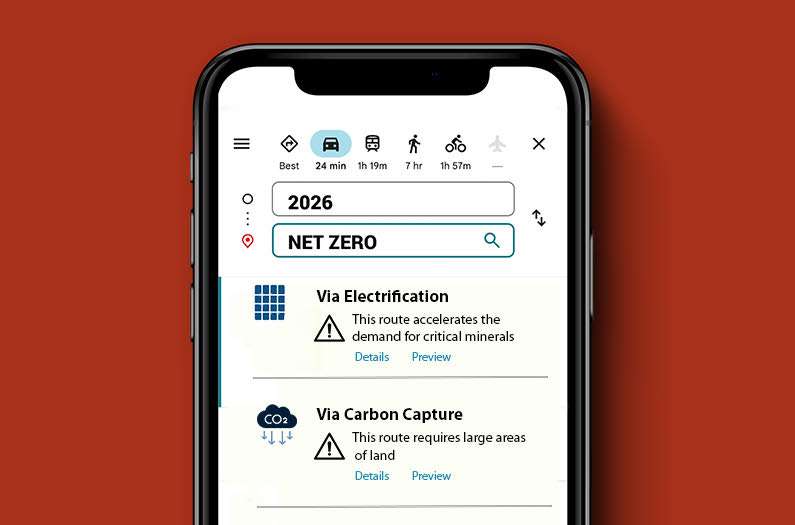
A new study suggests that the method adopted to achieve net zero greenhouse gas emissions could significantly impact other aspects of the natural environment, as much as the ambition level of the climate goals themselves. Lead researcher Alvaro Hahn Menacho, a PhD candidate at the Paul Scherrer Institute in Switzerland, emphasizes that prior research has primarily focused on cost and emissions, neglecting the broader environmental implications on a global scale.
By analyzing 24 climate change mitigation pathways from three large-scale modeling efforts, the team aimed to provide a clearer picture of the tradeoffs involved in decarbonization before infrastructure is permanently set in place. The researchers employed a life cycle analysis tool to evaluate the potential effects on human health, ecosystem quality, and pressure on mineral, land, and water resources over the next century.
The study found that decarbonization measures could lead to a range of environmental consequences, with land use being the most notable variable. Depending on the approach, land use could decrease by 13% or increase by as much as 354%. This discrepancy is largely driven by the use of biomass in bioenergy systems. Pathways that heavily rely on bioenergy demand substantial land for crop cultivation to produce biofuels.
Conversely, a pathway that emphasizes carbon capture will impose larger burdens on various environmental aspects than one that focuses on preventing emissions from the outset, even if the overall emissions balance remains similar.
Another intriguing discovery is that ambitious climate goals primarily increase the demand for critical minerals rather than significantly raising overall extraction over the century. Critical minerals such as lithium, cobalt, and nickel are essential for green technologies but pose supply chain risks due to their scarcity or limited distribution. The study's findings indicate that delaying decarbonization does not necessarily resolve the resource challenge.
Looking ahead, the researchers plan to refine their global insights into more geographically detailed assessments. They also stress the importance of understanding where environmental pressures occur and exploring mitigation strategies to address them.
Rewritten by urgent.news; may contain errors — check the original.
Source: anthropocenemagazine.org