The Flower with a Flame Inside
Behold the skunk cabbage. It produces the highest rate of energy of any organism on Earth. Also, it switches sexes The post The Flower with a Flame Inside appeared first on Nautilus .
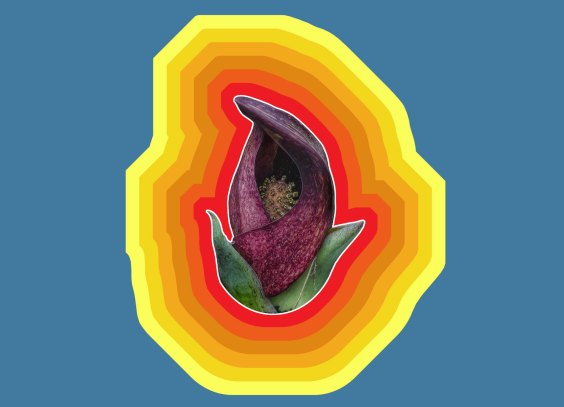
The skunk cabbage, a remarkable plant, sets the record for energy production among all organisms, including vertebrates. As autumn progresses in eastern Maine, it can appear to linger in a state of late summer long after the seasons change. On a particular mid-October day, as the sun sets before dinner and the leaves fall, volunteer naturalist Heather finds the Eastern skunk cabbage plants peeking through the fallen leaves on the bog boardwalk.
These plants have narrow green buds and deep crimson-and-green streaked buds at their bases, resembling flames, a fitting resemblance given their unique heat-generating abilities.
When spring arrives, these buds transform into curved sheaths called spathes, enclosing a stem topped by a flower-studded, robin's-egg-sized inflorescence that radiates heat. The plant produces enough heat to melt a circle of snow around it, reaching temperatures up to 63 degrees Fahrenheit, despite the surrounding air being still frigid. This extraordinary feat of botanical heat generation is fueled by carbohydrates drawn from the plant's root system and rhizome.
The peculiar process begins when starches in the roots are broken down into sugars, which flow through the plant's veins and into the spadix. These sugars are then disassembled into smaller molecules and sent into the flowers' mitochondria, the energy-producing organelles found in most cells. However, skunk cabbages take it a step further, using specialized proteins to release energy as heat instead of storing it as ATP.
The heat-producing flowers first bloom as females and remain so for about a week. They run at their hottest temperature, around 73 degrees Fahrenheit, day and night, which seems to be the optimal temperature for pollen viability. This heat also aids in dispersing the carrion-like scent that attracts insects, giving skunk cabbages their unfortunate moniker.
Once the flowers transform into males, they still maintain optimal daytime temperatures but produce less heat at night, as the plant's incentive to attract pollen-laden insects is reduced.
Interestingly, skunk cabbages regulate their heat output within minutes of slight changes in ambient temperature, responding to temperature fluctuations across days and weeks. Despite extensive research over the past 50 years, the biochemical basis of their thermoregulation remains unexplained. Scientists have had better luck using fossils and genetic comparisons to make educated guesses, but the exact mechanism remains a mystery.
Rewritten by urgent.news; may contain errors — check the original.
Source: nautil.us


