Silver miners struggle to close persistent supply gap
Dependence on copper, lead, zinc and gold operations limits the precious metal’s supply response despite record prices.
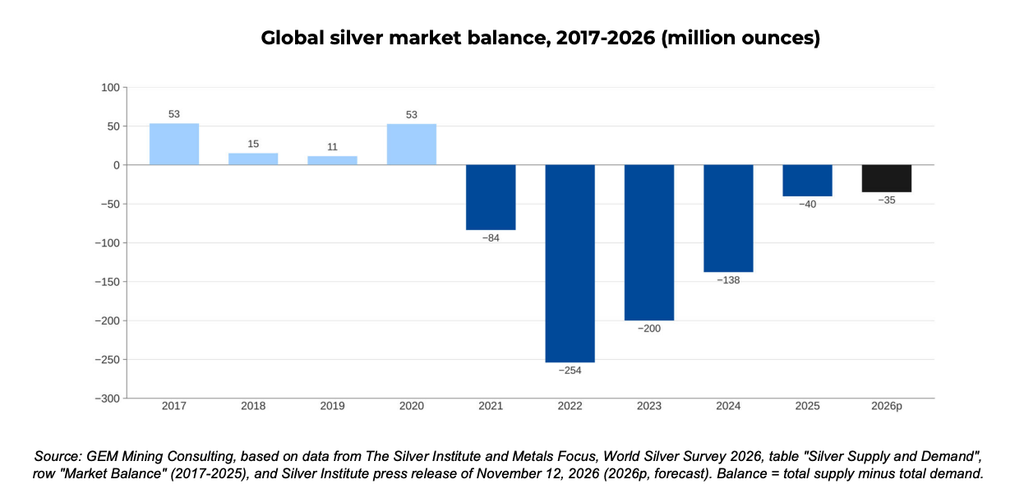
Silver miners face a persistent supply gap as global production remains stable, despite a market deficit for the sixth consecutive year. The demand for silver is expected to exceed supply by 35 million ounces in 2026, resulting in a cumulative shortfall of approximately 746 million ounces since 2021, or about 90% of annual global mine output.
Deutsche Bank's metals research head, Daniel Ghali, has stated that "peak silver scarcity is clearly in the rear-view mirror." The disparity between silver prices and supply highlights the need for a change in consumption, recycling, and inventories to rebalance the market. Between 2021 and 2025, annual silver demand averaged 1.17 billion ounces, a 20% increase from the previous four-year period.
However, mine output declined by 0.9%, while recycling increased by 15%. The relationship between production and prices has been historically limited and delayed. Byproduct dependence is a significant factor, with primary silver mines accounting for only 26.1% of global mine supply in 2025. Chile's copper mines saw a 10% decrease in silver production despite a 95% increase in inflation-adjusted silver prices.
Even with higher prices, additional ounces produced would only cover less than one-fifth of this year's projected market shortfall. Industrial demand for silver is diminishing, with global silver consumption in solar applications projected to decline by more than 20% this year in China. Recycling is expected to increase by 6% in 2026, reaching its highest level since 2012.
The supply of silver is also bolstered by rising inventories, with London's commercial vaults holding over 914 million ounces at the end of August, a 70% increase since October 2025. Deutsche Bank forecasts that spot silver prices could average $70 per ounce by the second quarter of 2027, with investment flows becoming increasingly important to the metal's performance as industrial demand weakens.
This surplus could complicate expansion decisions for primary silver producers, even as elevated prices support profitability.
Rewritten by urgent.news; may contain errors — check the original.
Source: mining.com