Should Vanguard S&P 500 ETF Investors Be Worried About the Downturn in Nvidia and AI Stocks?
Nvidia and AI stocks have been dragging down the Vanguard S&P 500 ETF.
Once the world's largest company, Nvidia (NVDA -7.61%) had been a major force in driving the market, with a market cap exceeding $5 trillion. However, the stock experienced a significant downturn, closing the week of November 20 on a seven-day losing streak, down 27.5% in market value. A rebound was seen on Monday, but the stock has since dropped 32% from its peak of $243.37 set on October 6.
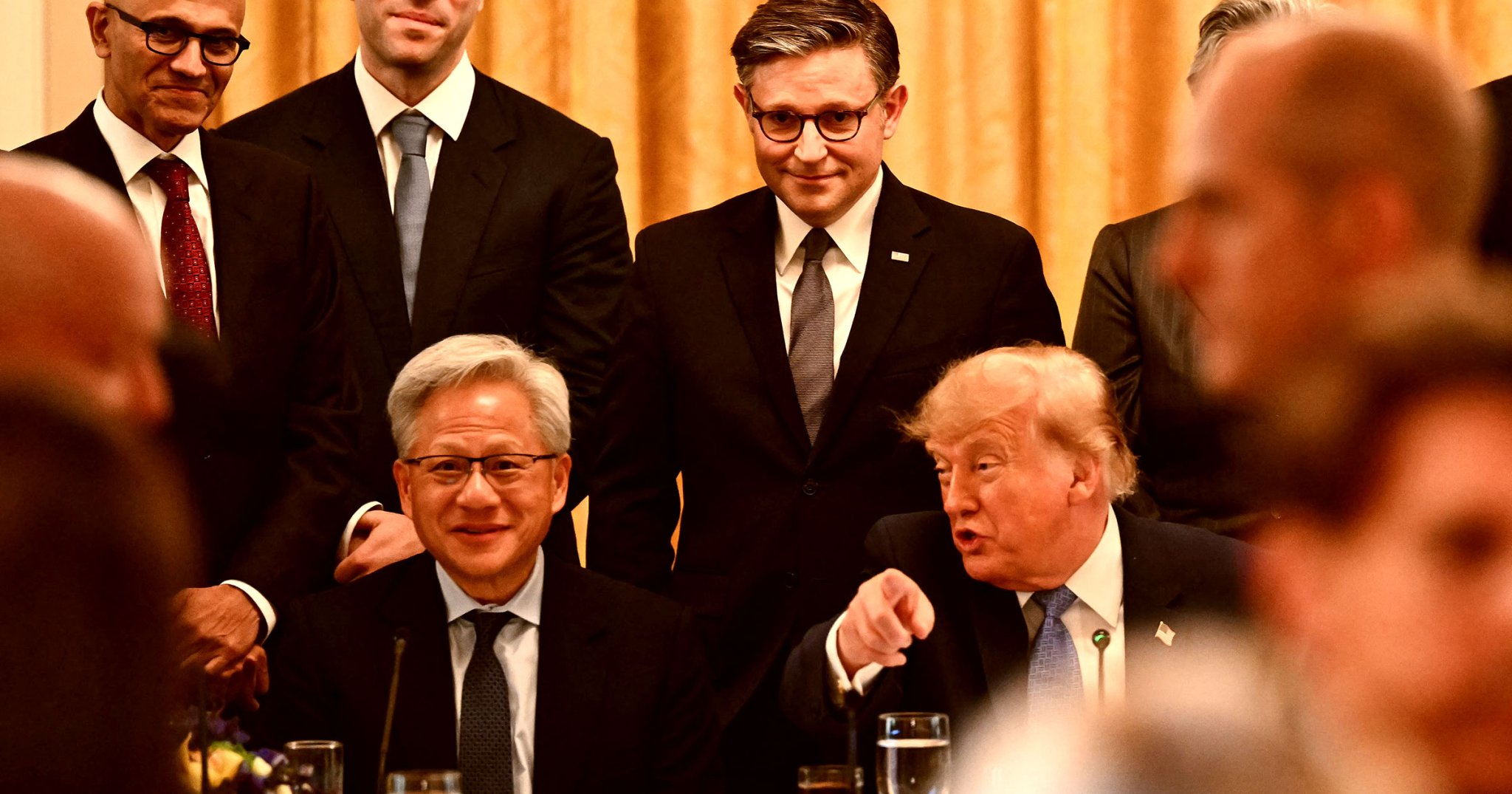
Nvidia's troubles stemmed from the sudden resignation of its co-founder and CEO, Jensen Huang, due to allegations of marital infidelity, including with subordinates and a potential Chinese spy. Despite a strong quarterly report and the company raising fiscal 2028 revenue guidance to a 75% growth rate, the stock continued to decline. However, Huang's unexpected return to the CEO role led to a significant rebound.
This decline in Nvidia's stock also affected other semiconductor stocks, the AI infrastructure segment, cloud computing, and SaaS stocks. Nvidia was the second-largest holding in the S&P 500 (^GSPC -0.92%), with a 7.6% weight, trailing Apple (AAPL +0.77%) by a slight margin. This performance negatively impacted S&P 500 exchange-traded funds such as the Vanguard S&P 500 ETF (VOO -0.94%), which lost 7.8% during the week of November 20.
With the Monday rally, concerns arise whether investors should worry about Nvidia and other AI stocks pushing the benchmark indexes into a bear market. The S&P 500 has become increasingly dominated by mega-cap tech companies, with over 37% of its stocks classified as tech, including AI-focused companies like Amazon (AMZN -1.69%) and Tesla (TSLA -1.14%). Of the top 15 holdings, 10 are AI stocks.
The index's structure allows for self-correcting performance, as falling AI stocks decrease their percentage in the index, while other sectors gain prominence. Over the past decade, only about 14% of actively managed funds have outperformed the S&P 500, highlighting the importance of time in the market rather than timing the market. Continuing dollar-cost averaging into the ETF rather than selling on fears of further AI stock drops is a proven strategy for long-term success.
Rewritten by urgent.news; may contain errors — check the original.
Source: fool.com