November’s full moon rises tonight! Here’s how to see the Beaver Moon supermoon
A dam good moon.
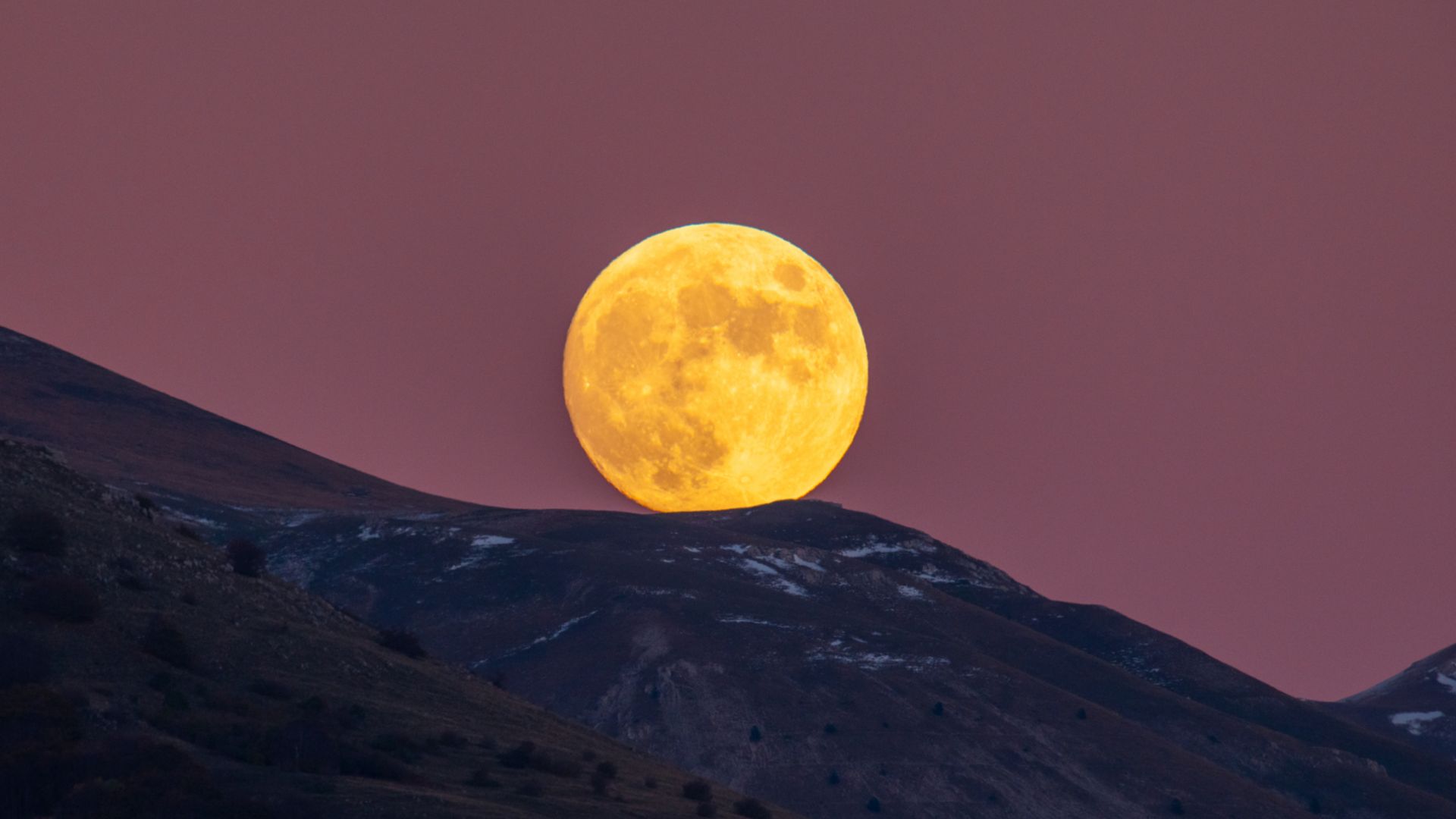
Get ready for a celestial spectacle! The full "Beaver supermoon" graces the eastern horizon shortly after sunset on November 24, 2021. The lunar disk faces the sun opposite, making it appear fully illuminated. November's full moon falls at 9:53 a.m. EST (1453 GMT) on Nov. 24, when the moon is opposite the sun from our perspective.
This particular full moon is also a supermoon, as it reaches its closest point to Earth within 90% of its elliptical orbit. A supermoon can make the moon appear up to 30% brighter and 14% larger than the most distant full moon of the year, which is called a "micro-moon."
For stargazers in the U.S., the Beaver Moon will be below the horizon at the moment of fullness. However, it is still visible shortly after sunset, low over the eastern horizon. If you have a clear view, you may spot the blue-white lights of the Pleiades open star cluster near the lunar disk, approximately the width of a clenched fist held at arm's length away.
Even if you miss the full moon on Nov. 24, don't worry; the moon will appear full for a few more nights. A common phenomenon that makes the moon look larger near the horizon is called the "moon illusion," which tricks our brains into thinking the lunar disk appears larger when viewed with foreground objects compared to when it is overhead. Photography enthusiasts can take advantage of this effect and use a beginner's guide to imaging the full moon, along with recommended cameras and lenses for capturing the night sky.
Editor's Note: If you capture an image of the November full moon and wish to share it with Space.com's readers, please send your photos, comments, along with your name and location to spacephotos@space.com.
Rewritten by urgent.news; may contain errors — check the original.
Sources: smithsonianmag.com · space.com
This story
This is one outlet's version. Read the fullest account.