Joburg is radiation hotspot as million face risks from mine tailings
A million or more people in Gauteng's former goldfields face serious health risks from radioactive mine tailings.
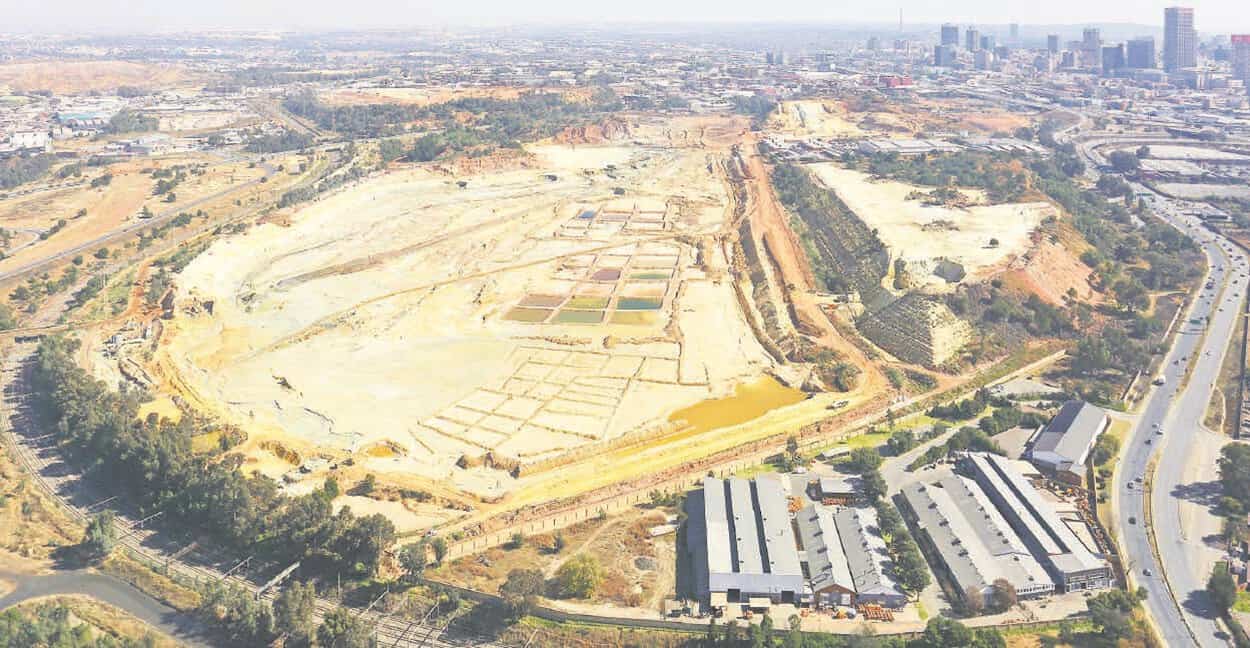
Millions of people in the Gauteng region of South Africa, particularly in and around Johannesburg, face significant health and environmental risks due to radioactive mine tailings and poorly managed mining waste. Environmental experts warn that urgent action is needed to prevent further exposure. Abandoned, ownerless, and inadequately rehabilitated mines in the area are exposing thousands of people to hazardous substances, including uranium and other heavy metals.
The city of Johannesburg itself is identified as a radiation hotspot, with radioactive material found in elevated levels in the CBD and surrounding wetlands. Many of these radioactive hotspots lack access control, fences, or warning signs.
Mariette Liefferink, an expert at the Federation for a Sustainable Environment, explains that most of the deposits in the region contain radioactive material, as gold ore in the region naturally occurs alongside uranium. She estimates that the region's mining belt contains about 270 mine dumps over an area of 400 square kilometers, with tailings storage facilities estimated to hold around 600,000 tons of uranium.
These facilities have historically released radioactive material into surrounding wetlands, and some have even been repurposed as construction materials.
Exposure to uranium poses serious health risks, including kidney damage, kidney disease, kidney failure, and transgenerational impacts. As the uranium-238 and radium-226 in these exposed, unlined dumps decay, they release radon-222 gas, which can contaminate the atmosphere and soil. Radon is a known carcinogen and the second-leading cause of lung cancer worldwide.
Liefferink criticizes the National Nuclear Regulator (NNR) for interpreting its mandate narrowly, focusing mainly on radioactive waste on licensed sites while leaving contamination outside these sites inadequately regulated. The Department of Environmental Affairs also does not regulate radioactive waste, and the NNR faces capacity constraints in implementing rehabilitation requirements.
Communities living near abandoned and poorly managed mines, such as those along the Main Reef Road corridor from Springs to Westonaria, face serious health and environmental risks. Mining expert David van Wyk highlights the toxic nature of unrehabilitated mine sites, which contain heavy metals like uranium, lead, arsenic, silica, cadmium, strontium, copper, and iron.
These sites are particularly dangerous for respiratory illnesses and cancer, as many residents of nearby townships, including Soweto, were located on the lower side of the mine waste due to historical practices of spatial apartheid. Van Wyk calls for mining companies to be held accountable for failing to properly close and rehabilitate mines after completing operations.
Rewritten by urgent.news; may contain errors — check the original.
Source: citizen.co.za