Hegseth’s Pentagon Accuses Canada of Failing as Credible Defense Partner Amid Tensions
The Pentagon claimed Canada is prioritizing domestic economic interests over military effectiveness.
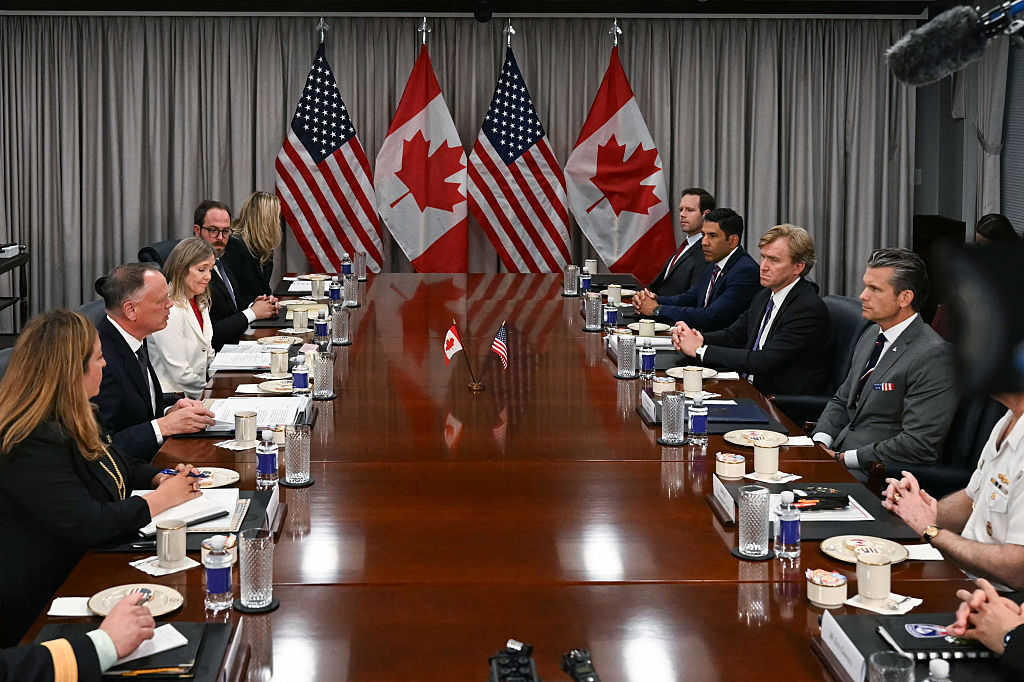
The Pentagon has criticized Canada's military capabilities, accusing the country of falling short as a credible defense partner in North America. Canada's Prime Minister Mark Carney and Defense Secretary Pete Hegseth exchanged sharp words on September 22, 2025, at the Pentagon, amid a trade war between the two nations.
The Pentagon released a two-page fact sheet, highlighting what it described as Canada's "defense shortfalls." The document criticized Canada's underinvestment in its Armed Forces and its defense spending plan for NATO. Canada pledged to reach 5% of GDP by defense spending by 2035 at the 2025 NATO summit in the Hague, but the country's latest budget projects only 4.1% of GDP by 2027-28. Canada's Parliamentary Budget Officer stated that reaching 5% by 2035 remains "unclear."
The Pentagon accused Canada of deferring major increases in defense spending until after the 2029 federal election, arguing that the U.S. has been footing the bill for Canada's homeland defense for decades. The rhetoric echoed President Donald Trump's accusations that Canada "rip[s] off" the United States.
Canada's defense readiness was also questioned, with the Pentagon noting that only 41.9% of its air force fleet and 53.9% of its naval fleet were serviceable in 2025-26. These issues have raised concerns about Canada's ability to fulfill its commitments to NORAD, a joint operation between the two countries.
Canada responded to the accusations by emphasizing its commitment to working with the U.S. on defense matters. Canada's Minister of National Defence, David McGuinty, stated that Canada will continue to defend North America, while exploring a pilot project in Keflavík, Iceland, to support maritime patrols and anti-submarine operations in the North Atlantic and Arctic. This move aims to reduce Canada's reliance on the U.S. by expanding economic relationships and alliances with other countries.
However, these tensions could have a negative impact on future alliances, experts argue. Andrea Charron, director of the Centre for Defense and Security Studies at the University of Manitoba, says that publicly shaming a close ally sends a chilling effect throughout all allied partnerships, benefiting only adversaries. Some experts suggest that this public shaming could set a dangerous precedent, as adversaries of both the U.S. and Canada will look for evidence of fractures in the allied relationship.
Rewritten by urgent.news; may contain errors — check the original.
Source: time.com