Etat 2027: Was an dieser Bundestagswoche besonders ist
Die Haushaltswoche ist im Bundestag ohnehin speziell. In diesem Jahr aber ganz besonders. Worüber stimmt das Parlament von heute an ab?
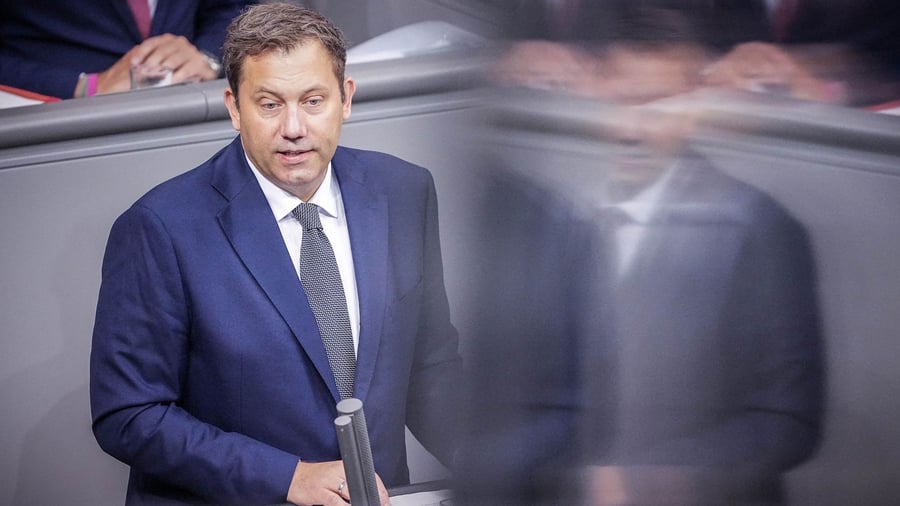
This week in the Bundestag is focused on the budget. Members of parliament will decide how much money the government led by Chancellor Friedrich Merz (CDU) can spend on various projects next year. What makes this budget unique is that when Finance Minister Lars Klingbeil takes the podium today morning, the budget is technically not finished yet.
A last-minute compromise regarding the reduction of the electricity tax for consumers and businesses still needs to be incorporated. For four days, parliamentarians discuss the budgets for each individual ministry. Klingbeil will have the chance to defend his plans first, followed by the budgets of the other 15 departments, ranging from the Digital Minister to the Transport Minister.
At the end of the week, on Friday afternoon, the budget for 2027 will be decided in the parliament. A special debate will take place on Wednesday morning during the discussions on the budget of the Chancellor's office. The so-called General debate is traditionally opened by the leader of the opposition from the AfD, followed by a response from the Chancellor.
This is not only about the money but also about the overall government policy. The budget is set to spend around 560 billion Euros in the upcoming year, which is the highest amount ever spent in a single year and approximately 36 billion Euros more than in 2026. Over one third of the budget is allocated to the labor and social sector, primarily because the government needs to contribute more money to the pension insurance.
Despite a slight drop in the investment budget, the infrastructure sector remains the biggest investment with more than 17 billion Euros. Another major focus of the budget is defense, with spending projected to rise to nearly 140 billion Euros next year, reaching a peak since the end of the Cold War. Much of this is financed through loans, either from an existing special fund for the Bundeswehr or with the help of an exception to the debt brake.
What consumers will face first, the German government had planned some reforms that would have made life more expensive, including the introduction of taxes on sugary drinks and plastic packaging. However, the Union and SPD have postponed these measures. Cuts to the housing allowance and the child allowance for families with low income have also been avoided.
Entitlements are expected to come through a reform of the income tax, including higher child benefits and an increase in the basic exemption from income tax. The rest of the funding will come from taxes and additional revenues. But these are not enough to cover the planned expenses. "Every third Euro is financed through loans," said the Chairwoman of the Budget Committee, the Green politician Lisa Paus, in parliamentary television.
The Union and SPD plan to take on nearly 123 billion Euros in loans from the core budget alone, on top of billions of Euros in special funds: 57.8 billion for infrastructure and 29.6 billion for the Bundeswehr. Taken together, this amounts to new debts of around 210 billion Euros. The debt brake enshrined in the Basic Law is still respected: loans in so-called special funds do not count, and certain debts for defense are excluded.
The opposition complains that the budget stands on shaky ground due to the high debts. The Green budget chief Sebastian Schäfer called it "a shabby building without a foundation". Green budget expert Dietmar Bartsch lamented that the young generation would face huge interest payments and harsh cuts at the same time as rising taxes and fees.
AfD budget expert Michael Espendiller calculated that the German government would take on new debts of 400,000 Euros per minute. This year is particularly notable because usually, the budget is finalized after a long session of the responsible budget committee, and the decision in the Bundestag is then just a formality. But this year, Union and SPD negotiated with each other.
In a coalition committee deep into the night, they agreed to reduce the electricity tax to at least the European minimum for all citizens and businesses next year. This is intended to make electricity cheaper. The cost to the Bund will be around 5.4 billion Euros, which still needs to be incorporated into the budget. The reduction is to be financed by money that would not be used for the promotion of renewable energy.
Since the price of electricity is expected to remain high due to the war in the Middle East, the government assumes it will not need the entire budget for the subsidies. This will be regulated in an accompanying law to the budget, which will be discussed in special sessions of the Budget and Finance Committees in the middle of the week.
Rewritten by urgent.news; may contain errors — check the original.
Source: handelsblatt.com