Ejército de EU pide desalojar pequeño poblado en Iowa; detonará 4.5 toneladas de explosivos
El Ejército de Estados Unidos pidió desalojar un pequeño pueblo de Iowa y sus zonas aledañas antes de la detonación controlada de unos 4 mil 500 kilogramos (4.5 toneladas) de material explosivo inestable y degradado. El plan es destruir el miércoles las reservas de azida de plomo, que se utilizaba como detonador para activar otros explosivos en municiones. Sin embargo, el material se ha degradado…
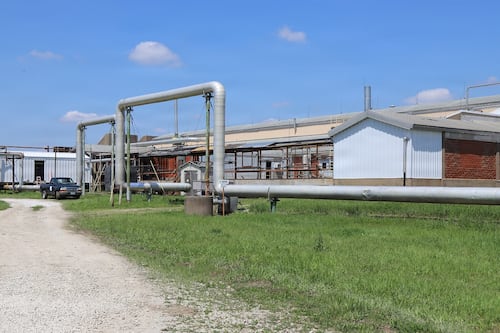
The United States Army has requested the evacuation of the small town of Middletown, Iowa, and surrounding areas in preparation for the controlled detonation of approximately 4,500 kilograms (4.5 tons) of unstable and degraded lead azide explosive material. The plan is to destroy the lead azide, which was used as a trigger for other explosives in munitions.
However, the material has degraded and poses a risk of spontaneous detonation. The Federal Emergency Management Agency (FEMA) is supporting the recommended relocation of all residents in Middletown, Iowa, and nearby affected areas, citing "extreme precaution," according to a public safety warning. Middletown has a population of about 360 people.
The controlled explosion has raised concerns about potential lead contamination in the surrounding area. "There is consensus among experts across the country that a controlled and mitigated detonation of the lead azide..." said Army Deputy Secretary Adam Telle at a press conference on Tuesday. A federal court lifted the suspension of the Army's detonation plan on Monday.
The Army asserts that the controlled detonation is the safest alternative to eliminate the reserve, stored in 68 underground barrels, after experts detected highly sensitive crystalline formations in 58 of them. However, their projections indicate that the explosion could disperse lead particles up to 160 kilometers away, despite the measures to contain contamination.
The controversy escalated after it was revealed that the Army had hired MuniRem Environmental in March to chemically neutralize the residues through a procedure that its founder, geochemist Valentine A. Nzengung, claimed would have avoided contaminant release and cost less than the explosion. The contract was canceled in May, and the Army opted for the controlled explosion, which was initially scheduled for the previous week but delayed multiple times due to resident protests.
Rewritten by urgent.news; may contain errors — check the original.
Source: eluniversal.com.mx