Die polnische Industriestadt Lodz lockt westliche Konzerne für Auslagerungen – nun gehen ihr die Arbeitskräfte aus
Nach dem Niedergang der Textilindustrie erfand sich die Metropole als beliebter Standort für Industrieproduktion und Dienstleistungszentren neu. Doch Abwanderung und Überalterung drohen die Entwicklung zu bremsen.
The Polish industrial city of Łódź has been attracting Western corporations for outsourcing, but its workforce is dwindling. Once a thriving hub for the textile industry, Łódź has struggled with unemployment and aging populations since the fall of the Iron Curtain in the 1980s. Mass layoffs led thousands of workers to emigrate to Western countries like Britain, Germany, and the Netherlands, or to move to Warsaw.
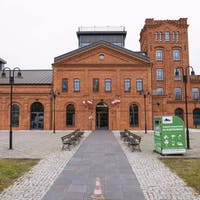
Despite a significant population decrease from almost 850,000 to the current 640,000, many experienced industrial workers remain in the city. Łódź's former textile factories have been renovated and transformed into modern office spaces, lofts, hotels, and shopping centers. New factories have also sprung up on the city's outskirts.
The Swiss chocolate manufacturer Barry Callebaut opened a plant in Łódź in 1995, followed by other international corporations such as German household appliances maker BSH (owned by Bosch), Switzerland's largest industrial firm ABB, and American consumer goods conglomerate Procter & Gamble (P&G). Recent additions to the list include Swiss transformer manufacturer R&S, which built its new factory in just twelve months.
Miele, a German producer of household appliances, recently expanded its operations in Łódź, bringing washing machine production to the city from its existing facility in Gütersloh. The company is also considering relocating more parts of its washing machine production from Germany to Łódź. Łódź's geographical location and low labor costs initially attracted industrial corporations.
Despite rising wages in Poland, they are still significantly lower than in Western European countries. Matthias Weibel, the financial director and interim CEO of R&S, notes that labor costs in Łódź remain attractive. Additionally, the city's workforce is highly motivated and well-trained, particularly at the engineering level. Another major factor in attracting industrial corporations is the creation of a Special Economic Zone (SEZ) in Łódź in 1997.
Poland has 14 SEZs in total, offering firms substantial tax breaks. Depending on the investment amount, 30 to 70 percent of expenses incurred within 14 years can be deducted from profits. R&S will benefit from this investment incentive in the future. The city has supported over 800 investment projects, with director Tomasz Sadzynski revealing that companies initially committed to creating 100,000 jobs.
However, with many businesses expanding their workforce since then, he now estimates there will be 300,000 employees. Several international firms have established shared-service centers in Łódź, including Clariant in 2013, which employs 350 people. Shared-service centers are now home to almost 140 international companies in the city.
These investments have helped reduce unemployment in the area, despite the city's overall population decline.
Rewritten by urgent.news; may contain errors — check the original.
Source: nzz.ch