China’s $150 billion COP31 sideshow upstages negotiations
Chinese clean-tech manufacturers will play a significant part in facilitating a pledge at the summit to accelerate electrification.
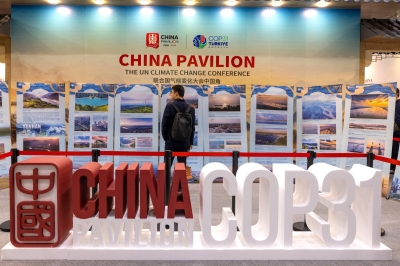
At the COP31 climate conference in Antalya, Turkey, China's clean-technology sector showcased its resilience amidst geopolitical tensions. China's official pavilion featured more than 10 world-leading Chinese companies, highlighting their advancements in clean energy solutions. Solar manufacturer Longi Green Energy Technology highlighted its data-center battery business, CATL promoted efforts to reduce battery carbon footprint, while a state-owned power company showcased its large-scale hydropower dams in Southeast Asia.
Chinese clean-tech exports reached $150 billion this year, equivalent to eliminating Brazil's annual emissions from the global carbon footprint.
The primary US objective of COP31 was to accelerate electrification, with nearly 75 countries pledging to do so. Chinese Vice President Han Zheng emphasized China's leading clean-tech supply chain and its commitment to strengthening cooperation with developing nations. China and Turkey signed a memorandum of understanding for $15 billion in clean-energy projects during the summit.
Chinese clean-tech companies seized the opportunity to forge international relationships, as demand in their home market wanes due to supply chain disruptions and regulatory hurdles. Tuya, a smart-systems provider, showcased AI-powered weather forecasting at the conference, securing new European partners. The global new energy market is active due to fuel supply disruptions and extreme weather events, prompting companies to seek international solutions.
Chinese companies face tariffs and trade barriers in the EU and US, prompting them to shift production overseas. Longi's solar panels are produced in China and US facilities, while Ming Yang Smart Energy Group is considering a factory in Spain after a UK location was blocked due to national security concerns. However, concentrating production in a few countries may hinder the global transition, according to Ming Yang's Wang.
Chinese firms must collaborate with local stakeholders to maintain their competitive edge and contribute to the global green transition.
Rewritten by urgent.news; may contain errors — check the original.
Source: japantimes.co.jp