Bundeshaushalt: Rechnung mit Risiken: Beim Haushalt 2027 wird Klingbeil zum Schulden-Trickser
Der Finanzminister nutzt neue Kreditausnahmen, fragwürdige Darlehen und Schattenposten. Die Lasten wandern so in die Zukunft. Das Handelsblatt analysiert Klingbeils finanzpolitische Kunstgriffe.

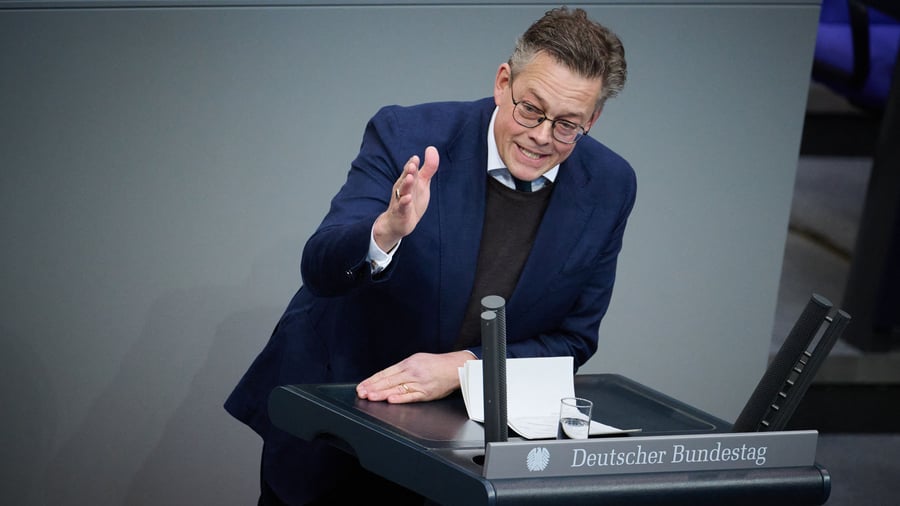
When Lars Klingbeil (SPD) takes the podium at the Bundestag on Tuesday, the state will see a satisfied Finance Minister. The budget deficit for the coming year was originally 34 billion euros. Now it has been closed. This is a good performance under the most difficult conditions, according to the Finance Ministry, and that is how Klingbeil will present it in his budget speech.
There has rarely been less reason for a Finance Minister to boast, especially in these days when the Bundestag is finalizing the 2027 budget. Not only the opposition, but also many economists and even some coalition politicians acknowledge that tricking a budget in such a way is actually not possible. Even if it might turn out differently for Klingbeil, most of the savings that the black-red coalition made have been left behind.
Instead, burdens are being postponed. Moreover, the coalition is borrowing even more through various means than it had planned. In total, a net borrowing of 122.9 billion euros is now planned in the core budget, even including special funds. That amounts to more than 210 billion euros when the special funds are taken into account.
Despite the exemption for defense spending from the debt brake, the "no ordinary budget" assessment is "historically high" according to Jens Boysen-Hogrefe from the Kiel Institute for World Economy. He criticizes the ways the debt brake is being circumvented. "And the fact that we will arrive at the mother of all budget crunches in 2028 seems completely irrelevant."
Similar words come from Green budget policy expert Sebastian Schäfer. "Merz and Klingbeil solve structural problems with tricks, shifts, and loans without any repayment perspective. Instead, they increase financial risks." The left budget policy expert Dietmar Bartsch also labeled Klingbeil's budget as having "side budgets, shadow budgets."
The Handelsblatt analyzes where and how Finance Minister Klingbeil is tricking: bonding with the Autobahn company The black-red coalition had actually started with a comfortable financial position. It created a credit-financed extra pot of over 500 billion euros, from which investments in infrastructure would be funded in the coming years.
This includes road construction. But now the coalition wants to allow the Autobahn company to borrow money to make investments. Transport Minister Steffen Bilger (CDU) has already presented a bill for the borrowing without setting a ceiling. The law has not been passed yet, but Finance Minister Klingbeil is already factoring it into the 2027 budget: As the Autobahn company will be allowed to borrow money from then on, funding from the federal budget is being cut back.
Just under two billion euros in investment funds for the Autobahn and a total of 5.5 billion euros in other commitments are being withdrawn for the coming year and the years to come. Higher loans to the Federal Employment Agency (BA) are where Finance Minister Klingbeil is being generous. The BA gets a larger loan than originally planned: Instead of 5.2 billion euros, the federal government will put 8.2 billion euros into the Federal Employment Agency.
The reason for the generosity is mainly the increased expenditures for unemployment benefits. Klingbeil has agreed to the loan because it is a financial transaction and is not subject to the debt brake, so he does not have to make savings elsewhere. Experts find the large loan questionable, however, because it is unclear how the BA can repay it.
For the foreseeable future, it is unlikely to generate surpluses. The law professor Hanno Kube of the University of Heidelberg calls the move "constitutionally problematic". The reduction in the contribution to the pension insurance is another case of budget cuts on the workers and businesses. The Rentenversicherung (pension insurance) had to be requested additional funds from the budget department during the current year.
The "Renten-Haltelinie" decided upon by the SPD in late 2025, has increased expenditures more than planned. The pension insurance warned that this would inevitably lead to an increase in the contribution rate. The current rate is 18.6 percent and is set to increase to 19.8 percent in 2028. The contribution rate is currently 18.6 percent.
Klingbeil is closing budget gaps also at the expense of workers and businesses, who will have to face higher social contributions. Social spending: Hope on the labor market In social spending, Klingbeil has further reduced the budgeted amounts for the coming year. For basic income (Grundsicherung), a billion euros less is now planned, and for the accommodation cost (Kosten der Unterkunft) around 250 million euros less.
The Union has repeatedly demanded savings in social spending. However, the cutback in the budget does not reflect changes in benefits, but rather the fact that the federal government is saving less.
Rewritten by urgent.news; may contain errors — check the original.
Source: handelsblatt.com