Between negotiations and opposition: DEM Party’s strategic test
The real issue is whether a political relationship can be established in which negotiation does not replace democratic opposition, nor does opposition rule out the possibility of peace.
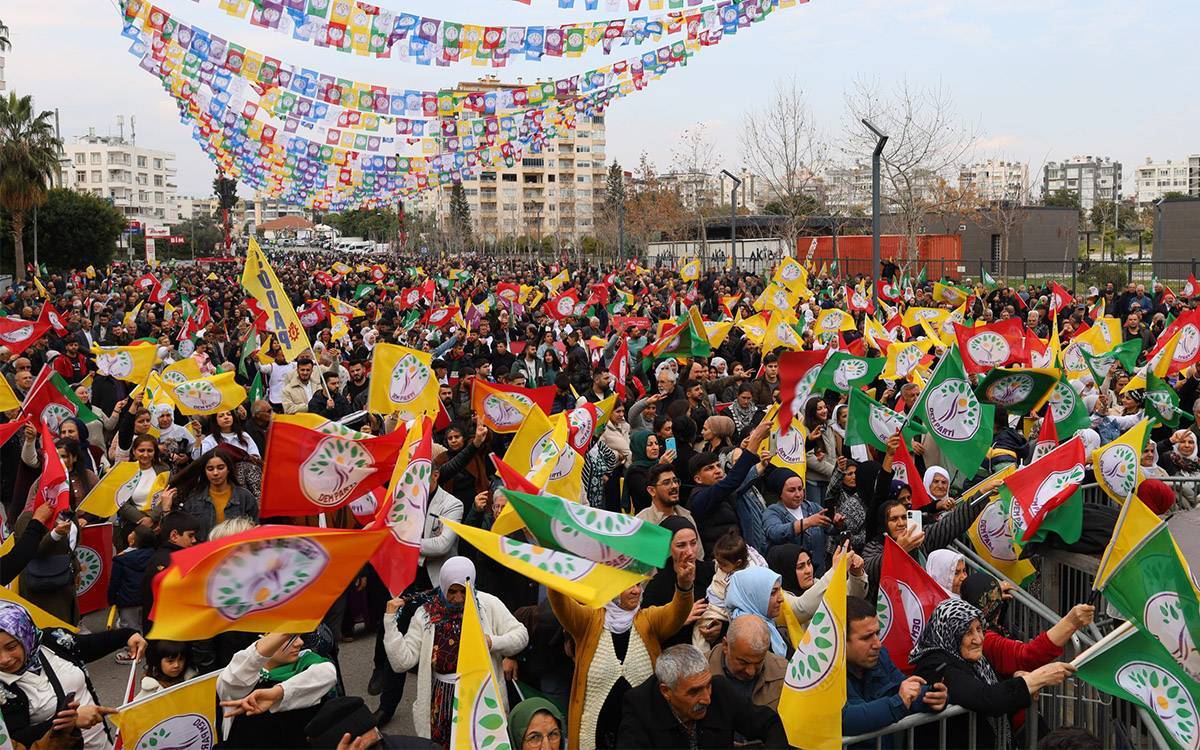
The Democratic Party (DEM) finds itself at a critical juncture as it navigates the complex strategic equation arising from Turkey's ongoing negotiations on the Kurdish issue. The party must carefully balance its role in the peace process, representing the broader societal demand for democracy, the rule of law, equality, and freedom, while simultaneously participating in discussions with the ruling bloc to ensure a lasting legal foundation for the Kurdish peace process.
This dual position has drawn harsh criticism from both the mainstream opposition and socialist groups, who view the DEM Party as either too closely aligned with the ruling party or not engaging enough on democratic principles. The party's fundamental challenge lies in reconciling its desire to be part of Turkey's democratic opposition with its active role in negotiations aimed at resolving the Kurdish issue.
Critics argue that the DEM Party's participation in dialogue with the ruling party could weaken its capacity for democratic opposition, as the government employs the peace process to strengthen its political hegemony and shape the constitutional order according to its own needs. The party must therefore carefully consider how its involvement in negotiations might inadvertently become part of the government's political calculations, potentially diluting the opposition's stance on democratization.
Meanwhile, the main opposition party, the YENİ Party, is grappling with its own strategic dilemma regarding the Kurdish issue. The party struggles to develop an inclusive perspective that enjoys strong social legitimacy, and its differing stances on parliamentary committee work, legal safeguards for the process, and withdrawal from the Monitoring Commission indicate a divide within the opposition.
The DEM Party's negotiations with the ruling party may widen the gap between the two factions, as a resolution solely focused on government-to-Kurdish political movement negotiations could limit the overall social legitimacy of the solution.
Rewritten by urgent.news; may contain errors — check the original.
Source: bianet.org