4 easy ESP32 projects that become more useful if you own a 3D printer
A 3D printer can turn ESP32 wire piles into professional projects
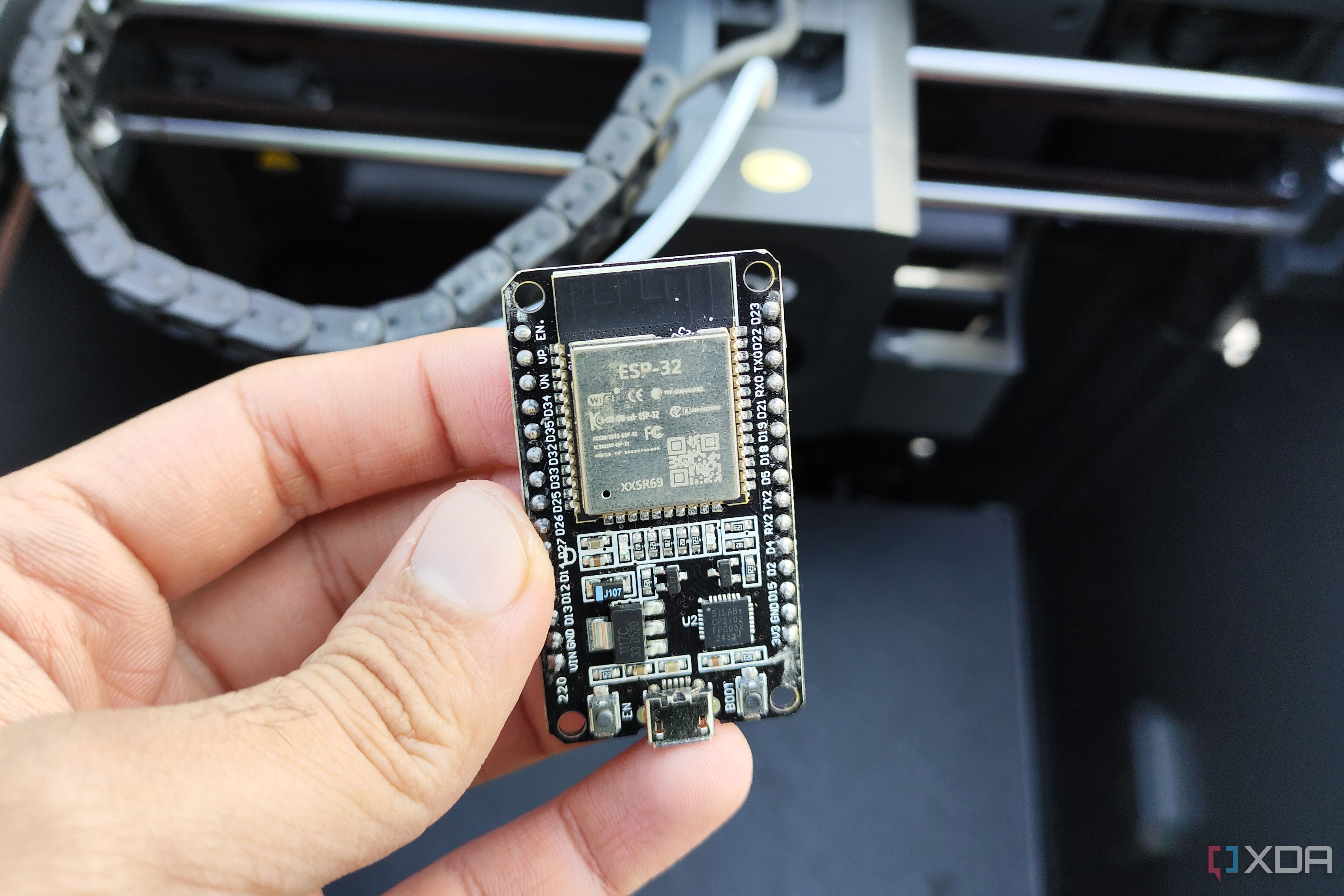
The ESP32 microcontroller is a versatile and affordable tool for various DIY projects, from robotics and circuitry to automation. Its utility expands even further when paired with a 3D printer. With a 3D printer, you can create custom cases and mounts for ESP32 devices, making them more compact, visually appealing, and better suited for specific applications.
For instance, a 3D-printed case can turn an ESP32 security camera into a sleek wall-mounted unit, perfect for monitoring larger rooms. Similarly, a customizable macro pad or controller can be constructed with an ESP32-S3, which boasts a second USB socket enabling it to act as a USB I/O device when connected to a PC. This allows for the integration of analog sticks and directional inputs to run specific commands on a computer.
Moreover, a 3D-printed enclosure can help organize and conceal cables, making complex macro pads and controller setups look neater and more professional. In the case of matrix LED displays, a 3D-printed case can transform a cluttered, cable-ridden display into a compact, visually striking smart clock, automated light decor, or visual alert panel.
Sensor modules, such as soil moisture sensors, can be interfaced with ESP32 devices using 3D-printed enclosures to ensure waterproofing and protection from the elements. With PETG filament, a robust and affordable case can be built, allowing for waterproofing and hiding cable clutter. Overall, a 3D printer is an invaluable tool for enhancing the functionality, aesthetics, and usability of ESP32-based projects.
Rewritten by urgent.news; may contain errors — check the original.
Source: xda-developers.com