Will astronauts farm on the moon? Scientists successfully grow potatoes in simulated lunar dust
Researchers have successfully grown potatoes in simulated lunar regolith, possibly opening the door for farming on future moon bases.
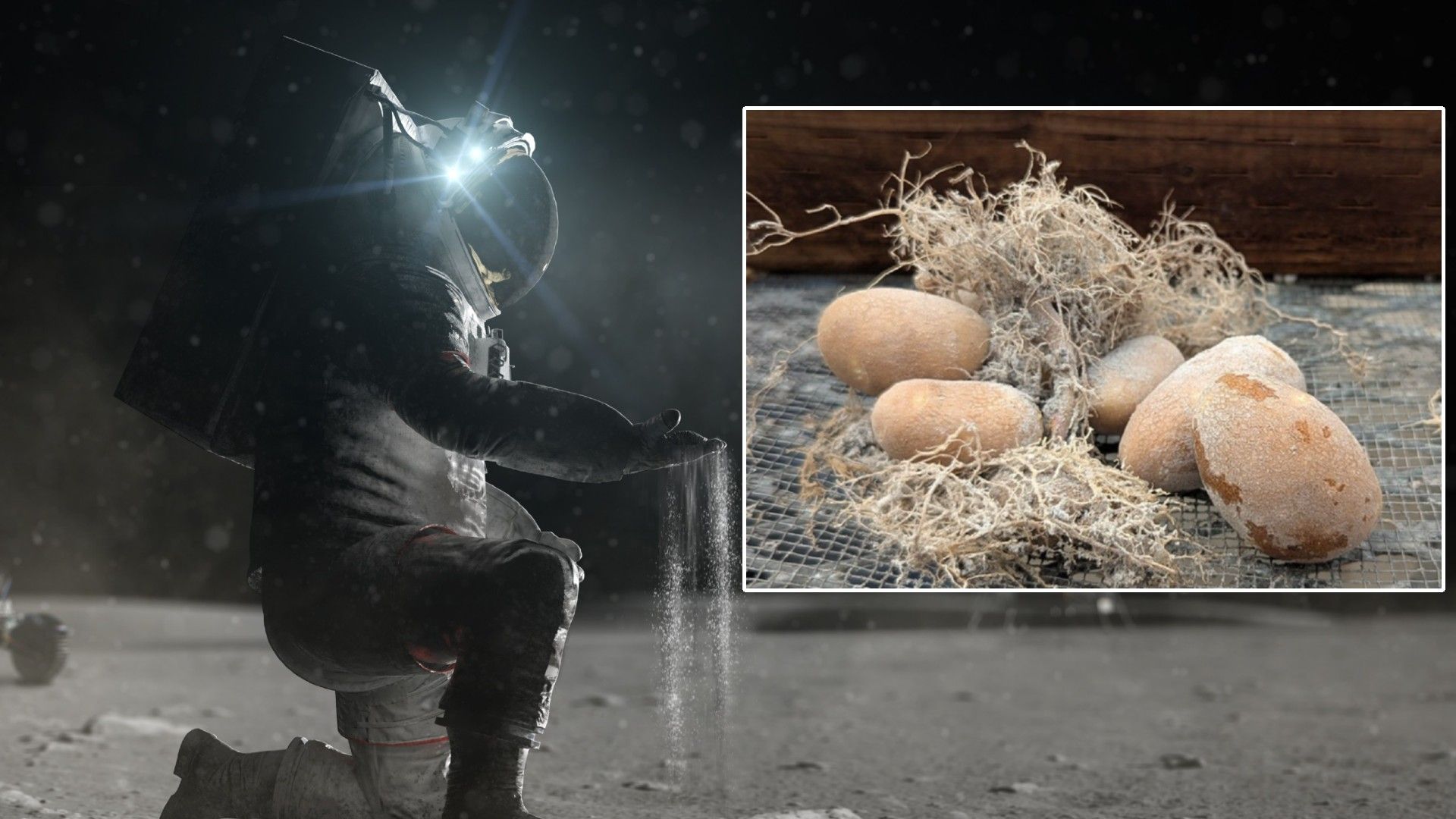
NASA is planning for a long-term presence on the moon, which requires a reliable food supply for astronauts. Researchers at Oregon State University have successfully grown potatoes in simulated lunar dust, indicating a potential method for producing food on the moon. The study, published in the Microgravity Science journal on November 20, demonstrated that potatoes can complete their entire life cycle in simulated moon soil when mixed with organic matter.
The scientists used five materials similar to lunar regolith, which covers the moon's surface, and found that a 30% mixture of vermicompost with simulated regolith yielded comparable results to using regular soil. Vermicompost, a nutrient-rich soil, helped balance the toxicity present in lunar regolith, preventing harmful compounds from negatively impacting the plants.
Future lunar explorers could potentially bring nutrient-rich soil with them, mix it with the moon's regolith, and grow potatoes. This research, funded by NASA, represents a significant step towards developing sustainable food production systems for long-term human exploration of the moon.
Rewritten by urgent.news; may contain errors — check the original.
Source: space.com